
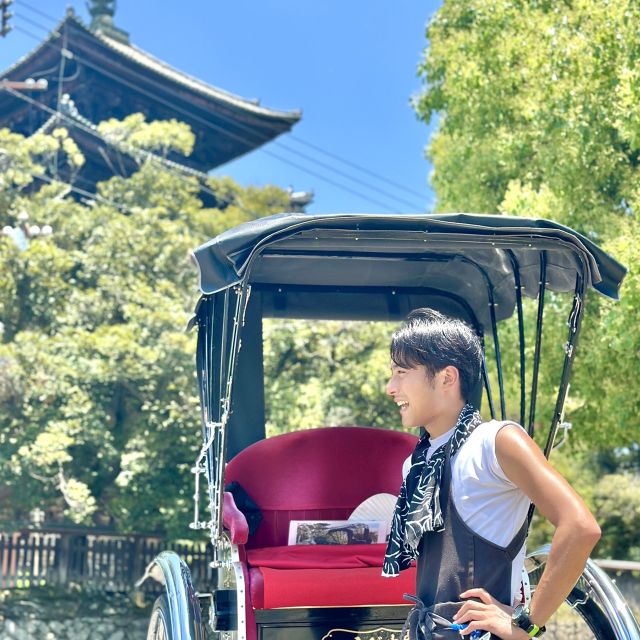
Review · JAPAN
Nara: Cultural Heritage Tour by Rickshaw
Nara rewards a slower ride. This private rickshaw tour gives you a pleasant way to see the city’s famous sights without rushing, while a local guide explains what you are looking at. I especially like the custom route choices and the chance to feed Nara’s gentle deer near Mt. Wakakusa. The guide called Ricky also earned praise for being excellent, which matters on a short, personal tour.
The main consideration is comfort. A rickshaw is only about 21.1 inches, or 74 centimeters, wide, and two adults share the seat. The ride may not suit anyone with back problems or anyone who is pregnant. You should also check the exact option carefully, since the choices range from 70 minutes to 190 minutes, while the headline duration may show only the shorter tours.
Key points to know before booking
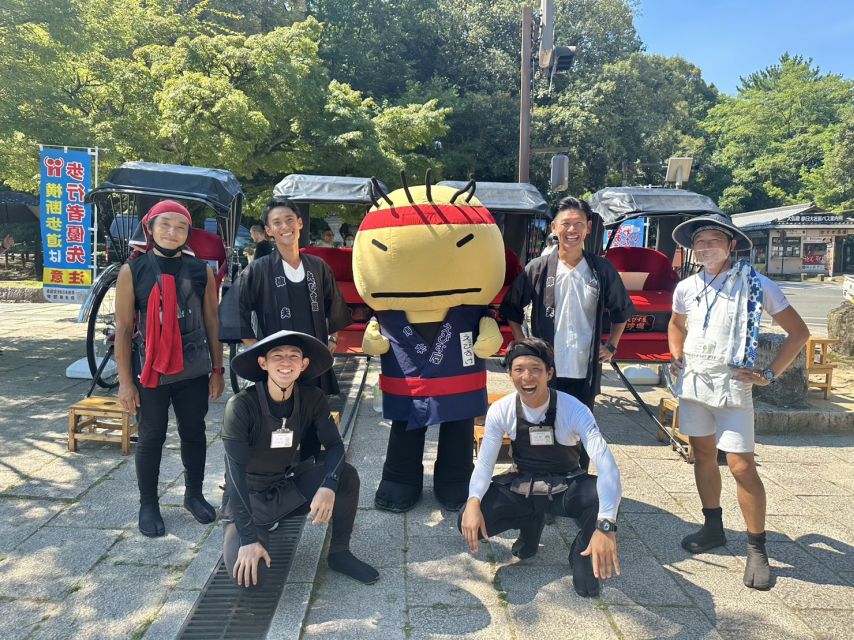
- Choose your subject: Pick deer and Mt. Wakakusa, Buddhist sculpture, or a broader heritage route with sake.
- Meet near Todaiji: The usual starting point is just outside the intersection by Todaiji Temple, though the exact meeting place can change by option.
- Feed the deer: Deer biscuits are supplied on the Mt. Wakakusa route.
- Expect a private ride: The tour is for your own group, with an English or Japanese guide.
- Check the seat size: Two adults fit, but separate rickshaws may be more comfortable for some people.
- Budget for extras: Temple admissions, snacks, drinks, and hotel pickup are not included.
Why a rickshaw works well in Nara
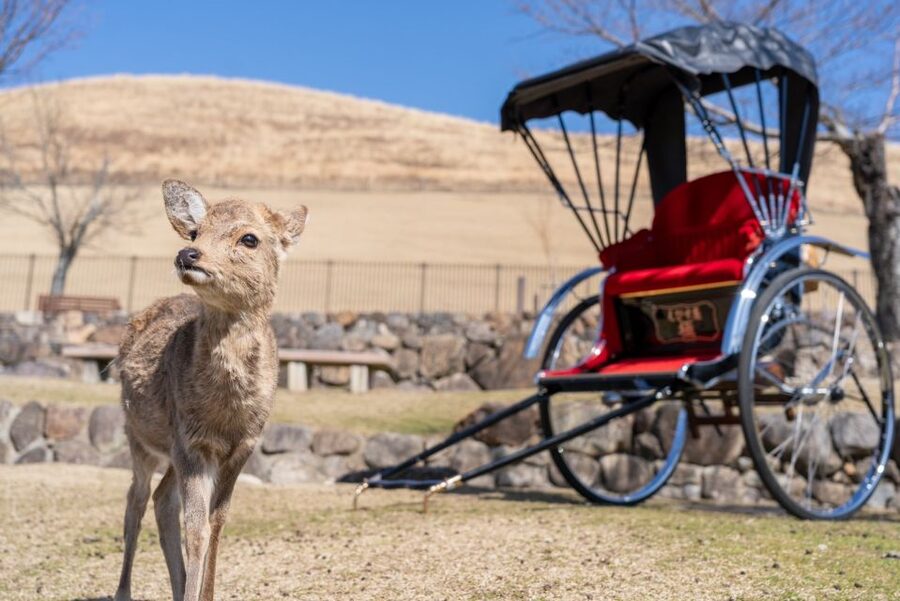
Nara’s major sights are close enough to connect by foot, but the area around Todaiji, Kofukuji, Kasuga Taisha, Mt. Wakakusa, and Naramachi can still take energy. A rickshaw gives you a seat, a guide, and a simple way to cover more ground without turning the day into a march.
I like the private format because you are not tied to a large group’s pace. You can ask questions, request photo stops, and shape the route around your interests. That is especially useful in Nara, where a temple gate, Buddhist statue, or old town street can mean much more when someone points out what makes it important.
The tour is also more personal than a standard sightseeing transfer. You are not simply being carried from one attraction to the next. The guide explains the city as you go and can adjust the experience to suit your group. The supplied photo stops are useful if you want a few good reminders of the day without spending the whole ride posing.
The tradeoff is that a rickshaw has limited space. Two adults can ride together, but the narrow seat may feel snug. If you are tall, broad-shouldered, or simply prefer personal space, booking one rickshaw per passenger may make the ride more comfortable.
More Rickshaw Tours in Japan
- Tokyo Asakusa Rickshaw Tour
★ 5.0 · 1,375 reviews - Kyoto: Arashiyama Customized Rickshaw Tour & Bamboo Forest
★ 5.0 · 432 reviews - Kyoto Arashiyama Rickshaw Tour with Bamboo Forest
★ 5.0 · 354 reviews
Starting beside Todaiji Temple
The ride begins near the intersection by Todaiji Temple, one of Nara’s defining sights. Todaiji is home to the Daibutsu, the enormous bronze Vairocana Buddha. Even if you choose a route that does not include a temple admission, starting here puts you close to one of the city’s most important cultural sites.
Your guide can orient you before the rickshaw sets off. That matters because Nara’s sights can blend together when you first arrive. A short explanation of the area helps you understand which stops are religious sites, which are historic streets, and which are simply good places to pause.
The precise meeting point may vary according to the option you book. Read the meeting instructions carefully and allow enough time to find the starting place. Hotel pickup is not included, so you need to make your own way to the meeting point.
The 70-minute Mt. Wakakusa and deer route
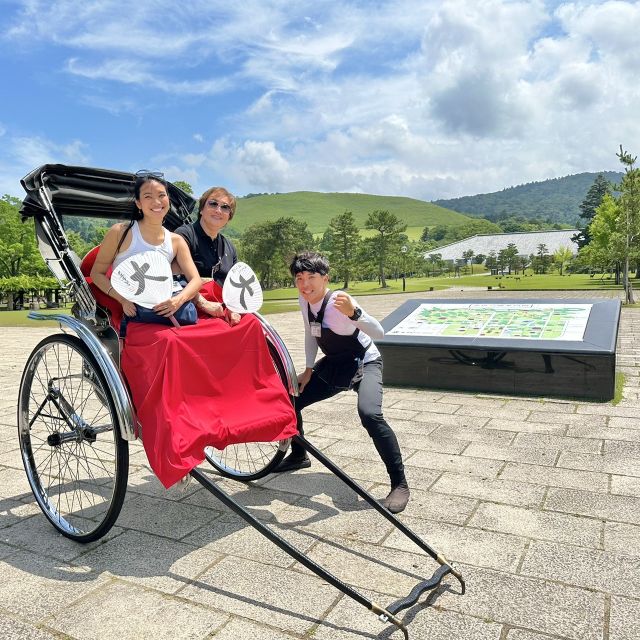
The shortest option focuses on Mt. Wakakusa and Nara’s deer. It leaves the main temple and shrine area for open grass-covered slopes, giving you a different view of the city than you get around Todaiji.
On a clear day, you can see across the Nara city skyline from the mountain. The attraction here is not a long hike or a strenuous climb. It is the change of setting, from historic religious buildings to open greenery, along with the chance to spend time with the deer away from the busiest temple approach.
Deer biscuits are provided by the company. Feeding the deer is one of the tour’s most memorable details, especially for families and first-time visitors to Nara. The deer at Mt. Wakakusa are described as gentle, but you should still follow your guide’s instructions and keep food controlled.
The warning about deer near Todaiji is important. The animals by the temple can be much more forceful when they expect food. If you have biscuits, keep your hands visible and empty after feeding. Do not tease the deer or hold food out longer than necessary.
This 70-minute choice is best if you have limited time, want a relaxed introduction, or mainly care about deer and views. It is not the right pick if your main interest is Buddhist art or if you want to visit several major heritage sites.
The 130-minute Unkei Buddhist statue route
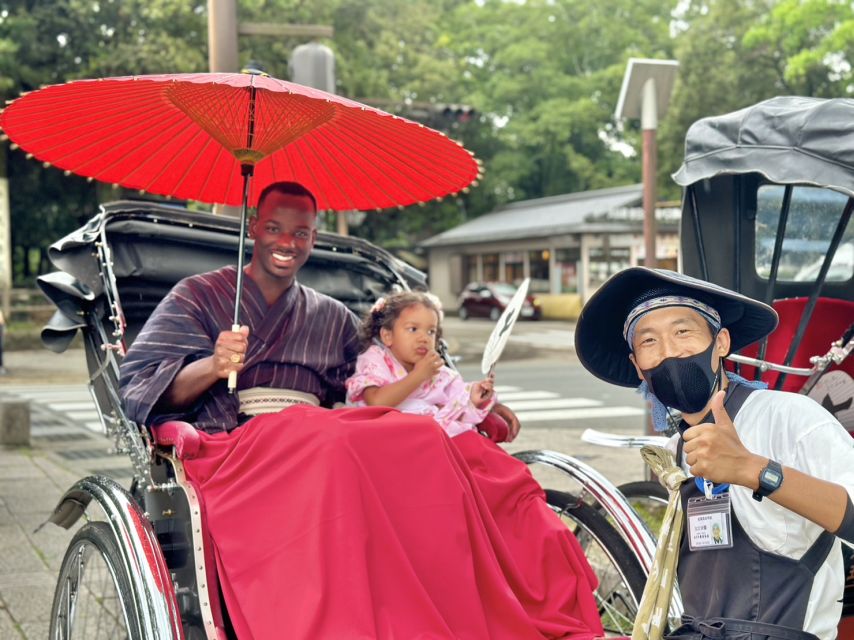
The middle option is designed for people who want more than a quick look at temples. It focuses on Buddhist statues linked to Unkei and other highly skilled Japanese sculptors, with explanations from your guide along the way.
This route includes Kofukuji Temple’s National Treasure Hall, Tokondo Hall, Chukondo Hall, and Todaiji Temple’s Nandaimon Gate. Each stop adds a different piece to the story of Nara’s religious art.
The National Treasure Hall is the key stop for anyone interested in sculpture. It gives you a chance to see important Buddhist works in a setting where details matter. A guide’s explanation is valuable here because statue features can be easy to miss: posture, facial expression, hand position, and the objects held by each figure all carry meaning.
Tokondo Hall and Chukondo Hall add more architectural and artistic context at Kofukuji. Instead of viewing one famous building in isolation, you get a wider sense of how the temple complex presents Buddhist imagery.
Todaiji’s Nandaimon Gate offers a different experience. It is a grand entrance rather than an indoor statue display, and its scale helps explain the importance of Todaiji before you enter the main temple area. The route therefore mixes close study with large public spaces.
Admission fees to the temples are not included. That affects the true cost of this option, so budget for entrance charges in addition to the tour price. If you already plan to visit these sites, the rickshaw may be a good way to connect them while adding interpretation. If you only want transportation, it may feel expensive.
More rickshaw tours around Japan:
- Kyoto Rickshaw Tour
★ 5.0 · 210 reviews - Tokyo: Asakusa Sightseeing Tour by Rickshaw
★ 4.9 · 195 reviews - Kyoto: Private Rickshaw Tour of Gion and Higashiyama Area
★ 5.0 · 144 reviews - Otaru Rickshaw Tour
★ 5.0 · 76 reviews
The 190-minute World Heritage and sake route
The longest option gives you the fullest day of sightseeing. It includes Todaiji Temple, Kasuga Taisha Shrine, Naramachi, and a traditional sake brewery.
Todaiji is the major temple stop, with its famous bronze Vairocana Buddha. Kasuga Taisha offers a different religious setting and gives the route another major heritage site. Seeing both helps you compare two important parts of Nara’s sacred identity rather than spending all your time at one temple.
The ride through Naramachi adds an old-town element. This is where the experience moves beyond headline attractions and into the older streetscape of Nara. You can enjoy the view from the rickshaw while your guide explains the area and points out places worth noticing.
The sake brewery visit is a distinctive feature. Nara is presented as the birthplace of Japanese sake, and you can sample sake at a traditional brewery. You may also purchase a bottle to take home. Snacks and drinks are not generally included, but the brewery tasting is part of this longer route.
This option makes the most sense if you want a broad introduction to Nara and have nearly three hours available. It is also the best choice for adults interested in local food and drink. The drawback is cost and time. You will need to account for temple admission fees, and anyone who wants a fast visit to the deer may prefer the shorter route.
How much value do you get for $77?
The advertised price is $77 per person. That is not the cheapest way to move around Nara, but you are paying for more than a ride. The price covers a private rickshaw, a local guide, photo stops, and a route shaped around your interests.
For two adults, the cost buys a private experience rather than a shared group outing. That can be good value if you want personal explanations, do not want to follow a fixed crowd, or have only one short window in Nara.
The value is strongest on the 130-minute and 190-minute options if you care about context. A guide can help connect the Buddhist statues, temple architecture, deer, old town, and sake into a more understandable visit. Without that help, you may see impressive places but miss why they matter.
The shorter route is easier to justify if your priority is a simple scenic ride and deer feeding. The longer options may involve extra admission fees, so look at the full day’s cost rather than treating $77 as the final amount.
Private group size and rickshaw comfort
This is a private group experience, but the rickshaw itself has limited capacity. Two adults can ride in one vehicle. Up to two children aged five or younger can ride with two adults, but they must sit on an adult’s lap.
A child aged five who uses one of the two rickshaw seats must be booked as an adult and pay the full fare. This rule is easy to overlook, so check your seating needs before booking.
The vehicle is listed as wheelchair and stroller friendly. That is useful for families and some visitors with mobility needs, but the tour is not recommended for people with back problems. It is also not suitable for pregnant women, and the information advises against participation during the first 16 weeks of pregnancy.
Selfie sticks are not allowed. Bring a regular phone or camera instead, and listen to the guide when stopping for photos.
The guides and language options
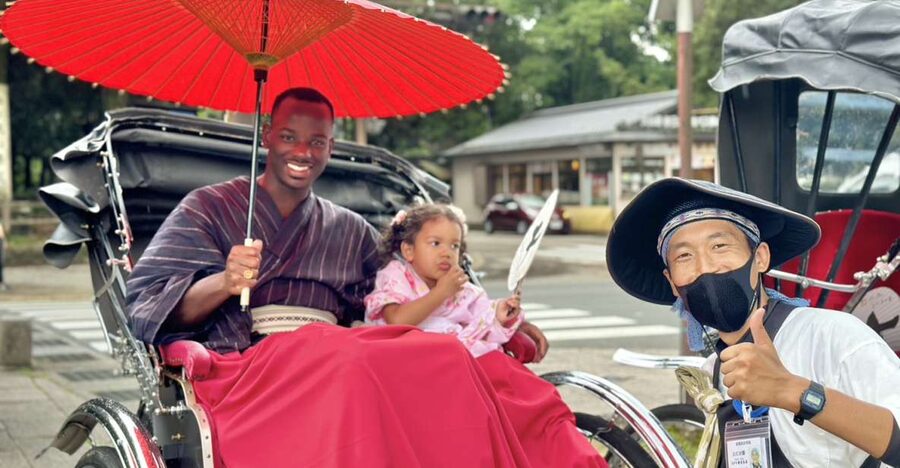
The tour is available in English and Japanese. That gives English-speaking visitors a practical way to learn about Buddhist statues, temple sites, and Nara’s older districts without relying only on signs.
The strongest personal praise in the available feedback went to a guide named Ricky, described simply as awesome. Another confirmed booking called the experience very good. The sample is small, but those comments point to the value of the guide relationship on this private format.
Your guide is central to the experience. The rickshaw is memorable, but the explanations turn it into a tour rather than a short ride. If you have a particular interest, such as Buddhist sculpture, sake, or deer behavior, tell the guide at the start. The route can be customized depending on your interests.
Timing, meeting point, and planning tips
The three listed choices are 70 minutes, 130 minutes, and 190 minutes. Some booking information may display only 70 to 130 minutes, so confirm the exact duration before paying, especially if you want the longest heritage and sake route.
The normal finish is the starting point, but the end location can be customized by discussing it directly with your guide. This can help you continue toward another Nara sight, though you should not assume a different drop-off until it has been confirmed.
Hotel pickup is not included. Temple admission is also separate, as are snacks and drinks. The sake route includes sampling at a traditional brewery, but do not assume every food or drink expense is covered.
Free cancellation is available up to 24 hours in advance for a full refund. You can also reserve now and pay later, which is useful if your Japan plans are still shifting.
Who should book this Nara ride?
I would recommend the tour to first-time visitors who want a friendly introduction without joining a large group. Families may especially like the deer biscuits and the private setup, provided the seating rules work for everyone.
Art lovers should choose the 130-minute Unkei statue route. It gives you the most focused attention on Buddhist sculpture and includes several important Kofukuji and Todaiji stops.
Adults with more time should consider the 190-minute route. The combination of Todaiji, Kasuga Taisha, Naramachi, and sake offers the broadest look at Nara’s cultural life.
I would be cautious if you have back problems, are pregnant, dislike confined seating, or want complete control over your walking pace. A private rickshaw is comfortable for many people, but it is not a substitute for a spacious vehicle.
Should you book the Nara rickshaw tour?
Book it if you want personal guiding, easy photo stops, and a flexible way to connect Nara’s major sights. The 70-minute route is a good short choice for deer and Mt. Wakakusa. The 130-minute option suits Buddhist art fans, while the 190-minute route gives you the fullest mix of temples, old streets, and sake.
I would choose the longest option only if you have enough time and are prepared to pay separate temple admission fees. For a compact visit, the 130-minute tour offers the best balance of sightseeing and explanation. The narrow seat and health restrictions are the main checks before booking, but for the right group, this is a pleasant and personal way to see Nara.
FAQ
Where does the rickshaw tour begin?
The guide and rickshaw usually meet just outside the intersection by Todaiji Temple. The exact meeting point may vary depending on the option you book.
How long does the tour last?
The available options are 70 minutes, 130 minutes, and 190 minutes. Check the selected option carefully because some booking information lists only the shorter duration range.
What can I see on the 70-minute tour?
The 70-minute route focuses on Mt. Wakakusa and Nara’s deer. On clear days, you can also see the Nara city skyline.
Are deer biscuits included?
Yes. Deer biscuits are provided on the Mt. Wakakusa and deer route.
What does the 130-minute tour include?
It includes Kofukuji Temple’s National Treasure Hall, Tokondo Hall, Chukondo Hall, and Todaiji Temple’s Nandaimon Gate. The focus is Japanese Buddhist sculpture, including works connected with Unkei and other major sculptors.
Does the longest tour include sake tasting?
Yes. The 190-minute World Heritage route includes sake samples at a traditional brewery in Nara. You can also purchase a bottle to take home.
Are temple admission fees included?
No. Admission fees to temples are separate. Snacks and drinks are also not included, apart from the sake sampling associated with the longest route.
Can children ride in the rickshaw?
Up to two children aged five or younger can ride with two adults on an adult’s lap. A child aged five who uses one of the two rickshaw seats must be booked as an adult and pay the full fare.
More History Rides around Japan
- [30 minutes] Rickshaw tour around Asakusa [History, sightseeing, Tokyo Skytree]
★ 5.0 · 38 reviews - Kamakura Heritage Bike or Walk Tour with ex-Rickshaw guide
★ 5.0 · 11 reviews - Kamakura: Private History and Heritage Tour by Rickshaw
★ 4.9 · 7 reviews - Rickshaw Tour of Kagoshima’s Historical and Cultural Sites
★ 5.0 · 4 reviews
Just added around Japan
- Sushi Making Tokyo with Traditional Rickshaw Ride Tour in Asakusa★ 5.0 · 12 reviews
- Exiting Rickshaw ride and Kimono experience★ 5.0 · 4 reviews
- Hot Spring Capital of Yufuin Rickshaw Tour★ 5.0 · 32 reviews
- Kyoto Sagano Insider: Rickshaw and Walking Tour★ 5.0 · 15 reviews
- Private 3-hour Kyoto Arashiyama Rickshaw Tour★ 5.0 · 5 reviews
- Kurashiki Rickshaw Tour★ 5.0 · 39 reviews
- Kamakura Heritage Bike or Walk Tour with ex-Rickshaw guide★ 5.0 · 11 reviews
- Rickshaw Tour of Kagoshima’s Historical and Cultural Sites★ 5.0 · 4 reviews
Rickshaw Tours, compared.
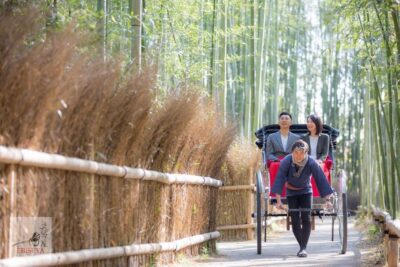
Arashiyama Customized Rickshaw Tour & Bamboo Forest
Read our review →
Split by Private Electric Rickshaw – Palace & Hidden Gems
Read our review →
Kyoto Arashiyama Rickshaw Tour with Bamboo Forest
Read our review →Browse the lists this tour appears in