
Review · JAPAN
Private 3-hour Kyoto Arashiyama Rickshaw Tour
Green Kyoto rewards a slower ride. This private Arashiyama tour combines a rickshaw ride with quiet temples, moss gardens, stone figures, and a bamboo forest shrine. I especially like the small-group format and the chance to hear local stories from an English-speaking driver rather than simply passing through on foot. The seasonal focus on Shinryoku, Japan’s love of fresh deep-green foliage, gives the morning a clear purpose.
I also like the way the route reaches places beyond the usual bamboo photo stop, including Gio-ji, Jojakko-ji, and the two Nenbutsu-ji temples. The main drawback is price: at $236.44 per person, this costs far more than a self-guided walk, and temple admissions, food, and drinks are extra. It is best for people who value personal guiding, comfort, and time saved.
Key points at a glance
- Late spring to early summer only: The tour is built around Shinryoku, the fresh green season, rather than autumn leaves or winter scenery.
- A genuinely private outing: Only your own group takes part, with an English-speaking rickshaw driver and live commentary.
- Several temple choices: You may be directed toward green-themed sites such as Gio-ji, Jojakko-ji, and Hokyo-in, or unusual temples with famous stone figures.
- The rickshaw covers ground efficiently: A three-hour route lets you see more of Arashiyama than a slow walk alone, with stops for temples and views.
- Families need to check the seating rules: Children aged six and older pay the adult price, while younger children must sit on an adult’s lap.
- Book early: This is booked, on average, 106 days ahead, and your chosen start time is confirmed by email rather than guaranteed automatically.
Why a Rickshaw Works Well in Arashiyama
Arashiyama can look compact on a map, but its temples and lanes spread well beyond the best-known bamboo forest. Walking from one end to another takes time, and the most atmospheric sites are not all clustered around the main tourist street.
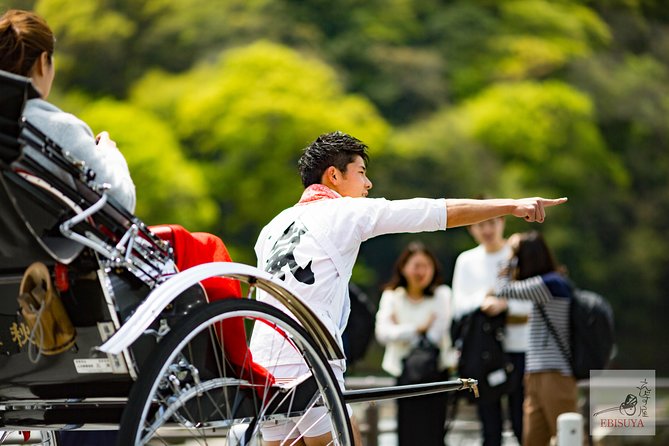
A rickshaw gives you a useful middle ground. You are not sealed inside a vehicle, so you can see the trees, lanes, and passing streets at a relaxed pace. You also avoid spending the entire morning on foot. For a three-hour visit, that matters.
The driver does more than pull the rickshaw. Live commentary is included, and the strongest part of this experience is likely to be the personal explanation along the way. Guides praised in the supplied comments included Tai Tai, Yoppy, and Akihisa, with particular appreciation for clear explanations, local knowledge, care, and help with photographs. Those guides are not guaranteed for every departure, but the pattern is useful: the driver can shape the morning as much as the temples do.
One guide, Tai Tai, was praised for taking a group through the bamboo forest, local streets, and to tea at a 400-year-old teahouse. Tea is not listed as a guaranteed part of this three-hour tour, so do not book expecting it. Still, the detail shows the sort of local orientation a good driver may bring to the ride.
More Rickshaw Tours in Japan
- Tokyo Asakusa Rickshaw Tour
★ 5.0 · 1,375 reviews - Kyoto: Arashiyama Customized Rickshaw Tour & Bamboo Forest
★ 5.0 · 432 reviews - Kyoto Arashiyama Rickshaw Tour with Bamboo Forest
★ 5.0 · 354 reviews
A Green Season Route, Not an All-Year Tour
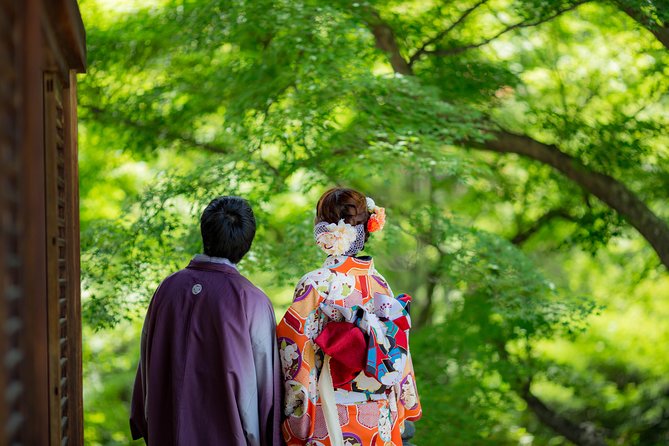
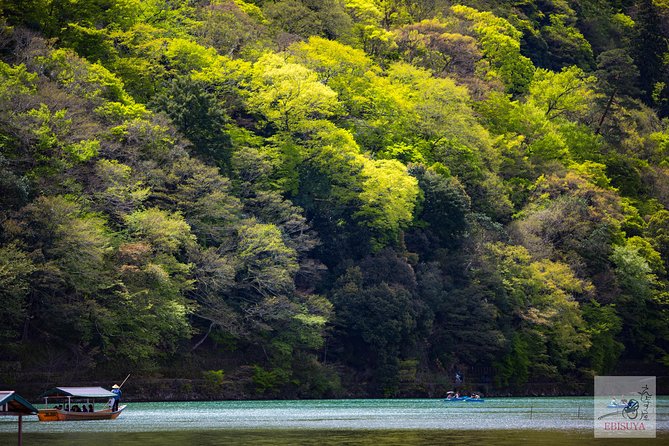
This is a seasonal outing available from late spring to early summer. The focus is Shinryoku, a Japanese word for the full, fresh green of leaves and bushes. That gives the tour a different mood from the better-known autumn foliage season.
You should book this for the greenery itself. The route is meant to show how light, moss, wooded paths, and temple gardens work together in the early summer months. If you want red maple leaves, snowy temple roofs, or a year-round sightseeing option, this particular tour is not the right match.
The itinerary includes a mix of destinations rather than one long stop at a single attraction. Each listed temple visit lasts about 20 minutes, with the remaining time used for riding, commentary, and travel between sites. That means you get variety, but you should not expect an hour of quiet exploration at every temple.
Some stops are marked as green options, while others are marked as unique options. The exact combination may depend on the route and the choices made during the private outing. Ask at the start which temples are planned so you know what kind of morning you are getting.
Gio-ji and Jojakko-ji: Moss and a Hilltop View
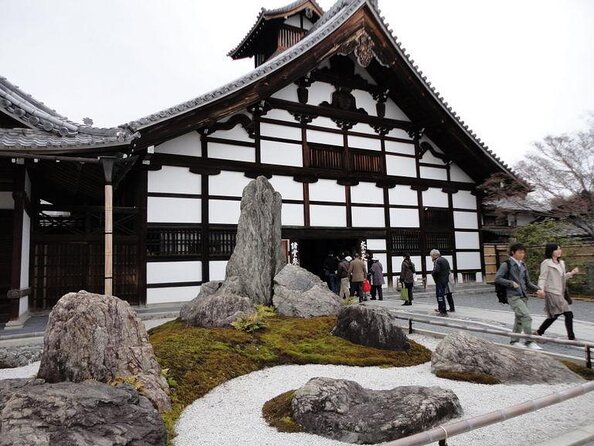
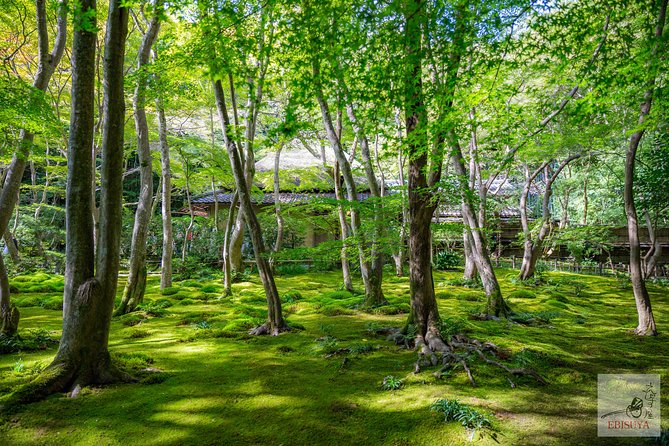
Gio-ji is one of the clearest reasons to choose this tour during the green season. Its moss garden is famous for its intense color, even in shade. This is the kind of place that rewards a short, unhurried visit. You are looking at texture and atmosphere rather than a grand architectural spectacle.
The 20-minute stop is enough to appreciate the garden, but it is not a long temple visit. Admission is not included, so carry money for the entrance fees. The tour price covers the ride and guide, not access to the temples and gardens.
Jojakko-ji offers a different view. The temple sits on a hill, and reaching the upper area involves many steps beneath the trees. At the top, you can catch a glimpse over Kyoto.
That climb is worth noting if you have limited mobility or simply prefer a flat route. The rickshaw gets you through the area, but it does not remove every walk or stairway from the visit. If you are comfortable with steps, Jojakko-ji adds a welcome change from garden-level scenery.
The Bamboo Forest Shrine and Arashiyama’s Familiar Icon
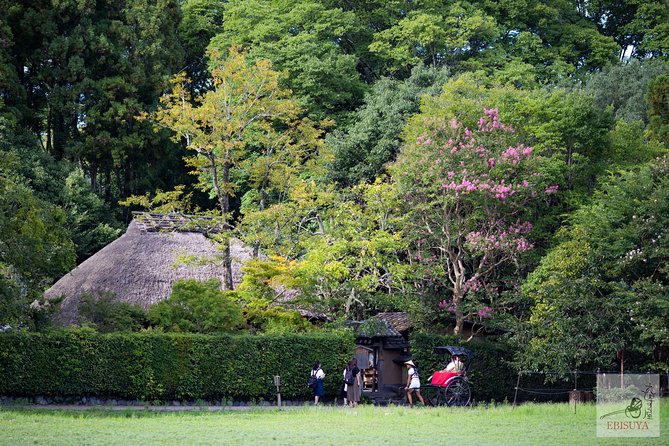
The route includes a Shinto shrine in the bamboo forest, dedicated to the goddess of matchmaking. The supplied details do not name the shrine, so you should treat this as a bamboo-forest shrine stop rather than assume a particular famous sanctuary.
This part of the tour links Arashiyama’s natural setting with everyday religious practice. The bamboo provides the memorable setting, while the matchmaking connection gives the stop a clear purpose beyond taking photographs.
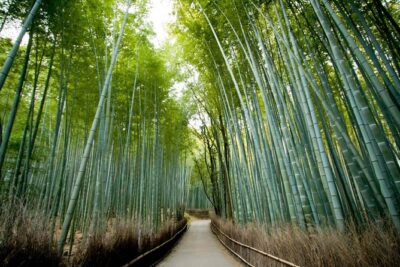
The itinerary also refers to one of Arashiyama’s icons. In context, this is the bamboo forest itself. A rickshaw can be useful here because the driver helps you reach the area and gives the forest a place within a wider route. You are not spending the whole three hours in one crowded corridor.
Still, the bamboo forest is a popular sight. The private format gives you your own group and your own guide, but it cannot turn a well-known public attraction into a private one. Keep that expectation realistic.
More rickshaw tours around Japan:
- Kyoto Rickshaw Tour
★ 5.0 · 210 reviews - Tokyo: Asakusa Sightseeing Tour by Rickshaw
★ 4.9 · 195 reviews - Kyoto: Private Rickshaw Tour of Gion and Higashiyama Area
★ 5.0 · 144 reviews - Otaru Rickshaw Tour
★ 5.0 · 76 reviews
Adashino Nenbutsu-ji and Otagi Nenbutsu-ji: Two Very Different Stone Worlds
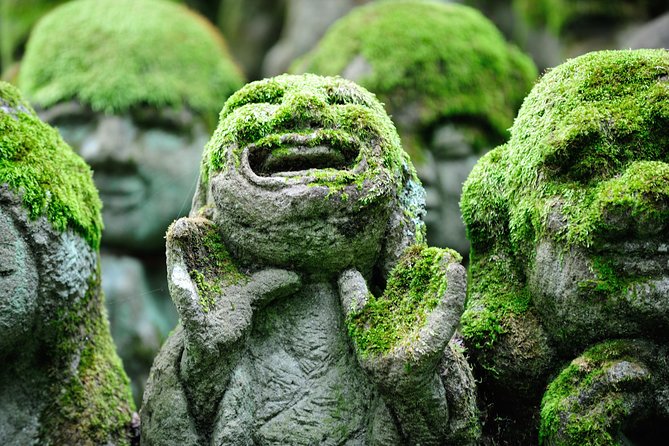
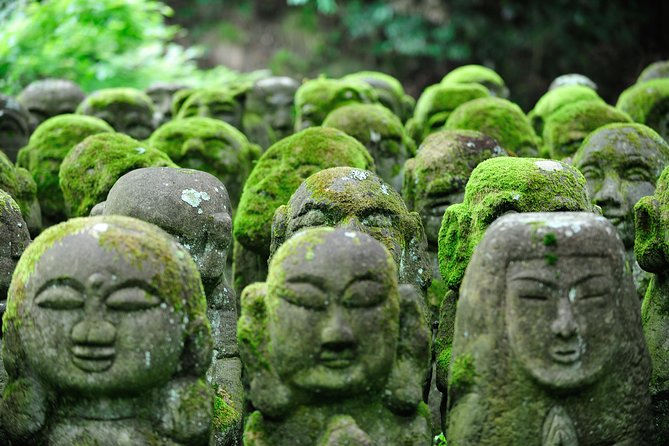
Adashino Nenbutsu-ji is presented as a unique option because of its large number of stone figures and the meaning behind them. The stop offers a more reflective side of Arashiyama. The figures are not just decoration, and your guide’s explanation can help you understand why they matter.
Otagi Nenbutsu-ji also has many stone figures, but the mood is lighter. The figures are described as humorous, making this a particularly good choice for families with children. A 20-minute stop is enough to see the main character of the place without asking younger visitors to endure a long formal temple visit.
These temples make the tour more than a sequence of famous viewpoints. You get solemn imagery at one site and playful sculpture at another. That contrast is useful if you want your morning to include something unusual.
Again, admission fees are separate. If you plan to visit several temples, add those costs to the headline price before deciding if the tour fits your budget.
Seiryoji and Hokyo-in: Stories Behind the Scenery
Seiryoji is another unique option. Here, the appeal is the temple’s size and presence, along with the story of a special Buddhist statue and its eventful journey. This is a good example of why the guide matters. Without explanation, you may see a large temple and move on. With context, the visit has a stronger sense of place.
Hokyo-in is listed as a green option. It offers a restful setting and a resting place connected with two samurai who share a distinctive link. That combination of greenery and personal history suits the tour’s broader theme: quiet surroundings with a story attached.
The itinerary gives each of these stops about 20 minutes. That is enough for an introduction, photographs, and a short explanation. It is not enough for a slow, independent study of every building, garden, or historical detail. If you already know you want to spend half a day at one temple, a private walking visit may serve you better.
What the Three Hours Feel Like
The tour begins at 1-1 Sagatenryuji Susukinobabacho in Ukyo Ward, close to public transportation. Hotel pickup and drop-off are not included, so you need to reach the starting point yourself and arrange your own onward travel.
The morning alternates between riding and short temple visits. That rhythm is easier than a nonstop walking tour, especially when you want to cover a wider section of Arashiyama. You also have a driver available to explain what you are seeing instead of stopping to read every sign.
A three-hour private booking is a useful length. It gives you more depth than a brief rickshaw circuit but does not consume the whole day. You can pair it with lunch, another Kyoto neighborhood, or a separate visit to a site you want to explore at your own speed.
The selected starting time is not automatically guaranteed. You receive confirmation by email within 24 hours of booking, so leave some flexibility in your Kyoto schedule until the time is confirmed.
Price, Comfort, and Family Rules
At $236.44 per person, this is a premium experience. I would not recommend it simply as a way to get from one end of Arashiyama to another. Walking and public transportation cost much less.
The price makes more sense if you value three things: a private group, a local English-speaking guide, and the ability to cover several outlying temples without walking the entire route. For a couple or small family marking a special morning, the personal attention may justify the cost. For budget-focused visitors, it will be a hard sell.
The rickshaw seat is 74 centimeters, or about 29.1 inches, wide, and can fit up to two adults side by side. Children aged six and older need their own seat and pay the adult price. Children five and under can ride free on an adult’s lap, with one child per adult and a maximum of two adults and two children per rickshaw.
If a five-year-old uses one of the two seats rather than sitting on an adult’s lap, that child must be booked as an adult. These rules matter when you calculate the real cost for a family.
Expecting mothers in their first 16 weeks of pregnancy are not permitted to ride. Most other visitors can participate, but the seating width and the temple steps at Jojakko-ji are worth considering before you book.
Past outings have also included comfort touches such as a heated seat and warm blanket in colder weather. Those details come from other seasonal rides, so they should not be treated as guaranteed features for this late spring to early summer tour.
Who Will Get the Most From This Tour
I would choose this outing if you want a calm introduction to Arashiyama without spending the whole day walking. It suits first-time Kyoto visitors who want help sorting the area’s temples and families who appreciate shorter stops and a playful site such as Otagi Nenbutsu-ji.
It also works well for couples and small private groups who want photographs, stories, and an easy pace. The guide can offer a more personal experience than a large group tour, and past guide comments praised friendly service, clear explanations, and careful attention.
I would hesitate if your priority is low cost, long temple visits, or complete control over the route. The admissions add up, the stops are brief, and the seasonal availability limits your choices. You should also avoid booking it if your schedule cannot flex around the email confirmation of the start time.
Free cancellation is available if you cancel at least 24 hours before the local start time. Changes or cancellations inside that window are not accepted for a refund.
Should You Book the Arashiyama Rickshaw Tour?
Book it if you want private guiding and easy movement through a spread-out part of Kyoto, and if late spring or early summer greenery is the reason you are visiting. The best value comes from the driver’s commentary, the range of temples, and the time saved between them.
Skip it if you are happy to walk, want to keep temple costs low, or prefer to spend a long time at just one site. At $236.44 per person before admissions, this is not a bargain sightseeing ride. It is a comfortable, personal way to see more of Arashiyama in three hours, with the strongest appeal for small groups who care about stories and scenery.
FAQ
How long is the Kyoto Arashiyama rickshaw tour?
The tour lasts approximately three hours.
Is the tour private?
Yes. Only your group participates in the activity.
What is included in the price?
The price includes an English-speaking local rickshaw driver and guide, the rickshaw ride, and live commentary.
Are temple admission fees included?
No. Admission fees to the temples and gardens are not included.
Can children ride the rickshaw?
Children aged six and older need a seat and pay the adult price. Children aged five and under can ride free on an adult’s lap, with one child per adult. A five-year-old using a seat must be booked as an adult.
Where does the tour begin?
The meeting point is 1-1 Sagatenryuji Susukinobabacho, Ukyo Ward, Kyoto, 616-8385, Japan. The location is near public transportation, and hotel pickup and drop-off are not included.
Can I cancel for a full refund?
Yes. You can receive a full refund if you cancel at least 24 hours before the experience’s local start time. Cancellations or changes made less than 24 hours before the start are not accepted.
More 3-Hour Experiences in Japan
- Visiting 9 Places in 3 hours Share Tour by Tuk-Tuk
★ 4.9 · 293 reviews - Tuk Tuk Athens Complete City Center Tour – 100% Electric (3 hour)
★ 5.0 · 252 reviews - Athens: Private 3-Hour City Tour on Eco-Friendly Tuk Tuk
★ 4.8 · 248 reviews - 3-hour Old Delhi Heritage Walking tour with Rickshaw Ride
★ 5.0 · 240 reviews
Just added around Japan
- Sushi Making Tokyo with Traditional Rickshaw Ride Tour in Asakusa★ 5.0 · 12 reviews
- Exiting Rickshaw ride and Kimono experience★ 5.0 · 4 reviews
- Hot Spring Capital of Yufuin Rickshaw Tour★ 5.0 · 32 reviews
- Kyoto Sagano Insider: Rickshaw and Walking Tour★ 5.0 · 15 reviews
- Kurashiki Rickshaw Tour★ 5.0 · 39 reviews
- Kamakura Heritage Bike or Walk Tour with ex-Rickshaw guide★ 5.0 · 11 reviews
- Rickshaw Tour of Kagoshima’s Historical and Cultural Sites★ 5.0 · 4 reviews
- Kamakura Rickshaw Tour★ 5.0 · 53 reviews
Rickshaw Tours, compared.

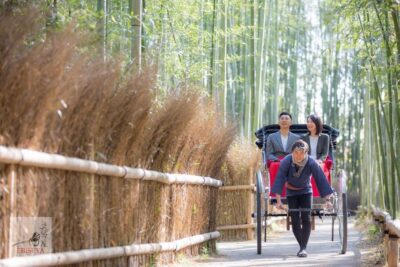
Arashiyama Customized Rickshaw Tour & Bamboo Forest
Read our review →
Split by Private Electric Rickshaw – Palace & Hidden Gems
Read our review →
Kyoto Arashiyama Rickshaw Tour with Bamboo Forest
Read our review →Browse the lists this tour appears in