
Review · JAPAN
Tokyo: Asakusa Sightseeing Tour by Rickshaw
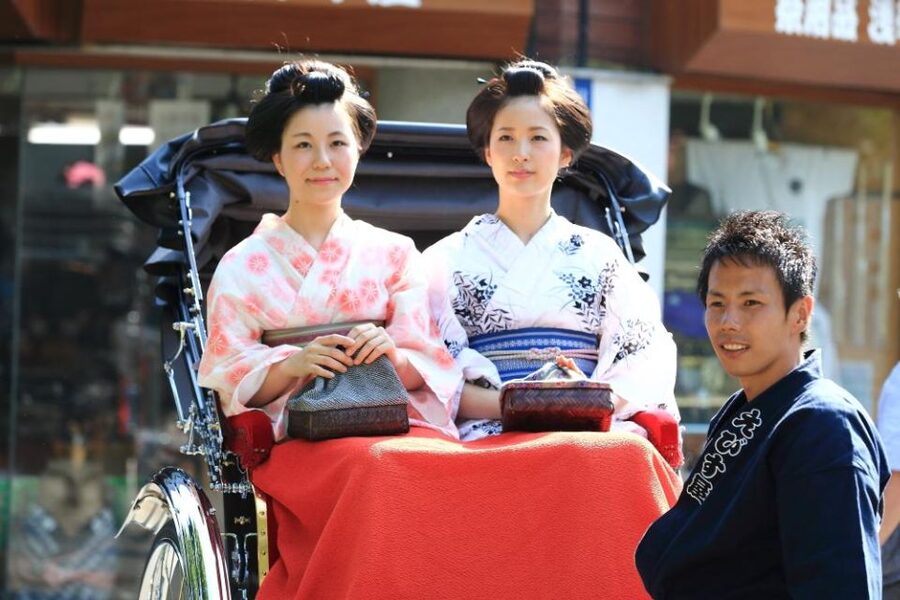
See old Tokyo at running pace. This private rickshaw tour gives you a lively introduction to Asakusa, with a local guide explaining temples, shrines, customs, shopping streets, and neighborhood life as you ride. I like the personal guiding and the chance to cover several parts of Asakusa without tiring your feet. I also like the photo stops, where guides such as Masa, Kazu, and Shima have helped families capture excellent pictures. The main consideration is price: at about $35 per person, a short ride is not the cheapest way to sightsee, and the rickshaw is narrow.
The ride is more than a quick spin around Senso-ji. Depending on your chosen length, you can pass Asakusa Shrine, Bentendo Hall, Sumida Park, Hanakawado, Tanuki-doori, Rokku, and Denpoin Street. You will also hear about temple manners, incense, local traditions, and the area’s changing character. Guides are central to the experience, and the strongest reports describe them as funny, friendly, energetic, and excellent with children.
Choose your meeting point carefully. The stand is outside Exit 1 of Asakusa Station on the Tokyo Metro Ginza Line, not another Asakusa station served by a different subway line. The tour is private, offered in English or Japanese, and can be adjusted around your interests. The 30-minute option is a taste; the longer rides make more sense if you want the neighborhood story.
Key points to know before booking
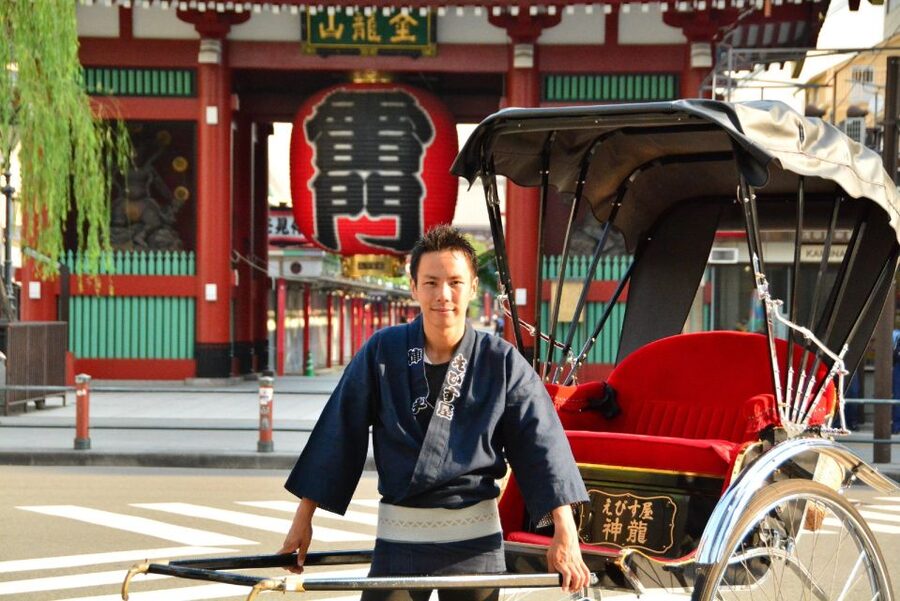
- Your guide shapes the experience: Names praised for warmth and energy include Masa, Kazu, Shima, Yusuke, Taku, Tashi, Taisei, and Matcha.
- The route mixes famous and lesser-known Asakusa: Expect major religious sites alongside Tanuki-doori, Rokku, Denpoin Street, and small neighborhood temples.
- You get a moving history lesson: Guides explain rituals such as washing at a temple fountain and using incense.
- The rickshaw is private but compact: A maximum of two adults ride in one vehicle, and each rickshaw is 74 centimeters wide.
- Longer rides offer better value: Tours range from 30 to 190 minutes, with more time for side streets, gardens, and photo stops.
- Season matters: Cherry trees make Sumida Park especially attractive in spring, while heated seats and blankets have helped keep riders comfortable in cold weather.
Why a Rickshaw Works So Well in Asakusa
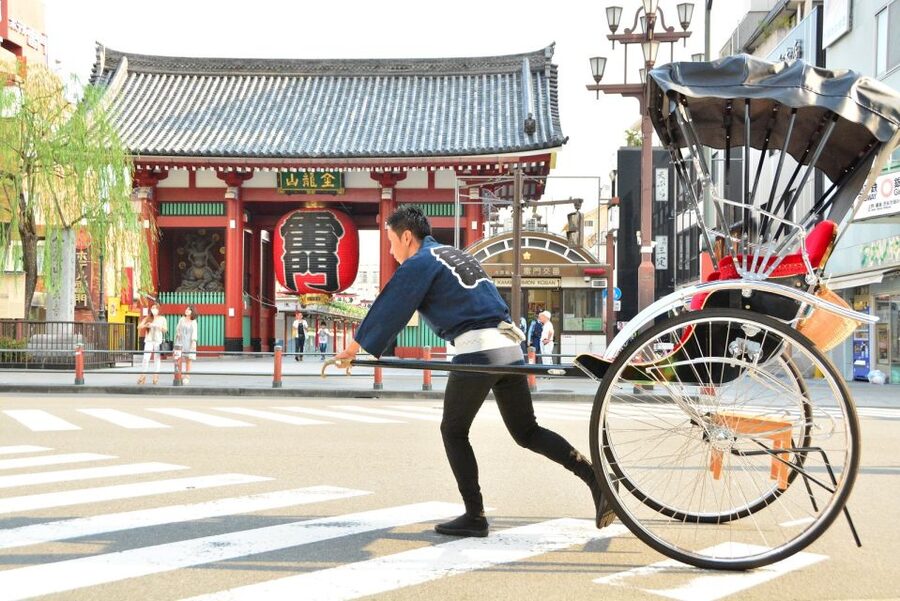
Asakusa is easy to explore on foot, but it can also feel scattered. One moment you are near a major temple, and a few streets later you are looking at old-style storefronts, small shrines, entertainment venues, or a quiet garden. A rickshaw connects these pieces quickly while leaving you seated high enough to watch street life.
I like the pace. You are not sealed inside a bus or rushing past the district from a taxi window. The ride is open to the weather and the sounds of the street. You can look up at temple roofs, notice shop signs, and watch your guide handle narrow roads and busy crossings.
This is also a useful first activity in Tokyo. Several guides have offered suggestions for food, shopping, and other things to try in Asakusa. If you take the ride near the start of your visit, you can return later to places that caught your attention.
The experience is not silent sightseeing. Your guide pulls the rickshaw, steers through the district, explains what you are seeing, and often takes pictures with your phone or camera. The best guides add humor and adapt to the people in the vehicle. One guide sang pop songs with a child, while another used anime references to keep a teenager interested. That personal touch is a large part of the appeal.
More Rickshaw Tours in Japan
- Tokyo Asakusa Rickshaw Tour
★ 5.0 · 1,375 reviews - Kyoto: Arashiyama Customized Rickshaw Tour & Bamboo Forest
★ 5.0 · 432 reviews - Kyoto Arashiyama Rickshaw Tour with Bamboo Forest
★ 5.0 · 354 reviews
From Asakusa Station to the Temple District
The meeting point is the rickshaw stand a short walk from Exit 1 of Asakusa Station on the Tokyo Metro Ginza Line. This detail matters more than it may seem. Asakusa has several stations and many exits, and they are not all close together. One group arrived at the wrong exit and needed help finding the stand, so check the subway line and exit before setting out.
The ride typically begins near the district’s best-known religious sights. Senso-ji, Tokyo’s oldest temple, anchors the area, while Asakusa Shrine sits nearby. The pairing gives you a useful glimpse of Japan’s Buddhist and Shinto traditions in one compact area.
Your guide may explain how to behave at a temple or shrine. At a purification fountain, you can learn why people rinse their hands and mouth. At an incense burner, the guide may explain why people wave smoke toward parts of the body. These details turn a quick look at a religious site into something you can understand and use during the rest of your Japan trip.
Bentendo Hall is another possible stop. Its position and setting add a quieter note to the main temple area. Rather than seeing Asakusa only as a procession of famous buildings, you get a sense of how religious spaces fit into the everyday neighborhood.
The drawback is that the exact route can vary. This is a customizable private tour, so you should tell the guide what interests you. If you want more temple time, shopping, gardens, or anime-related sights, say so early.
Hanakawado, Sumida Park, and the River Views
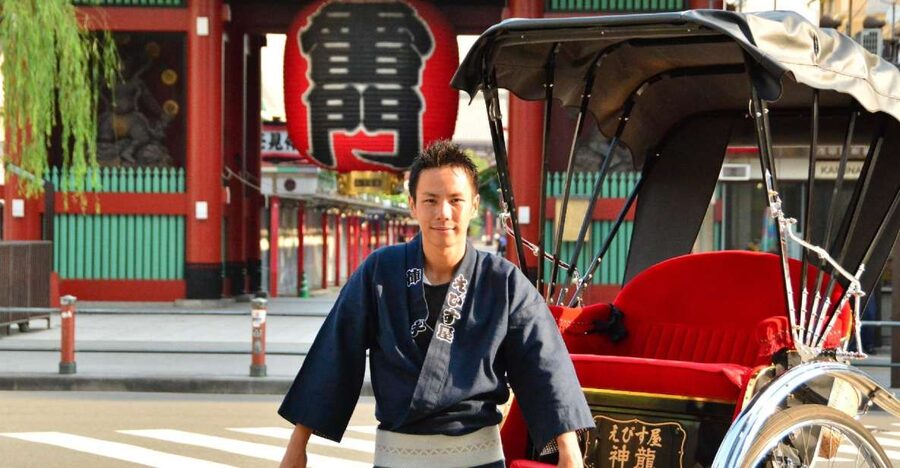
The route can continue toward Hanakawado, known for shoe shopping. This is a practical stop for visitors who want to see a more ordinary commercial side of Asakusa. It is not only about grand temples and postcard views. Shops and local streets show how the district functions as a place where people live and work.
Sumida Park provides a change of mood. The park follows the Sumida River and is especially attractive in spring, when thousands of cherry trees bloom. Even outside blossom season, the combination of open space, trees, water, and views gives you a break from the tighter streets.
You may want to ask for a photo stop here if the weather is clear. Guides regularly take pictures for riders, and this is one of the strongest practical benefits of a private tour. You can enjoy the ride without constantly asking strangers to take family photos.
Summer requires some thought. One ride took place in heat approaching 95 degrees Fahrenheit, yet the guide kept the pace cheerful and comfortable. The open vehicle provides a breeze, but you are still outside in Tokyo’s humidity. Spring and autumn are likely to feel easier, while cold-weather rides may include blankets and heated seats.
The river section also shows why the rickshaw can be useful for families. You remain together in a private vehicle, and the guide can adjust the pace and explain sights to adults and children at once. Children under six can ride free when seated on an adult’s lap, subject to the stated limit of one child per adult.
Tanuki-doori and the Older Entertainment Quarter
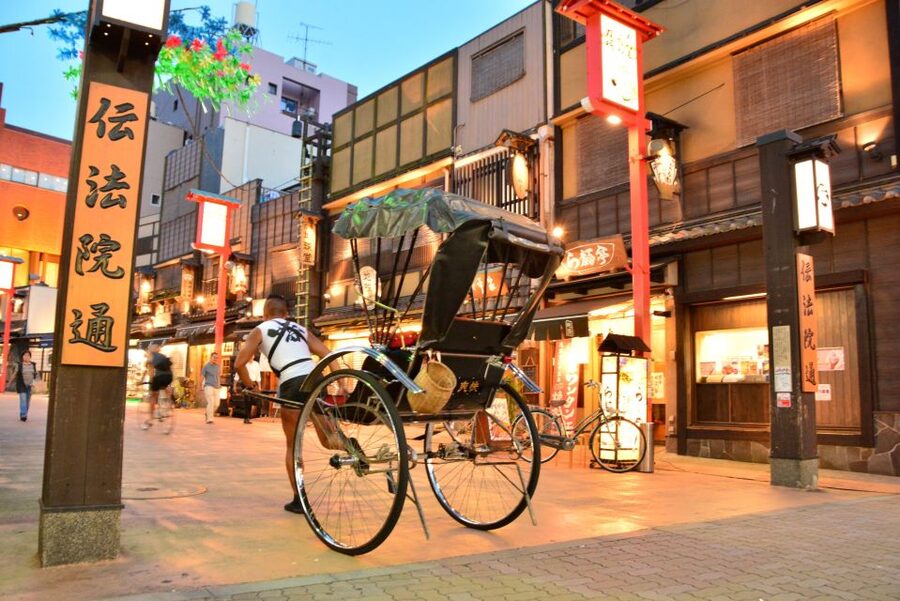
Tanuki-doori brings you into a quirkier side of Asakusa. The street is part of the district’s older entertainment character, and it contrasts with the formal atmosphere around the major temples. Here, the tour becomes less about landmark collecting and more about reading the layers of the neighborhood.
The historic Rokku Ward adds another unusual turn. The area is associated with theaters and older entertainment, including adult theaters. That makes it less polished than the temple approach, but it is also part of Asakusa’s real identity. If you prefer a tidy sightseeing route with only major monuments, this portion may surprise you. If you want to see how the district changed over time, it is worthwhile.
Hanayashiki, Japan’s oldest amusement park, is another memorable sight. A rickshaw ride does not replace a visit inside the park, but it gives you a convenient photo opportunity and a quick look at one of Asakusa’s enduring attractions.
I especially like this part of the route because it prevents the tour from becoming a standard temple circuit. You see old entertainment streets, small shops, and signs of the neighborhood’s less formal side. The guide’s explanation matters here, since the streets can look ordinary if you do not know what you are seeing.
More rickshaw tours around Japan:
- Kyoto Rickshaw Tour
★ 5.0 · 210 reviews - Kyoto: Private Rickshaw Tour of Gion and Higashiyama Area
★ 5.0 · 144 reviews - Otaru Rickshaw Tour
★ 5.0 · 76 reviews - Kamakura Rickshaw Tour
★ 5.0 · 53 reviews
Denpoin Street and the Return Route
Denpoin Street is one of the most atmospheric sections of the ride. Its appearance has changed little since World War II, giving you a sense of older Asakusa before returning to the starting point.
The street is not a museum set. It is part of a living district, which is why the ride works better than a quick photograph from a taxi. You pass through at street level, with time to notice building fronts, local businesses, and the contrast between old and new Tokyo.
The guide may also take you through quieter temple areas and small gardens. One long ride included a smaller Buddhist shrine where the surroundings were peaceful and the explanation was detailed. Another guide showed a beautiful garden behind a small temple. These moments often become the most memorable parts of the tour because they give you a pause from Asakusa’s better-known sights.
The longer options are best if you want this wider picture. A 30-minute ride can be a pleasant introduction, with a few photo stops and a brief look at the area. A 70- or 90-minute ride gives the guide more room to explain the district and add side streets. The two-hour and three-hour choices make sense for people who want a fuller route or specific interests.
The advertised duration range runs from 30 to 190 minutes, so check the exact option when booking. The three-hour choice includes a memorial gift, with a choice between a special Hello Kitty doll and an original T-shirt.
Guides, Comfort, and the Small Details
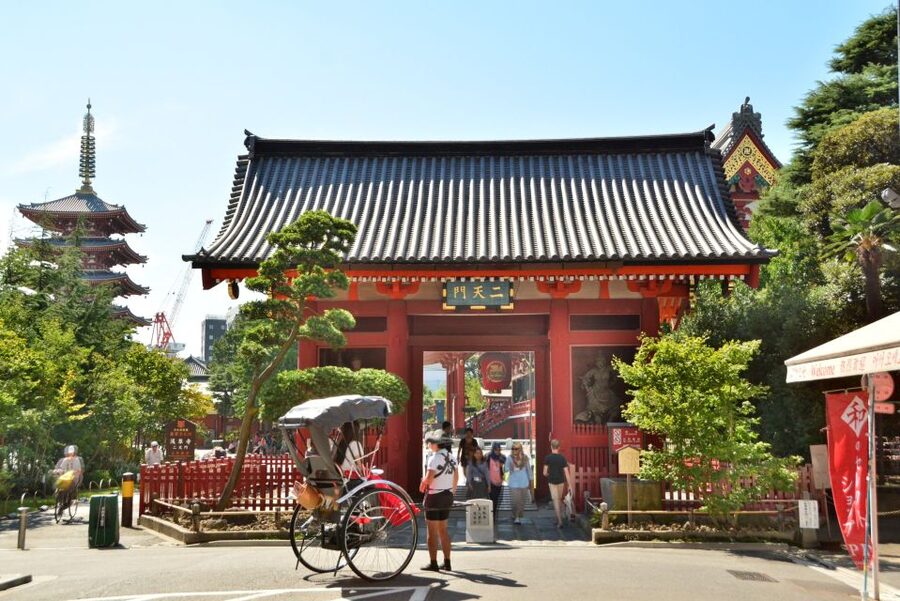
The guides receive the most consistent praise, and that is important because the vehicle itself is simple. This is not a luxury ride. You sit in a compact open rickshaw while a local driver pulls you through the district.
Guides such as Shima have been praised for handling busy streets smoothly while explaining Asakusa in clear English. Masa has been singled out for taking beautiful pictures and keeping the ride fun. Kazu, Yusuke, Taku, Tashi, Taisei, Matcha, and others have also been praised for their humor, warmth, and interest in the people they are guiding.
English ability can vary by guide. Most of the feedback is strongly positive, but one rider wanted clearer English and more historical explanation. If detailed history is your priority, mention that when you meet your guide and ask questions during the ride.
The rickshaw is 74 centimeters wide. Two adults can ride in one, but some people may prefer individual vehicles for more room. The stated limit is two adults per rickshaw. Children five and under can ride free on an adult’s lap, with one child per adult. A five-year-old who needs a separate seat must pay the adult fare.
Comfort depends partly on the season and your tolerance for an open ride. Heated seats and blankets have been provided in cold conditions. In summer, the moving air helps, but the heat and humidity remain real factors. The activity is wheelchair and stroller friendly, though you should still confirm the arrangements for your particular equipment.
The tour is not recommended during the first 16 weeks of pregnancy and is listed as unsuitable for pregnant women. Selfie sticks are not allowed. These rules are easy to manage, but they are worth knowing before you arrive.
Is $35 a Good Value?
The starting price of about $35 per person is fair for a private guided ride, especially if two adults share a rickshaw and choose enough time to cover several areas. You are paying for transportation, a local guide, route planning, photo help, and a personal introduction to Asakusa.
The 30-minute option is less strong on value if you judge it only by minutes. It works as a short orientation, a family-friendly novelty, or a way to fill a gap in your schedule. A longer ride gives you more time for history, side streets, gardens, and the river, so I would choose at least 70 minutes if your schedule allows.
There are no snacks or drinks included. That is not a serious issue in Asakusa, where you can easily find food and refreshments before or after the ride, but budget for them separately.
A private group also changes the value calculation. You are not sharing the vehicle with strangers, and the guide can respond to your interests. For a family, a couple, or a solo visitor who wants personal attention, that can justify the cost. For a large group, the narrow vehicles and two-adult limit may make the total price higher.
Who Should Book This Asakusa Ride?
I would recommend it to first-time visitors who want context before exploring on their own. It is also a strong choice for families, since guides make an effort with children and can take photos without breaking up the group.
Solo visitors should not dismiss it. One solo rider found the 30-minute option worthwhile, and a private ride lets you ask questions at your own pace. Couples can also treat it as a relaxed introduction before visiting temples and shops on foot.
This may not suit you if you want a strenuous walking tour, a deep architectural lecture, or a completely quiet ride. The experience depends on the guide’s personality, and the open rickshaw can feel exposed in very hot, cold, or wet weather.
For the best result, book enough time, arrive at the correct Ginza Line station exit, and tell the guide what you care about. Ask for temples and rituals if you want cultural detail. Ask for gardens and side streets if you prefer quieter scenes. Mention children’s interests, shopping, or anime if those will keep your group engaged.
Should You Book It?
Yes, I would book this tour if you want a friendly, efficient introduction to old Tokyo. The combination of temples, shrines, river views, gardens, entertainment streets, and personal guiding gives you much more than a novelty ride.
Choose 30 minutes only for a quick taste. For most people, 70 to 120 minutes offers the best balance of time and value. Pick the three-hour option if you want a customized route and the memorial gift.
At about $35 per person, this is not the cheapest activity in Tokyo. But the private setting, photo stops, local explanations, and access to several sides of Asakusa make it a sensible splurge, especially at the start of your visit.
FAQ
Where does the Asakusa rickshaw tour meet?
It meets at the rickshaw stand just outside Exit 1 of Asakusa Station on the Tokyo Metro Ginza Line. You still need to walk a few meters from the exit to reach the stand.
How long does the tour last?
Available options range from 30 to 190 minutes. Check the specific starting time and duration when choosing your option.
How many people can ride in one rickshaw?
A maximum of two adults can ride in one rickshaw. Each vehicle is 74 centimeters wide, so some passengers may prefer separate rickshaws.
Can young children ride for free?
Children five and under can ride free when sitting on an adult’s lap, with one child per adult. A five-year-old who needs a separate seat must book and pay as an adult.
Is the activity wheelchair and stroller accessible?
The activity is listed as wheelchair and stroller friendly. You should still confirm the arrangements for your particular wheelchair or stroller when booking.
What languages do the guides speak?
Guides provide the tour in English or Japanese. English ability and the amount of historical explanation can vary, so tell your guide what kind of information you want.
More Tuk Tuk City Tours around Japan
- Asakusa, Tokyo: Rickshaw Experience and Highlights Walking tour
★ 5.0 · 47 reviews - [30 minutes] Rickshaw tour around Asakusa [History, sightseeing, Tokyo Skytree]
★ 5.0 · 38 reviews - Tokyo: Asakusa Highlights Walking (OP : Rickshaw Experience)
★ 3.5 · 4 reviews - Otaru: Private Otaru Sightseeing Tour by Rickshaw
★ 5.0 · 4 reviews
Just added around Japan
- Sushi Making Tokyo with Traditional Rickshaw Ride Tour in Asakusa★ 5.0 · 12 reviews
- Exiting Rickshaw ride and Kimono experience★ 5.0 · 4 reviews
- Hot Spring Capital of Yufuin Rickshaw Tour★ 5.0 · 32 reviews
- Kyoto Sagano Insider: Rickshaw and Walking Tour★ 5.0 · 15 reviews
- Private 3-hour Kyoto Arashiyama Rickshaw Tour★ 5.0 · 5 reviews
- Kurashiki Rickshaw Tour★ 5.0 · 39 reviews
- Kamakura Heritage Bike or Walk Tour with ex-Rickshaw guide★ 5.0 · 11 reviews
- Rickshaw Tour of Kagoshima’s Historical and Cultural Sites★ 5.0 · 4 reviews
Rickshaw Tours, compared.

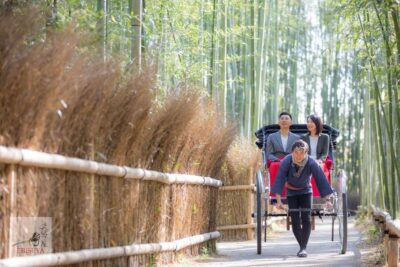
Arashiyama Customized Rickshaw Tour & Bamboo Forest
Read our review →
Split by Private Electric Rickshaw – Palace & Hidden Gems
Read our review →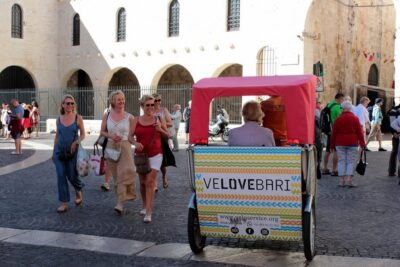
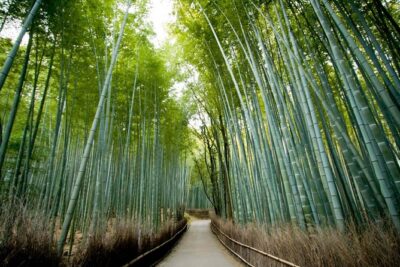
Kyoto Arashiyama Rickshaw Tour with Bamboo Forest
Read our review →Browse the lists this tour appears in