
Review · JAPAN
Kamakura Heritage Bike or Walk Tour with ex-Rickshaw guide
Kamakura rewards slow looking. This private four-hour tour links the Great Buddha, samurai-era shrines, quiet temple grounds, and the coast with guide Ichi, a former rickshaw driver who knows these streets well. I like the choice of bike or walking, and I like that the route includes both famous sights and quieter stops. The main drawback is the price, $150.24 per person, which makes the tour a better fit for couples or small groups who value personal guiding.
The tour also has a practical advantage: Ichi takes photos throughout the outing, so you can focus on the sights instead of constantly reaching for your phone. The route covers a lot of Kamakura, especially by bicycle, but the day depends on good weather and may feel full if you prefer long, unhurried visits at each temple.
Key points to know before you go
- Former rickshaw guide: Ichi brings five years of experience guiding visitors through Kamakura’s streets and landmarks.
- Bike or walking format: You can choose a bicycle tour or explore on foot, with some flexibility during the four-hour period.
- Six major sights: The route includes the Great Buddha, Tsurugaoka Hachimangu, Hokokuji, Hasedera, Egara Tenjin Shrine, and the graves of Minamoto no Sanetomo and Hojo Masako.
- Bamboo and matcha stop: Hokokuji includes an optional green tea break for 500 yen, about $3.
- Private experience: Only your group takes part, making it easier to ask questions and adjust the pace.
- Weather matters: The tour requires good weather. If conditions are poor, you can accept another date or receive a full refund.
Why a private Kamakura tour can make sense
Kamakura is easy to visit from Tokyo, but it is not always easy to understand. The main sights are spread across several areas, and the story of the Kamakura shogunate can blur together if you simply move from one temple gate to the next.
That is where a local guide earns the fee. Ichi explains how the city became the seat of Japan’s first warrior government and connects that past to the shrines, graves, temples, and streets you see today. Several accounts praise his ability to explain complicated Japanese history in clear English, without turning the outing into a lecture.
A private tour also lets you ask the questions that often go unasked on a large group excursion. You can pause over a custom, ask about a statue, or request more time at a favorite stop. The schedule is still fairly packed, but it is not a one-size-fits-all group outing.
The experience costs $150.24 per person. That is a serious price for four hours, especially if you are traveling alone. For two or more people, the value improves because you are paying for a private guide, entrance fees to the Great Buddha and Hokokuji, local route planning, and photos. Lunch and the optional tea are extra.
I would not choose this tour mainly to save money. I would choose it to make one half-day in Kamakura count, especially if this is your first visit or you want historical context rather than a simple checklist of sights.
More Rickshaw Tours in Japan
- Tokyo Asakusa Rickshaw Tour
★ 5.0 · 1,375 reviews - Kyoto: Arashiyama Customized Rickshaw Tour & Bamboo Forest
★ 5.0 · 432 reviews - Kyoto Arashiyama Rickshaw Tour with Bamboo Forest
★ 5.0 · 354 reviews
Starting at Kamakura Station
The meeting point is outside Kamakura Station at 1-chome-1-15 Onarimachi. This is a practical starting place because the tour can move toward several parts of town from there, and the activity ends back at the same meeting point.
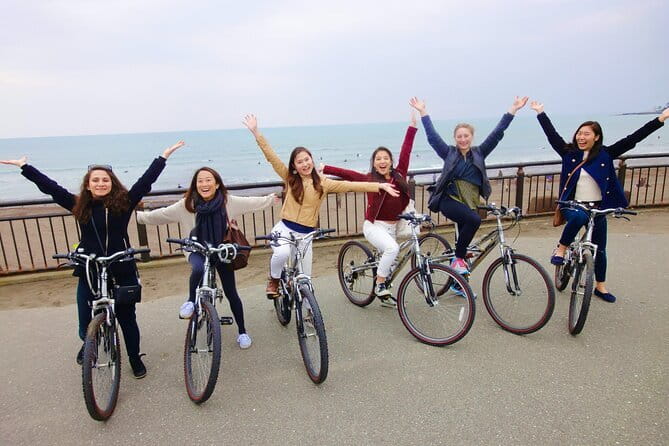
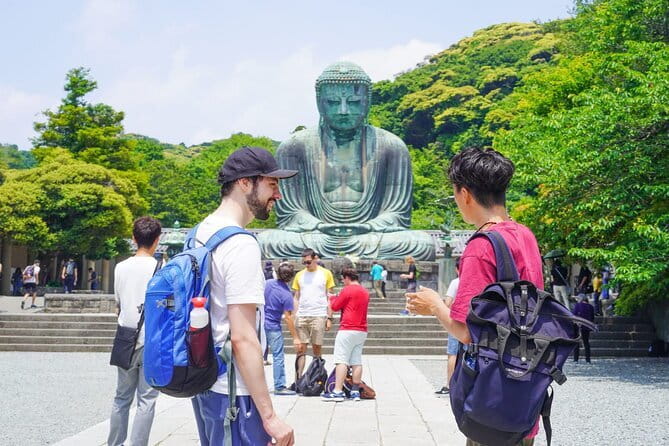
Your first decision is how you want to travel. The walking version suits you if you prefer temple paths, slower conversation, and a relaxed pace. The bike version covers more ground and makes it easier to connect central Kamakura with the Great Buddha and Hase area.
The bicycle option received the strongest praise in the available accounts. One person described it as a fun way to cover all the main sights and appreciated the use of electric bikes. That detail matters, since Kamakura’s route includes enough distance that a pedal-assist bike can make the day more comfortable.
The tour is not recommended for children under 13 who cannot ride an adult-sized bicycle. If someone in your group is not comfortable on a full-size bike, choose the walking format or confirm the arrangements before booking.
The Great Buddha at Kotoku-in
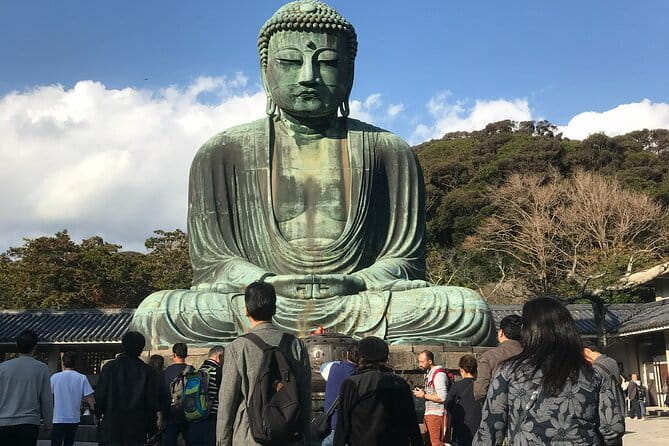
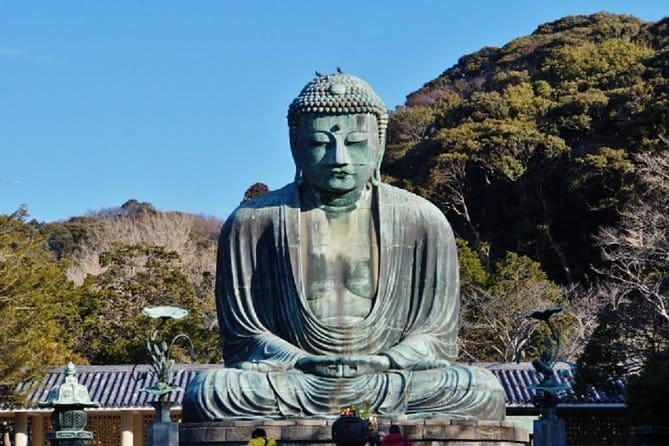
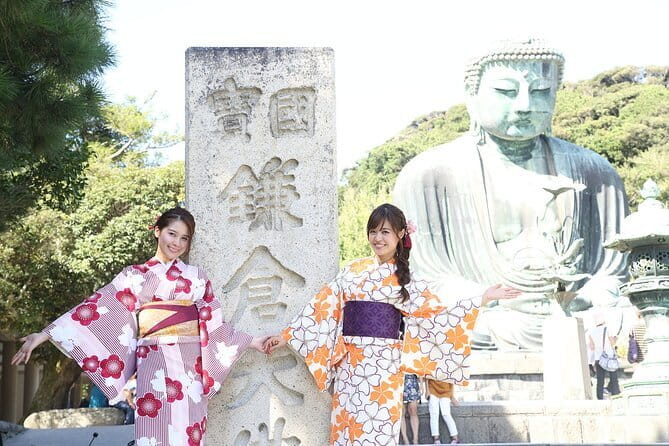
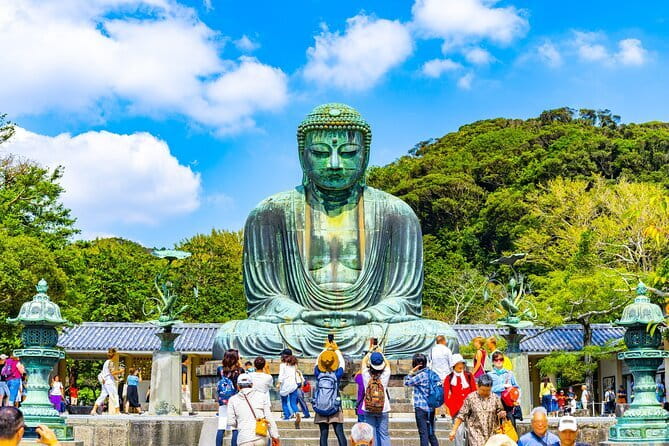
The Great Buddha of Kamakura is the visual centerpiece of the outing. At Kotoku-in Temple, you get to see the huge bronze statue up close and hear why it became one of Kamakura’s best-known symbols.
The scheduled visit is about 30 minutes, and admission is included. That is enough time for the main view, photographs, and an explanation of the statue’s place in Kamakura’s religious and political story.
This stop can be busy, especially around the most popular photo angles. A guide helps you do more than take a quick picture and move on. Ichi’s background guiding by rickshaw is useful here because he has spent years showing people how to experience the area efficiently.
Keep your expectations realistic. Thirty minutes is a good introduction, not a long meditation session. If the Great Buddha is your main reason for coming to Kamakura, you may want a separate visit with more time. On this tour, the value comes from placing it within a larger route.
Tsurugaoka Hachimangu and the samurai story
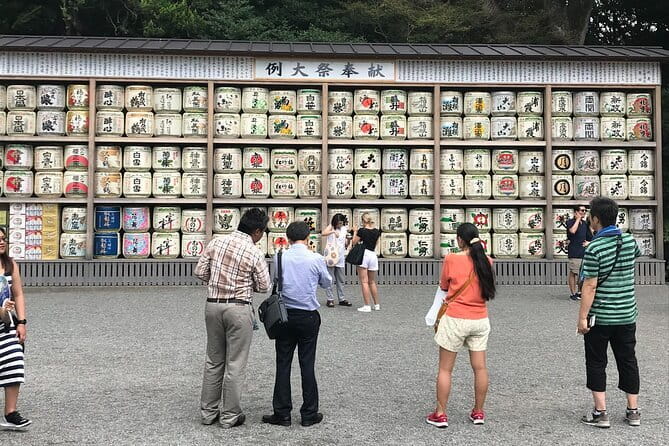
Tsurugaoka Hachimangu is the spiritual center of Kamakura and one of the most important stops for understanding the city’s warrior past. The shrine is dedicated to a god associated with war and the samurai, so it gives the tour a strong link to the Kamakura shogunate.
You have about 30 minutes here. That allows time to walk through the grounds, look at the architecture, and hear how the shrine relates to the rise of the military government. Ichi is particularly praised for explaining the role of the bakufu, the warrior government that began in Kamakura, in a concise and interesting way.
The shrine can feel more formal and grand than the smaller temple stops later in the day. That contrast is useful. You see the public, ceremonial side of Kamakura before moving toward quiet lanes, graves, and garden spaces.
If you arrive at the shrine on your own, it is easy to see the main approach without grasping why this place matters. The guide turns the setting into part of the story rather than just another attractive stop.
More rickshaw tours around Japan:
- Kyoto Rickshaw Tour
★ 5.0 · 210 reviews - Tokyo: Asakusa Sightseeing Tour by Rickshaw
★ 4.9 · 195 reviews - Kyoto: Private Rickshaw Tour of Gion and Higashiyama Area
★ 5.0 · 144 reviews - Otaru Rickshaw Tour
★ 5.0 · 76 reviews
The graves of Minamoto no Sanetomo and Hojo Masako
The stop at the graves of Minamoto no Sanetomo and Hojo Masako lasts about 10 minutes. It is brief, but it adds a human edge to the political story.
Minamoto no Sanetomo was the third shogun of the Kamakura shogunate. His grave points to the unstable family politics and power struggles that shaped the era. Hojo Masako is another central figure in Kamakura’s early government, and her connection to the shogunate helps you see that the period was not only about famous male warriors.
Do not expect a large monument or long visit. This is a quiet historical pause, best appreciated with a guide who can explain why the people connected to the site mattered. Without that context, you might pass through quickly and miss the point.
For me, this is the kind of stop that justifies having a local guide. The major temples are easy to photograph. A modest grave requires someone to tell you why you should care.
Hokokuji’s bamboo grove and optional matcha
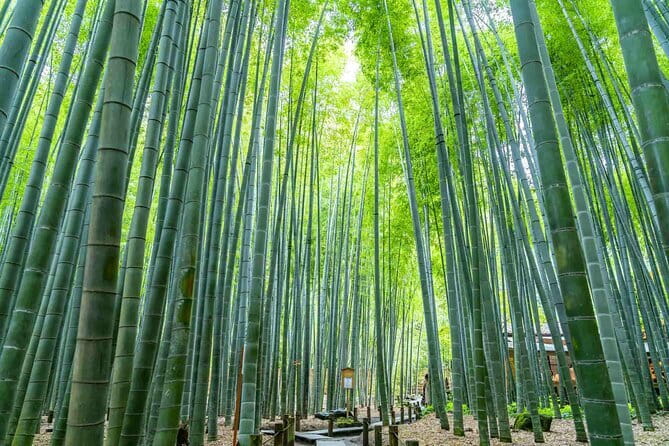
Hokokuji Temple brings a different mood. Its bamboo grove is calm, shaded, and compact, with a narrow path that makes the setting feel removed from the busier parts of Kamakura.
You get about 30 minutes here, and entry is included. The optional matcha costs 500 yen, about $3, at a temple cafe. I would add it if you enjoy Japanese tea and want to sit for a few minutes, but it is not part of the included price.
The bamboo grove is one of the tour’s most photogenic locations, so this is a natural place for Ichi to take pictures of you and your group. The photo service is not a separate professional shoot, but it can be a welcome touch. You get to look around instead of handing your phone back and forth.
Hokokuji is also a good example of the tour’s balance. The Great Buddha and Tsurugaoka Hachimangu are major names. Hokokuji feels more intimate and gives you a quieter temple experience.
The 30-minute schedule is enough for the grove and a quick tea, but not for a slow temple visit. If you want to linger over matcha, you may need to accept less time elsewhere.
Yuigahama Beach and the ride through Hase
The route includes Yuigahama Beach, where the city opens toward the Pacific. You can ride or walk along the seaside road and enjoy a change from temple grounds and wooded paths.
The beach is described as more active during summer. At other times, the stop may feel calmer, but the tour does not promise a long beach visit. Think of Yuigahama as a refreshing transition between Kamakura’s inland sights and the Hase area.
This section is especially useful on a bike. You can cover the seaside road without turning the beach into a separate transport problem. On foot, the same section will take more effort and may leave less time for the temples, so your guide’s pacing matters.
The beach stop also keeps the experience from becoming a string of religious sites. Kamakura is not only temples and shrines. Its coastal setting is part of the city’s appeal, and this route gives you a brief look at it.
Hasedera Temple and Kannon
Hasedera Temple, also called Hase Temple, is known for its gardens, coastal views, and a 9.18-meter wooden statue of Kannon, the Goddess of Mercy. The visit lasts about 20 minutes, and the itinerary notes admission as free for this tour.
This is another stop where the timing is tight. You can see the major features and hear the essential story, but you should not expect to explore every corner. The temple has enough to occupy a longer visit, particularly if you want to spend time with the gardens or views.
The large Kannon statue gives the stop a clear focus. Ichi can help explain why Kannon is important in Japanese Buddhism and how the statue fits the temple’s identity. The coastal outlook also gives you a different view of Kamakura after the enclosed bamboo and shrine spaces.
If you have already visited Hasedera, the tour still makes sense if you want to connect it to the rest of the city. If you have never been, you may later wish you had more than 20 minutes there. That is the tradeoff for seeing so much in one half-day.
Egara Tenjin Shrine and the quieter finish
Egara Tenjin Shrine is dedicated to Sugawara no Michizane, a deity associated with scholarship and learning. It is a peaceful final temple-style stop, with a quieter feel than the large shrine and Great Buddha earlier in the day.
The scheduled visit is about 10 minutes, and admission is included. Again, this is a short orientation rather than a full visit. You will have time to see the setting and learn who the shrine honors, but not to linger.
I like the inclusion of Egara Tenjin because it broadens the religious picture. Kamakura’s sites are not all devoted to the same figures or the same kind of worship. This stop gives you a simple introduction to a shrine connected with education and study.
The tour then returns to the Kamakura Station meeting point. Since the route includes central, eastern, western, and coastal areas, the return point is useful if you are continuing your own plans in town or heading back toward Tokyo.
Bike or walk: which choice fits you?
Choose the bike tour if you want to see more of Kamakura in four hours. It is the better option for connecting the Great Buddha, central shrines, Hokokuji, the beach, and Hase without spending as much time on foot.
The electric bikes mentioned in the feedback are a real advantage, though you should confirm availability when booking if that feature matters to you. A bike also makes the seaside section more enjoyable and gives the day a sense of movement rather than a series of short walks.
Choose walking if you care more about conversation and temple atmosphere than distance. Walking can make the quieter stops feel less rushed, but the route covers enough ground that you should be comfortable with a fairly active half-day.
The tour allows some schedule flexibility within the time available. That does not mean every stop can become a long visit. It means your guide can respond to your interests, weather, and pace better than a fixed group excursion.
Guide style, photos, and language
Ichi is the key reason to book this experience. He has five years of experience as a rickshaw driver guide in Kamakura and is described as friendly, funny, and strong in English.
The most praised feature is his storytelling. He explains Japanese history and customs in a way that works for both first-time visitors and people who already know something about Japan. One account specifically found the tour useful for a Japanese participant traveling with a friend from Australia, which suggests the explanations can bridge different levels of background knowledge.
The photo help is another practical bonus. More than 20 photos were taken for one group, and the experience is designed so you do not need to spend the entire outing managing a camera.
You should still ask questions and tell Ichi what interests you. If you want more time at gardens, less time at major monuments, or extra explanation of samurai politics, a private format gives you the best chance of shaping the experience.
Who should book this Kamakura experience?
This tour suits you best if you have one day in Kamakura and want a clear route through its major sights. It is also a strong choice for first-time visitors who want context, photos, and transport between areas without planning every turn.
It works well for couples, friends, and small private groups. The cost is easier to justify when divided among several people, and the private format lets everyone agree on the pace.
I would be more cautious if you are on a tight budget, want long visits at each temple, or dislike cycling. The price is not low, and the itinerary favors variety over depth. Families with young children should also pay close attention to the adult-sized bicycle requirement.
Book at least a little ahead if possible. The experience is booked an average of 44 days in advance, which suggests that popular dates can fill. Confirmation arrives within 48 hours, subject to availability.
Free cancellation is available up to 24 hours before the start time. Changes or cancellations inside that window are not refunded, and poor weather can lead to a different date or a full refund.
Should you book this tour?
Book it if you want a personal introduction to Kamakura, especially by electric bike, and value a guide who can connect famous sights with lesser-known historical details. Ichi’s former rickshaw work, clear English, storytelling, and photo help give the four-hour route more purpose than simply following a map.
Skip it if you want to spend half a day at only one or two temples, or if $150.24 per person feels too high for a private guide. For most first-time visitors who want to see a lot without losing the story behind it, this is a well-planned and useful way to meet Kamakura.
FAQ
How long does the Kamakura bike or walking tour last?
The experience lasts approximately four hours.
Where does the tour start and end?
It starts at Kamakura Station, at 1-chome-1-15 Onarimachi, Kamakura, Kanagawa 248-0012. It ends back at the same meeting point.
Is this a private tour?
Yes. Only your group participates in the activity.
Can I choose between biking and walking?
Yes. You can choose a bike tour or a walking tour, with some flexibility to adjust your schedule during the available tour time.
Are entrance fees included?
Admission to the Great Buddha at Kotoku-in and Hokokuji Temple is included. Lunch and optional green tea at Hokokuji are not included.
Is the tour suitable for children?
It is not recommended for children under 13 who cannot ride an adult-sized bicycle.
What happens if the weather is bad?
The experience requires good weather. If it is canceled because of poor weather, you can receive a full refund or choose a different date.
More History Rides around Japan
- [30 minutes] Rickshaw tour around Asakusa [History, sightseeing, Tokyo Skytree]
★ 5.0 · 38 reviews - Kamakura: Private History and Heritage Tour by Rickshaw
★ 4.9 · 7 reviews - Nara: Cultural Heritage Tour by Rickshaw
★ 5.0 · 5 reviews - Rickshaw Tour of Kagoshima’s Historical and Cultural Sites
★ 5.0 · 4 reviews
More Cycling Tours in Japan
- Penang George Town All-In-One Heritage Tour By Bicycle & Trishaw (Metro Bike)
★ 5.0 · 168 reviews - Paris: 2 hours Emily Tour in a Private Rickshaw bike
★ 4.7 · 38 reviews - Half-Day Food Tour with Cycle Rickshaw ride to Masterji Kee Haveli
★ 5.0 · 31 reviews - Paris : Private guided tour in Rickshaw bike – Napoléon
★ 4.5 · 23 reviews
Just added around Japan
- Sushi Making Tokyo with Traditional Rickshaw Ride Tour in Asakusa★ 5.0 · 12 reviews
- Exiting Rickshaw ride and Kimono experience★ 5.0 · 4 reviews
- Hot Spring Capital of Yufuin Rickshaw Tour★ 5.0 · 32 reviews
- Kyoto Sagano Insider: Rickshaw and Walking Tour★ 5.0 · 15 reviews
- Private 3-hour Kyoto Arashiyama Rickshaw Tour★ 5.0 · 5 reviews
- Kurashiki Rickshaw Tour★ 5.0 · 39 reviews
- Rickshaw Tour of Kagoshima’s Historical and Cultural Sites★ 5.0 · 4 reviews
- Kamakura Rickshaw Tour★ 5.0 · 53 reviews
Rickshaw Tours, compared.
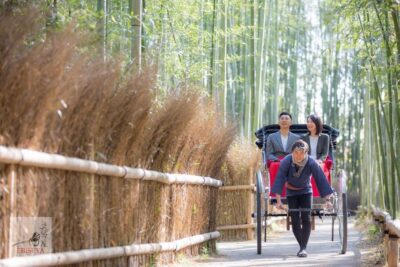
Arashiyama Customized Rickshaw Tour & Bamboo Forest
Read our review →
Split by Private Electric Rickshaw – Palace & Hidden Gems
Read our review →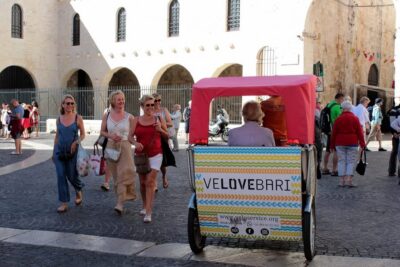
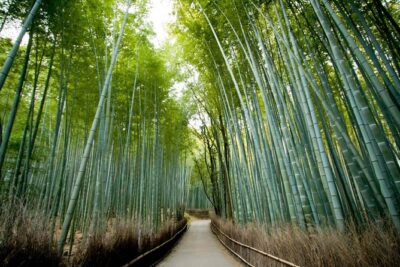
Kyoto Arashiyama Rickshaw Tour with Bamboo Forest
Read our review →Browse the lists this tour appears in