
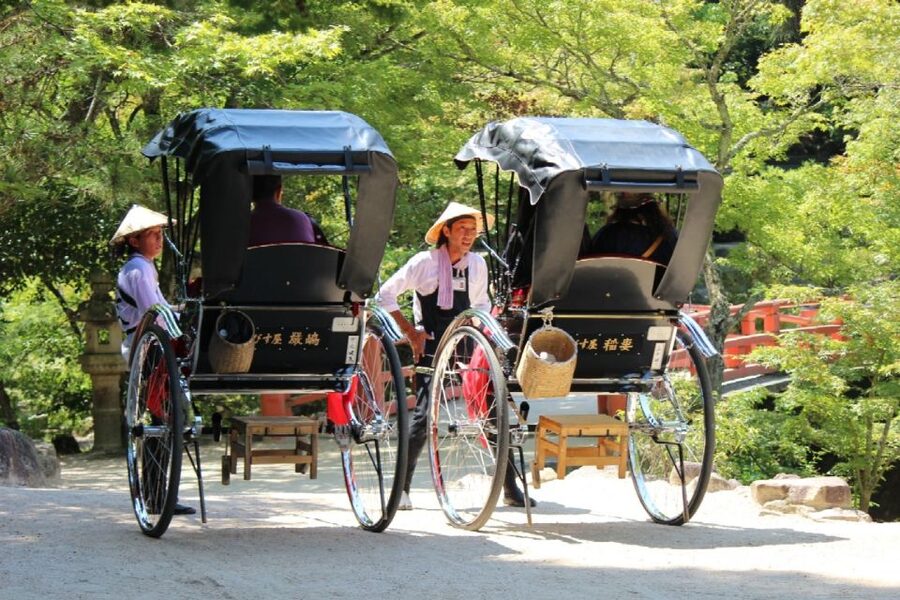
Review · JAPAN
Miyajima: Private Rickshaw Tour to Itsukushima Shrine
Miyajima is best seen at a gentle pace. This private rickshaw ride gives you a fun way to reach the island’s key sights while your local guide explains the streets, shrines, customs, and views. I like the personal service and the chance to see more than the ferry-terminal area. I also like that you can choose a short outing or spend up to 190 minutes exploring. The main drawback is the snug seating, especially for two adults sharing one rickshaw.
The tour is a good match if you want help getting your bearings quickly. Guides such as Kim, Jose, Shinemasa, and other local drivers have earned praise for friendly storytelling, photo help, and adapting their explanations with translation tools when needed. Just remember that the tour is provided in Japanese, and admission fees are separate.
Key details before you book
- The 70-minute option reaches Daishoin Temple, a 1,200-year-old temple known locally as a power spot, with broad views over Miyajima.
- The 130-minute option adds Senjokaku Shrine, built on the order of Toyotomi Hideyoshi, with a 100-yen entry fee.
- The 190-minute ride adds scenic routes, passing through parks and along the seaside, with time for a more relaxed, customized visit.
- The Itsukushima Shrine torii is best viewed at high tide, when the large orange gate appears to float offshore.
- Each rickshaw holds up to two adults, but the 74-centimeter-wide seat can feel tight for some couples.
- The meeting point is just outside Miyajima Ferry Terminal, making the tour easy to find after crossing from the mainland.
Starting beside Miyajima Ferry Terminal
Your guide meets you just outside the ferry terminal on Miyajima Island at the scheduled time. After booking, you receive a map and photograph showing the meeting place, which matters because the terminal area can feel busy when ferry passengers arrive together.
Once you find your driver, you settle into the rickshaw and begin along Miyajima’s streets. This is not a large group outing. You have a private guide, and the route can be adjusted around your interests and preferred endpoint.
That private format makes the ride useful right away. Instead of trying to work out the island’s layout while following a map, you can ask about the buildings, local customs, shrine traditions, and the best places for photographs. Guides have also been praised for their humor and warmth, with one guide using Google Translate when English explanations became difficult.
The live guide is Japanese-speaking, so you should not book this expecting a fully fluent English tour. Communication may be helped by translation tools and simple explanations. Still, the direct contact with a local driver is part of the appeal, especially if you enjoy learning through conversation rather than reading signs alone.
More Rickshaw Tours in Japan
- Tokyo Asakusa Rickshaw Tour
★ 5.0 · 1,375 reviews - Kyoto: Arashiyama Customized Rickshaw Tour & Bamboo Forest
★ 5.0 · 432 reviews - Kyoto Arashiyama Rickshaw Tour with Bamboo Forest
★ 5.0 · 354 reviews
Townhouses, shopping streets, and the waterfront
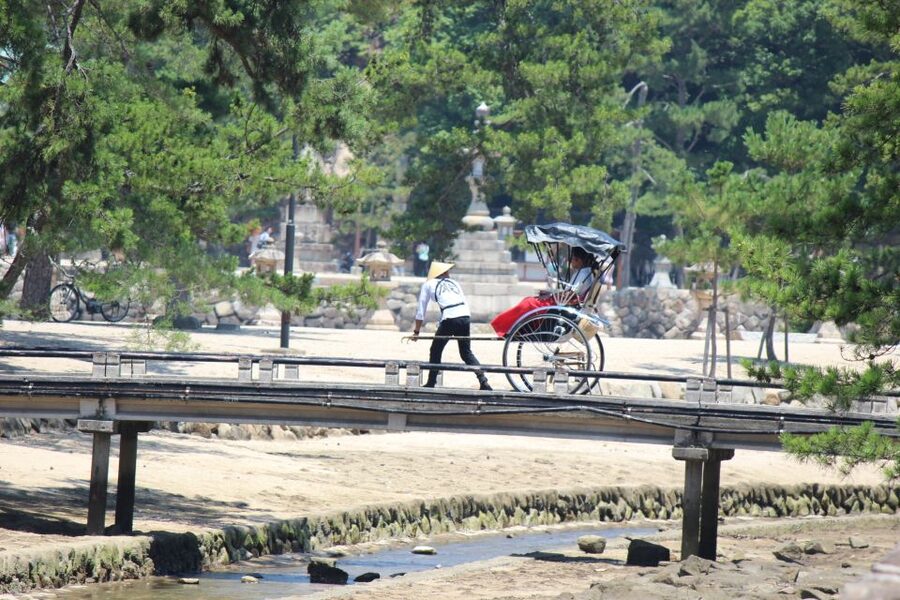
The first part of the ride takes you through the center of Miyajima. You pass traditional townhouses and the old-fashioned shopping arcade before continuing toward the waterfront.
This section helps you see Miyajima as more than a postcard shrine. The island has a working town, shops, homes, and narrow streets where a rickshaw is a practical way to move without rushing. You get a quick sense of how the tourist center fits around the older buildings and religious sites.
The shopping arcade is also a useful orientation point. If you plan to return later for food or souvenirs, your guide can help you recognize the main route. Food and drinks are not included, so any snacks or meals are your responsibility.
The rickshaw itself makes the trip feel special, but it is not a high-speed ride. The value comes from the open-air views, the guide’s commentary, and the ability to pause at selected sights. If your main goal is simply to travel from one end of the island to another, walking may cost less. If you want context and a private introduction, the ride earns its price more easily.
The orange torii at Itsukushima Shrine
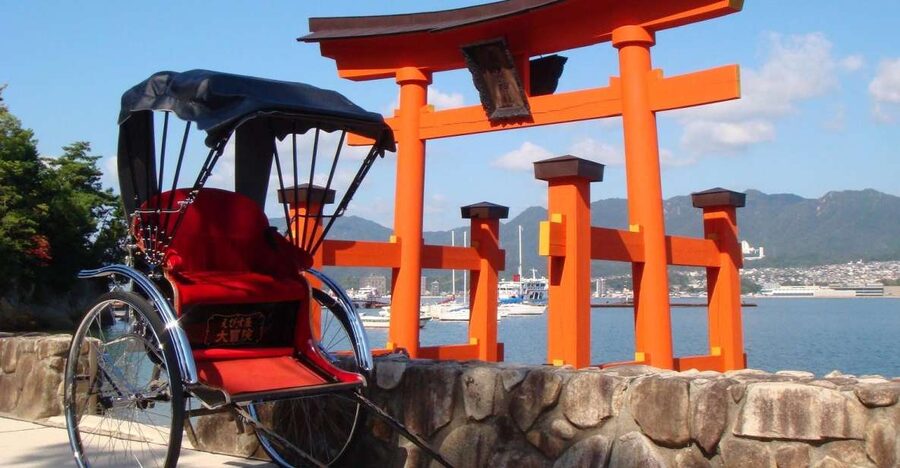
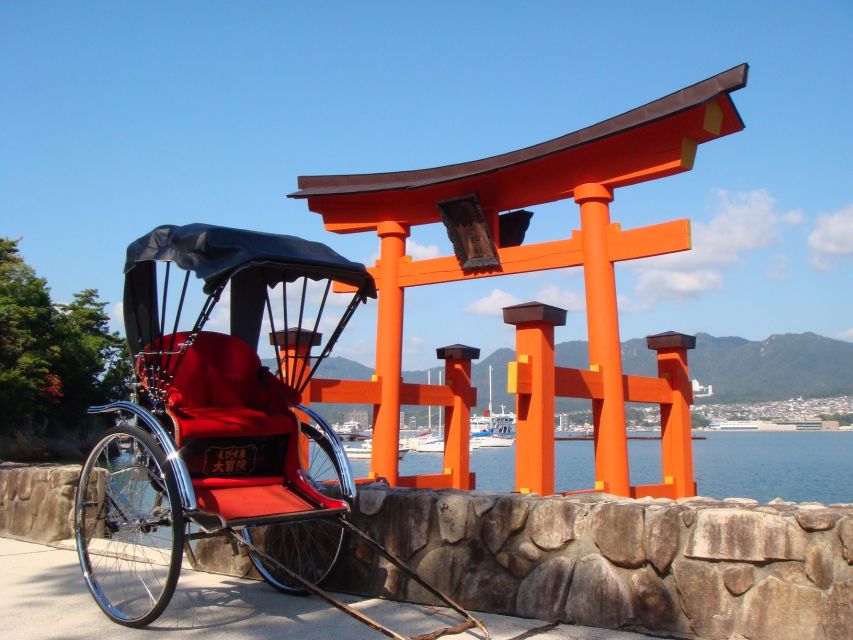
The waterfront brings you to Miyajima’s signature view: the large orange torii gate in the water in front of Itsukushima Shrine.
At high tide, the gate appears to float offshore. That is the classic image most people associate with Miyajima, and the rickshaw gives you a comfortable way to reach the viewing area without spending the first part of your visit finding it on foot.
Tide conditions matter. The gate does not look the same at every hour, so check the day’s tide times if this view is your main reason for booking. The tour description specifically highlights the floating appearance during high tide, but the schedule does not promise a particular tide level for your selected start time.
Your guide can also help with photographs. This came through strongly in the feedback about Kim, who was praised for taking excellent pictures while keeping the ride lively and informative. That small service can be valuable when you are traveling as a couple or family and want photographs with both people in the frame.
You should separate the outdoor torii view from temple admission. The tour includes the rickshaw and guide, but shrine and temple entry fees are not included.
Choosing the 70-minute ride to Daishoin Temple
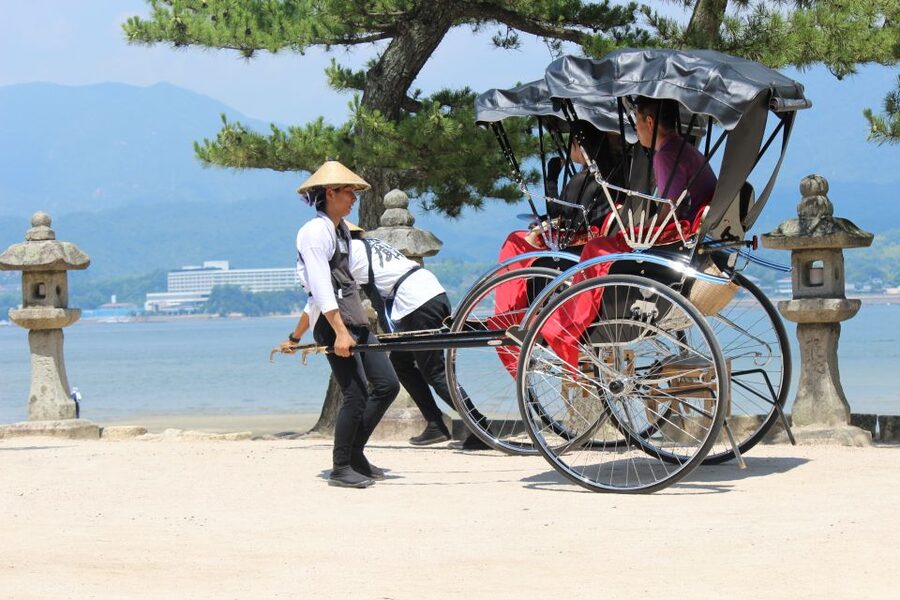
The 70-minute option adds Daishoin Temple, a religious site said to be about 1,200 years old. It is also described as a power spot, a place associated with renewed energy and good fortune.
The temple is not just another stop for a quick photograph. It gives the tour a stronger spiritual focus and provides a fine view over Miyajima. If you have limited time but want more than the torii gate, this is likely the best middle option.
The extra time also gives your guide room to explain the site rather than simply point it out. You can ask questions about the temple and its place in island life. The guide’s local knowledge is especially useful here because religious sites in Japan can be difficult to understand from architecture alone.
There is one practical point to keep in mind: the listing does not include temple admission fees. The supplied information gives a specific 100-yen fee for Senjokaku Shrine, but it does not state an admission price for Daishoin. Bring some yen for any entry charges you encounter.
More rickshaw tours around Japan:
- Kyoto Rickshaw Tour
★ 5.0 · 210 reviews - Tokyo: Asakusa Sightseeing Tour by Rickshaw
★ 4.9 · 195 reviews - Kyoto: Private Rickshaw Tour of Gion and Higashiyama Area
★ 5.0 · 144 reviews - Otaru Rickshaw Tour
★ 5.0 · 76 reviews
Adding Senjokaku Shrine on the 130-minute route
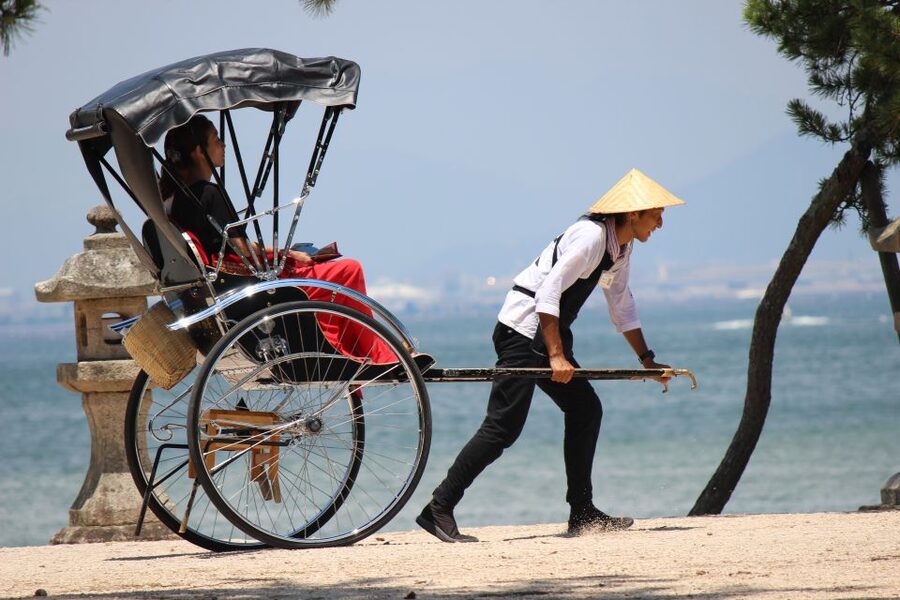
The 130-minute option includes Senjokaku Shrine. The building was ordered by Toyotomi Hideyoshi, a major figure in Japanese history, and the stop combines historical interest with sea views.
This longer route suits you if you want more time at religious sites and do not want to hurry back to the ferry terminal. You can listen to the guide’s explanation, look across the water, and take in the setting at a slower pace.
Entry to Senjokaku costs 100 yen and is not included. That is a small extra charge, but it is worth knowing before you arrive so the advertised tour price does not become your entire budget by accident.
The 130-minute outing may be a better choice than the 70-minute ride if you are visiting Miyajima only once. The shorter route gives you a taste of the island, while this option adds another important site and more time for questions and photographs.
Taking the 190-minute scenic route
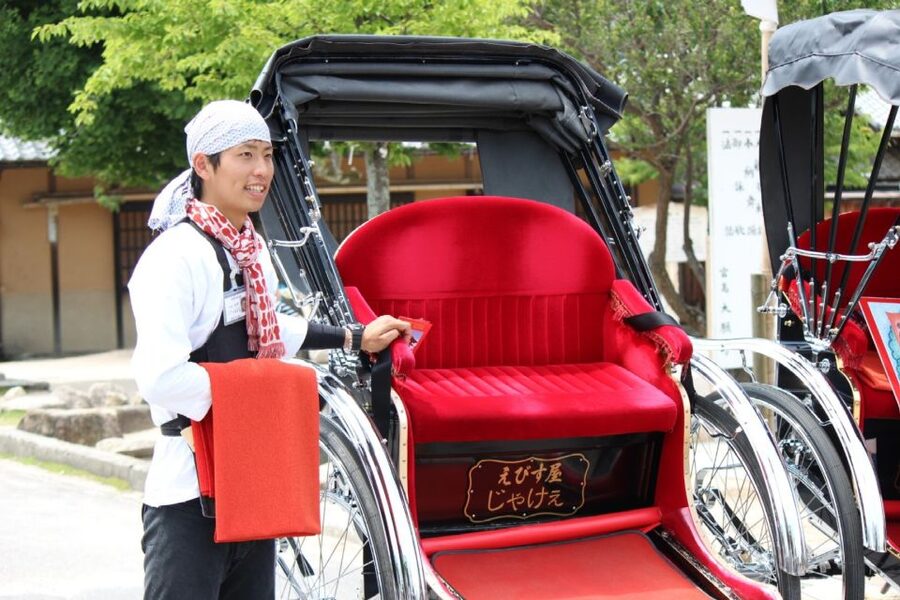
The longest option lasts 190 minutes and includes the temples and shrines from the shorter routes, along with scenic roads through parks and beside the sea.
This is the option for you if the ride itself matters as much as the individual sights. Rather than moving directly between major stops, you get more time for views, pauses, and the slower rhythm of island travel. The route can be customized around your interests, and you can choose your endpoint.
The extra time is also useful for anyone who dislikes compressed sightseeing. Miyajima can feel much more enjoyable when you are not watching the clock after every stop. A private driver can adjust the outing to your pace, although the exact changes depend on what the local partner can arrange.
At $51 per person, the longest version can offer solid value if two people share the ride and you want a guided introduction to several parts of the island. It is less attractive if you only want one photograph of the torii and plan to spend the rest of the day elsewhere.
How the private format affects the value
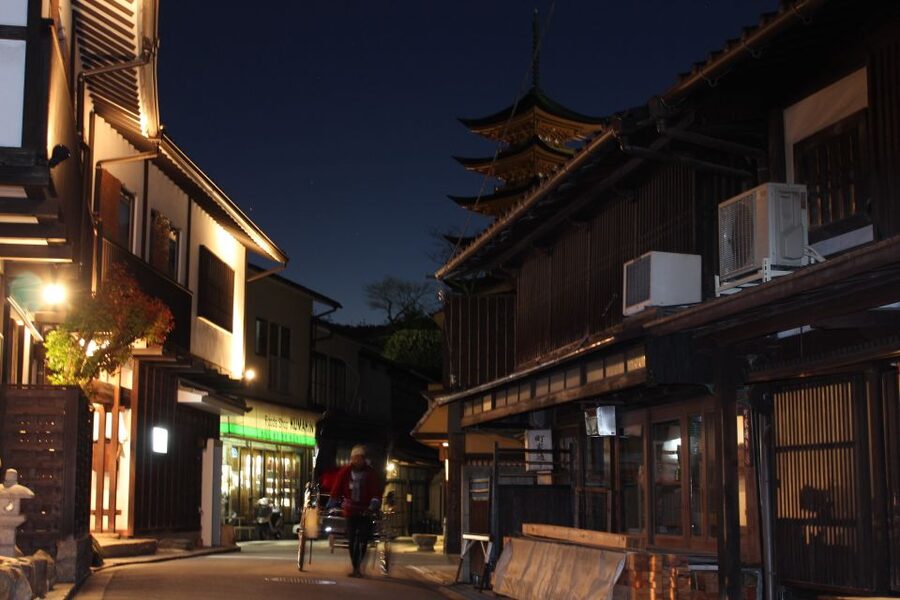
The advertised price is $51 per person, but the useful comparison is not simply rickshaw versus walking. You are paying for a private vehicle, a local driver, guiding, route planning, and a souvenir postcard and sticker.
For two adults, the cost buys a more personal experience than a standard group excursion. You can ask questions, request a preferred endpoint, and focus on the sights that interest you most. The guide can also help with photographs, which several positive comments singled out as part of the fun.
That said, the ride does not include food, drinks, or admission charges. You should budget separately for those items, particularly the 100-yen Senjokaku entry fee. If you are comfortable walking and enjoy researching sites on your own, you may find the tour expensive for transportation alone.
I see the best value for first-time visitors, couples, families with young children, and anyone who wants an easy overview before exploring independently. It is also useful if you have a short visit and do not want to spend precious time figuring out where to go.
Seating, children, and comfort
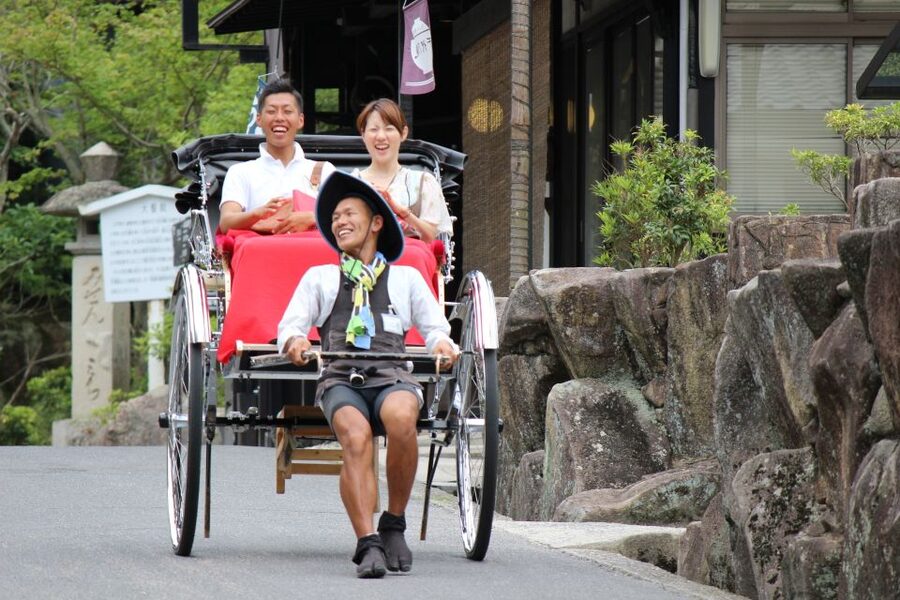
Each rickshaw has room for a maximum of two adults. The seat measures 74 centimeters, or about 29.1 inches, across. Two adults can sit side by side, but the space may feel close, particularly during the longer options.
If you prefer more room, booking separate rickshaws may be more comfortable. That choice increases the cost, so it is worth balancing personal space against your budget before booking.
Children six and under can ride free when seated on an adult’s lap, with one child per adult. The limit is two adults and two young children per rickshaw. A child six or older who uses one of the two seats must book as an adult.
The ride is not recommended for people with back problems or for pregnant women. The information also advises against the experience during the first 16 weeks of pregnancy. If either issue applies to you, choose a different way to see Miyajima.
Selfie sticks are not allowed. That may sound minor, but it is useful to know before you arrive, especially if you carry one as part of your usual sightseeing kit.
What the guide adds to the ride
The strongest part of this experience is the human element. A rickshaw can be a novelty, but the driver determines whether the outing feels like a useful tour or simply a short ride.
Kim was praised for enthusiasm, humor, island explanations, photographs, and comments about Japanese customs. Jose was described as friendly and engaging, with stories that made the local history easier to understand. Shinemasa was singled out for listening carefully and sharing lesser-known details about the island.
Those names also show that your experience depends on the guide assigned to you. The tour is conducted in Japanese, and English communication may vary. One guide handled difficult explanations with Google Translate, which suggests that patience and a willingness to use translation tools can help both sides.
I would book this for the chance to speak with a local driver, not for a formal lecture in polished English. If you want precise historical detail in your own language, you may need another type of tour. If you enjoy friendly conversation, photos, and a flexible route, the format has much more appeal.
Timing your visit to Miyajima
The available duration ranges from 45 to 190 minutes, so you can fit the ride around a wider day on the island. The shortest option works if you want a quick orientation and the main town and waterfront views.
The 70-minute ride gives you a meaningful stop at Daishoin. The 130-minute version adds Senjokaku, and the 190-minute outing allows scenic roads, park routes, seaside views, and a more relaxed pace.
Think about your ferry schedule before choosing. The meeting point is convenient, but you should leave enough time after the tour for your return crossing and any shopping or meals. The tour lets you select your endpoint, which may help with planning, but confirm your preferred finish with the local partner.
Miyajima’s deer are another small part of the experience. You may see them around the island and can greet them as you move through town and along the waterfront. They add charm, but they should not be the main reason to book, since the tour is built around the shrine, temples, views, and guide.
Should you book this Miyajima rickshaw tour?
Book it if you want a private, friendly introduction to Miyajima without handling the route yourself. The 70-minute option is a sensible choice for a short visit, while the 130-minute route gives you a fuller look at Daishoin and Senjokaku. Choose 190 minutes if you value scenic riding and a flexible pace as much as the major sights.
I would skip it if you prefer independent walking, need guaranteed English guiding, dislike close seating, or have a back problem. For everyone else, the combination of the floating torii view, local stories, temple stops, photographs, and flexible routing makes this a memorable way to get oriented on the island.
FAQ
Where does the Miyajima rickshaw tour meet?
Your guide waits just outside the Miyajima Ferry Terminal at the scheduled time. After booking, the local partner sends a map and photograph of the meeting point.
How long does the tour last?
Available options range from 45 to 190 minutes. The 70-minute option includes Daishoin Temple, the 130-minute option adds Senjokaku Shrine, and the 190-minute option also includes scenic routes through parks and beside the sea.
Is the rickshaw private?
Yes. The experience is for a private group, with a private rickshaw tour and local guide.
How many adults fit in one rickshaw?
A maximum of two adults can ride in one rickshaw. The seat is 74 centimeters wide, so some pairs may prefer separate rickshaws for added comfort.
Can young children ride for free?
Children six and under can ride free if they sit on an adult’s lap. There can be one child per adult, with a maximum of two adults and two children per rickshaw.
Is admission to Senjokaku Shrine included?
No. Entry to Senjokaku Shrine costs 100 yen and must be paid separately. Food, drinks, and other temple or shrine admission fees are also not included.
What language is the tour conducted in?
The live tour guide language is Japanese. Guides may use translation tools when needed, but the supplied tour information does not promise an English-language guide.
Is the tour suitable for pregnant women or people with back problems?
The tour is not recommended for people with back problems or for pregnant women. It is specifically not recommended during the first 16 weeks of pregnancy.
More Temple Tuk Tuk Tours around Japan
- Private Miyajima Rickshaw Tour Including Itsukushima Shrine
★ 5.0 · 32 reviews - Kyoto:Kiyomizu-dera Temple Rent a kimono and ride a rickshaw
★ 4.8 · 7 reviews - Bangkok by Night: Temples, Markets and Food Tuk-Tuk Tour
★ 5.0 · 3,752 reviews - Bangkok: Markets, Temples and Food Night Tour by Tuk Tuk
★ 4.9 · 2,371 reviews
Just added around Japan
- Sushi Making Tokyo with Traditional Rickshaw Ride Tour in Asakusa★ 5.0 · 12 reviews
- Exiting Rickshaw ride and Kimono experience★ 5.0 · 4 reviews
- Hot Spring Capital of Yufuin Rickshaw Tour★ 5.0 · 32 reviews
- Kyoto Sagano Insider: Rickshaw and Walking Tour★ 5.0 · 15 reviews
- Private 3-hour Kyoto Arashiyama Rickshaw Tour★ 5.0 · 5 reviews
- Kurashiki Rickshaw Tour★ 5.0 · 39 reviews
- Kamakura Heritage Bike or Walk Tour with ex-Rickshaw guide★ 5.0 · 11 reviews
- Rickshaw Tour of Kagoshima’s Historical and Cultural Sites★ 5.0 · 4 reviews
Rickshaw Tours, compared.

Arashiyama Customized Rickshaw Tour & Bamboo Forest
Read our review →
Split by Private Electric Rickshaw – Palace & Hidden Gems
Read our review →
Kyoto Arashiyama Rickshaw Tour with Bamboo Forest
Read our review →Browse the lists this tour appears in