
Review · JAPAN
Kyoto Sagano Insider: Rickshaw and Walking Tour
Arashiyama is best seen at street level. This private Kyoto tour pairs a rickshaw ride through the bamboo forest with a guided walk through old neighborhoods, giving you both a quick overview and time to notice small details. I like the private rickshaw, so you do not share your seat with strangers, and I like the chance to enter a traditional machiya house. The main drawback is the $228.62 price per person, which is a serious spend for just over three hours.
The guides add much of the value. Takumi, Atsu, Yoshii, Shota, Yuya, and others have been praised for clear explanations, friendly conversation, careful driving, and taking excellent photos with visitors’ cameras. The route also includes slopes, optional walking inside a part of the bamboo grove, and an admission fee for Otagi Nenbutsu-ji that is not included.
Key points to know before booking
- Private rickshaw seating: Your group gets its own rickshaw, with a seat 74 centimeters wide that can hold up to two adults side by side.
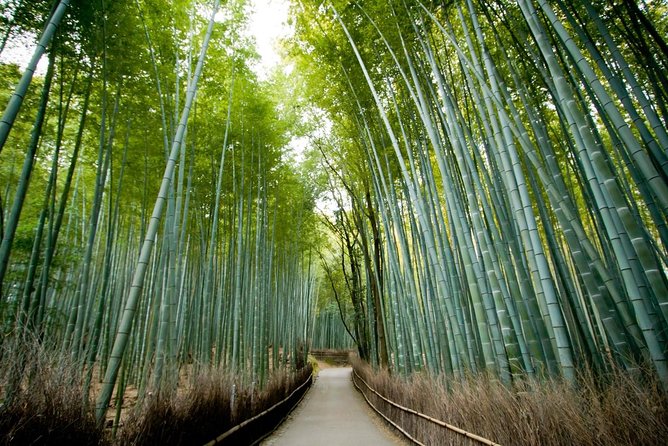
- Bamboo forest access: The rickshaw uses a route through the grove and stops for photos, while an optional short walk reaches a section that rickshaws cannot enter.
- Old Kyoto beyond the main path: You visit a traditional machiya house and pass preserved wooden homes, side streets, shrines, and an old pilgrim road.
- Otagi Nenbutsu-ji is extra: The quirky temple with handmade stone figures requires a separate admission payment.
- Three hours with a guide: The tour lasts about 3 hours and 10 minutes and returns to the original meeting point.
- Strong guide element: English and Japanese guides are fluent, while Chinese, Korean, and Spanish service may be available at a conversational level.
What you are really paying for in Arashiyama
The price is high for a short Kyoto activity, so it helps to understand what you are buying. This is not simply a ride from one point to another. You are paying for a private vehicle, a local driver-guide, photo stops, a planned route through several parts of Arashiyama, and help making sense of buildings and customs as you go.
At $228.62 per person, the tour makes the most financial sense for two people or a small family who value privacy and convenience. A shared ride might cost less elsewhere, but this experience keeps your party together and lets the guide adjust the pace and photo stops to you.
I would not choose it if your main goal is simply to reach the bamboo forest as cheaply as possible. You can visit parts of Arashiyama on foot, but you will not get the same combination of guided transport, local commentary, and access to a traditional home.
The high satisfaction attached to this experience is easy to understand. Guides such as Takumi and Atsu have been praised for mixing useful facts with easy conversation. Shota was also singled out for helping people stay comfortable in cold weather while taking photos, and Yoshii was praised for explaining the area in a friendly way.
More Rickshaw Tours in Japan
- Tokyo Asakusa Rickshaw Tour
★ 5.0 · 1,375 reviews - Kyoto: Arashiyama Customized Rickshaw Tour & Bamboo Forest
★ 5.0 · 432 reviews - Kyoto Arashiyama Rickshaw Tour with Bamboo Forest
★ 5.0 · 354 reviews
Starting beside Arashiyama’s famous sights
The meeting point is at 1-1 Sagatenryuji Susukinobabacho in Ukyo Ward. It is near public transportation and close to one of Arashiyama’s best-known sights, so you can plan this as part of a wider visit to the district.
Do not assume your selected starting time is final. The time is confirmed by email within 24 hours of booking, and bookings made within one day of departure are confirmed as soon as possible, depending on availability.
The tour ends back at the rickshaw stand. If you want to finish somewhere else, an extra drop-off fee may apply and is paid on the day. That detail matters if you are trying to connect directly with another Kyoto activity.
Riding through the Arashiyama Bamboo Forest
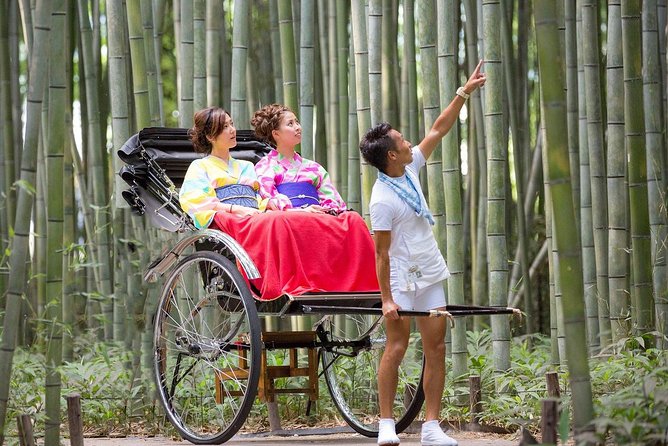
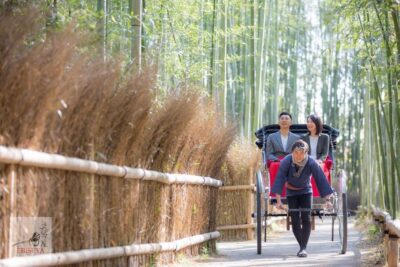
The rickshaw is the practical heart of the tour. Arashiyama’s bamboo paths can become crowded, and walking from one sight to another takes time. A rickshaw lets you cover more ground while your driver handles navigation and points out buildings and views along the route.
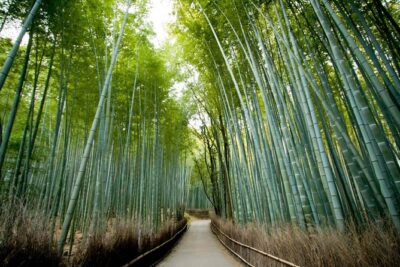
The bamboo ride is also a good answer to a common problem: the famous grove can feel brief if you only walk along its busiest section. Your driver stops for photographs, and the private setup means you can focus on your own group rather than trying to coordinate with strangers.
The photo stops are a major part of the appeal. Guides have been praised for taking good pictures with visitors’ phones and cameras, including posed shots with the rickshaw. If you are wearing a rented kimono, the setting is particularly photogenic, and the rickshaw gives the clothing a natural Kyoto backdrop.
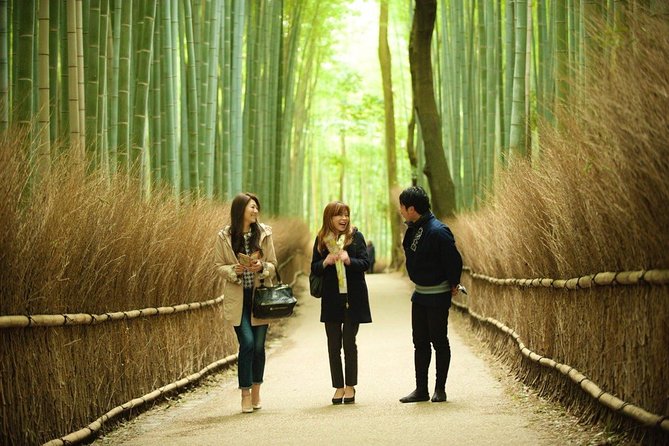
You should keep your expectations sensible. The rickshaw does not make the entire bamboo forest private or empty. It follows its permitted route, and the most popular paths can still have plenty of people on foot.
There is an optional section where you can get out and walk into a part of the bamboo grove that the rickshaw cannot reach. Tell the operator in advance if you want this included. It is a small but useful choice: you can keep the ride focused and easy, or add a short walk for a closer look at the grove.
Entering a Kyoto machiya house
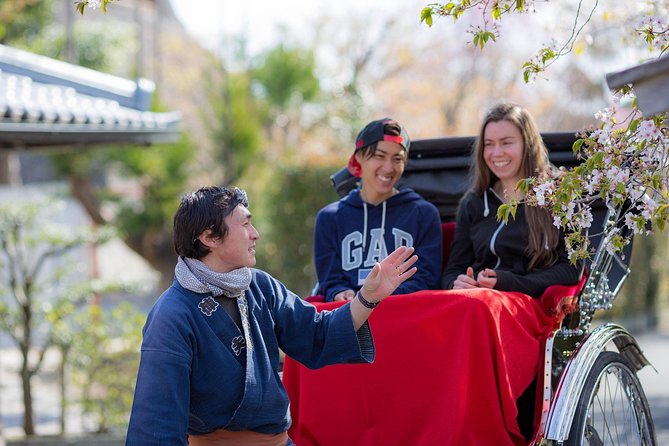
One of the best details is the visit inside a traditional Kyoto-style machiya at the Kyoto City Sagatoriimotocho Nami Preservation Hall. The stop lasts about 20 minutes and has no admission charge.
A machiya is a narrow traditional townhouse associated with Kyoto’s older streets. Seeing one from inside gives you more than a quick photograph of a wooden facade. Your guide can place the preserved building within the wider pattern of Kyoto neighborhoods, where homes, shops, lanes, and small work spaces once formed a close street community.
This stop also breaks up the rickshaw ride in a useful way. You are not sitting for the full three hours, and you get a chance to look carefully at a traditional interior rather than passing it from the road.
The visit is short, so do not expect a long architectural lecture or a full museum tour. Its value comes from context and access. You see how different the older residential fabric feels from central Kyoto’s modern streets.
More rickshaw tours around Japan:
- Kyoto Rickshaw Tour
★ 5.0 · 210 reviews - Tokyo: Asakusa Sightseeing Tour by Rickshaw
★ 4.9 · 195 reviews - Kyoto: Private Rickshaw Tour of Gion and Higashiyama Area
★ 5.0 · 144 reviews - Otaru Rickshaw Tour
★ 5.0 · 76 reviews
Otagi Nenbutsu-ji and its handmade figures
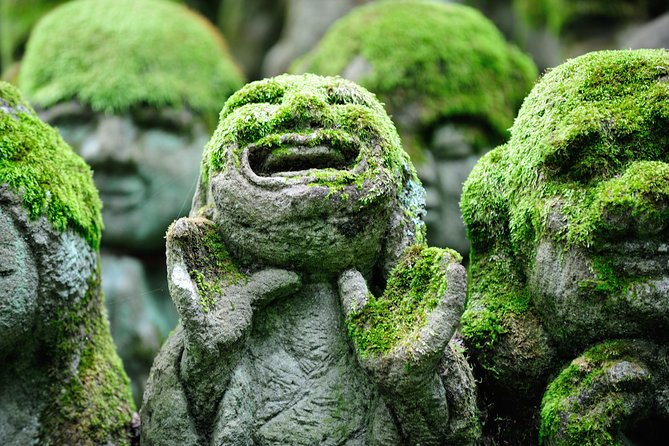
The tour continues to Otagi Nenbutsu-ji Temple, where you have about 30 minutes to enter and look around. Admission is not included, so bring money for the separate temple fee.
This is one of the most distinctive stops on the route. The temple is known for its large collection of handmade stone figures, each with a different expression and personality. The figures make the visit less formal than a standard temple stop, while still giving you a quiet place to learn about a different side of Kyoto’s religious art.
Thirty minutes is enough for a focused visit, though you may wish for more time if you enjoy photography or want to study the figures closely. If temple admission costs are already adding up during your Kyoto trip, remember to include this one when comparing the tour price.
The tour also passes an old cottage with a thatched roof, once the home of one of Japan’s famous haiku poets. The exact poet is not specified in the supplied details, but the stop adds a literary note to the route and shows how varied Arashiyama’s old buildings can be.
Shrines, side streets, and the old pilgrim road
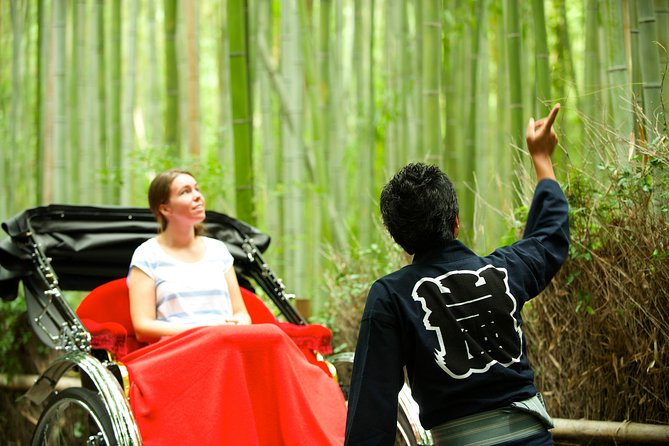
The most rewarding part of this experience may be the movement between major sights. You pass a Shinto shrine tucked into the bamboo, typical Arashiyama townhouses, residential lanes, and side streets that many first-time visitors miss when they stay only near the headline attractions.
The route also includes a preserved district with an old pilgrim road lined by wooden townhouses. This is the kind of setting where a guide earns their keep. Without local explanation, you might see an attractive row of buildings and move on. With commentary, you can better understand how people traveled, lived, and built along this older route.
I like that the tour does not treat Arashiyama as only a bamboo photo stop. The bamboo is the famous draw, but the townhouses and older road provide a stronger sense of place. You get a look at Arashiyama as a living district, not just a scenic backdrop.
The walking portions include going up and down a slope. Most people can participate, but this is not a completely flat sightseeing ride. Wear shoes you can walk in comfortably, especially if you plan to take the optional bamboo walk and explore Otagi Nenbutsu-ji.
The private seat, family rules, and comfort
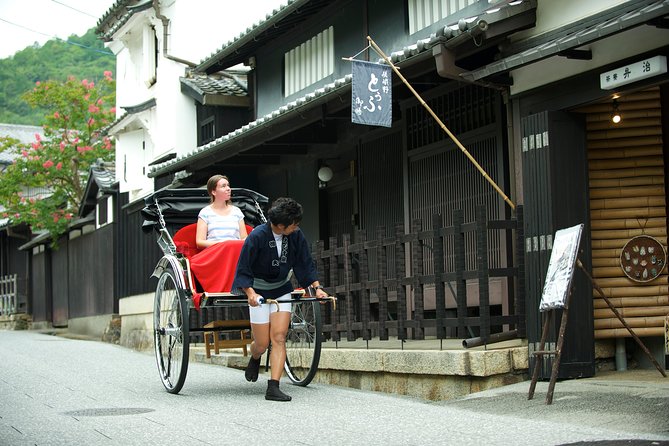
The rickshaw seat is 74 centimeters wide, or about 29.1 inches, and can hold up to two adults side by side. The private arrangement applies to your group, not to a single passenger automatically, so the actual number of rickshaws depends on the size of your party.
Children aged six and older need their own seat and pay the adult price. Children aged five and under can ride free on an adult’s lap, with one young child per adult. If a five-year-old uses one of the two seats instead of sitting on a lap, that child must be booked as an adult.
These rules are worth checking before you pay. A family may appear to fit into one rickshaw but still need additional seating under the operator’s policy. The seat width is also useful information for anyone concerned about comfort.
The tour is private, which is a clear advantage for families, couples, and small groups. You can talk directly with the guide, ask for a photo stop, and avoid trying to match your pace with another party.
Guide quality and photo help
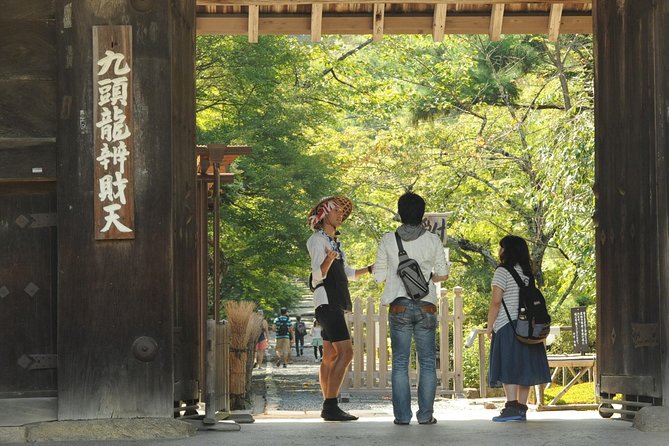
The driver-guide is central to the experience. A safe ride is essential, but the strongest part of the service is the added conversation about Kyoto’s buildings, temples, and local culture.
Takumi has been praised for speaking strong English while keeping the ride informative and warm. Atsu has been described as both a skilled driver and a patient photographer. Other guides, including Yappo, Aki, Yuya, Yoshii, and Shota, have also received praise for friendly service, local explanations, and thoughtful photo help.
Guide assignment is not guaranteed, and language availability varies. English and Japanese guides are fluent. Chinese, Korean, and Spanish guides may be available at a conversational level, so contact the operator if language is especially important to your group.
You should also bring your own phone or camera. The guides can take photos for you, but the supplied details do not indicate that a professional photo package or camera service is included.
How the timing works
The full experience lasts about 3 hours and 10 minutes. That is long enough to combine the ride, photo stops, the machiya visit, Otagi Nenbutsu-ji, and walking through the older streets without turning the day into a full-day commitment.
The pace will feel active rather than rushed. You ride for part of the route, get out at several points, walk through the bamboo if you choose, and visit a temple. If you have mobility concerns, note the slopes and uneven walking involved before booking.
Since the tour returns to its starting point, it is easy to plan around. You can leave larger sightseeing plans for before or after it, though you should allow extra time if you want to explore Arashiyama independently.
The tour does not include hotel pickup. Plan your own way to the meeting point, and make sure you allow enough time to arrive before the confirmed start.
Is the $228.62 price good value?
For a budget-conscious visitor, no. The price is a premium charge for a three-hour experience, and you still pay separately for temple admission. You also need to arrange your own transport to the starting point.
For a couple or small group wanting a private introduction to Arashiyama, the calculation looks better. You receive a dedicated rickshaw, a guide, several photo opportunities, access to a machiya house, and a route that includes more than the bamboo grove.
The strongest value comes if you are short on time, dislike navigating crowded sightseeing districts, or want photos of your group without asking strangers to take them. It is also a good choice if you want a local guide to explain what you are seeing rather than simply passing through.
I would skip it if you prefer slow, independent wandering or plan to spend a full day exploring every temple and lane at your own pace. A three-hour guided route gives you structure, but it also means less freedom to linger.
Who should book this Arashiyama experience?
This tour suits couples, families with older children, first-time Kyoto visitors, and anyone who wants an easy introduction to Arashiyama. It is especially useful for people wearing kimono, since the rickshaw and traditional streets create strong photo opportunities without requiring you to walk the entire route.
It also suits visitors who want a private experience. The guide can speak directly to your group, take photos, explain local sights, and help you see beyond the famous bamboo path.
You may want to choose another plan if you need a low-cost outing, dislike sitting in a narrow seat, or cannot comfortably manage slopes and walking. The tour is not fully effortless, even though the rickshaw reduces the amount of ground you need to cover on foot.
Cancellation is free up to 24 hours before the start time. Changes or cancellations within 24 hours are not accepted for a refund.
Should you book the Kyoto Sagano Insider tour?
Book it if you want a private, photo-friendly introduction to Arashiyama and are willing to pay for convenience, local guidance, and a route that reaches beyond the bamboo forest. The machiya visit, old pilgrim road, traditional homes, and Otagi Nenbutsu-ji give the tour more substance than a short rickshaw spin.
Skip it if $228.62 feels too steep or if you prefer to explore independently. For the right budget and occasion, though, this is a polished way to see several sides of Arashiyama in one outing, with a guide helping you notice what you might otherwise pass by.
FAQ
How long does the Kyoto Sagano Insider tour last?
The tour lasts approximately 3 hours and 10 minutes.
Where does the tour begin?
It begins at 1-1 Sagatenryuji Susukinobabacho, Ukyo Ward, Kyoto, 616-8385, Japan.
Where does the tour end?
The activity ends back at the rickshaw meeting point.
Is the rickshaw private?
Yes. This is a private activity, and only your group participates.
Can the rickshaw hold two adults?
Yes. The seat measures 74 centimeters, or about 29.1 inches, wide and can accommodate up to two adults side by side.
Can children ride for free?
Children aged five and under can ride free when sitting on an adult’s lap, with one child per adult. Children aged six and older require their own seat and pay the adult price.
Is walking included?
Yes. The experience includes walking through historic areas, and you can optionally get out to walk through a section of the bamboo grove that rickshaws cannot enter. The route also includes going up and down a slope.
Is admission to Otagi Nenbutsu-ji included?
No. Admission to Otagi Nenbutsu-ji is not included in the tour price.
Does the tour include hotel pickup?
No. Hotel pickup is not included. You must make your own way to the meeting point.
What languages are available?
English and Japanese guides are fluent. Chinese, Korean, and Spanish guides may be available at a conversational level, depending on availability.
More Tours on Foot around Japan
- Asakusa, Tokyo: Rickshaw Experience and Highlights Walking tour
★ 5.0 · 47 reviews - Kamakura Heritage Bike or Walk Tour with ex-Rickshaw guide
★ 5.0 · 11 reviews - Tokyo: Asakusa Highlights Walking (OP : Rickshaw Experience)
★ 3.5 · 4 reviews - Old Delhi Food, Heritage&Cultural Walk with Rickshaw ride to Masterji Kee Haveli
★ 5.0 · 742 reviews
Just added around Japan
- Sushi Making Tokyo with Traditional Rickshaw Ride Tour in Asakusa★ 5.0 · 12 reviews
- Exiting Rickshaw ride and Kimono experience★ 5.0 · 4 reviews
- Hot Spring Capital of Yufuin Rickshaw Tour★ 5.0 · 32 reviews
- Private 3-hour Kyoto Arashiyama Rickshaw Tour★ 5.0 · 5 reviews
- Kurashiki Rickshaw Tour★ 5.0 · 39 reviews
- Kamakura Heritage Bike or Walk Tour with ex-Rickshaw guide★ 5.0 · 11 reviews
- Rickshaw Tour of Kagoshima’s Historical and Cultural Sites★ 5.0 · 4 reviews
- Kamakura Rickshaw Tour★ 5.0 · 53 reviews
Rickshaw Tours, compared.
Arashiyama Customized Rickshaw Tour & Bamboo Forest
Read our review →
Split by Private Electric Rickshaw – Palace & Hidden Gems
Read our review →
Kyoto Arashiyama Rickshaw Tour with Bamboo Forest
Read our review →Browse the lists this tour appears in