
Review · JAPAN
Otaru Rickshaw Tour
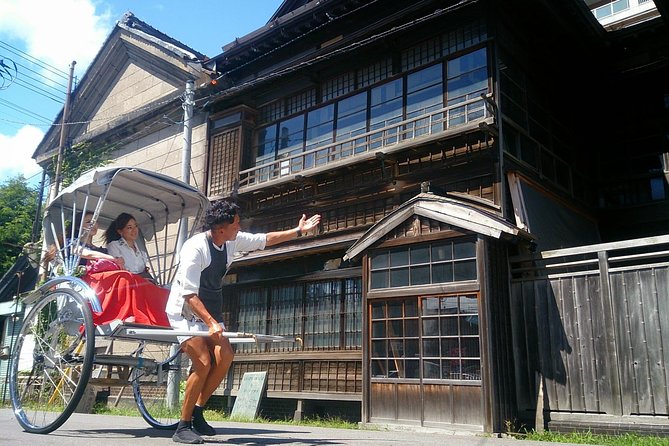
See Otaru at street level. This rickshaw ride links the canal, old rail tracks, warehouses, and marina in a compact tour led by a local driver-guide. I like the gentle pace and the chance to hear about Otaru while someone else handles the traffic and navigation. I also like the flexible length, from 30 minutes to two hours, which works well for a short port visit or a fuller look at the city.
The main drawback is space. A rickshaw is only 74 centimeters wide and fits two adults, but two larger passengers may be more comfortable booking separate vehicles. Your requested start time also needs confirmation by email, and an English-speaking guide is subject to availability.
Key points to know before booking
- The 90-minute ride gives you useful bearings: You see the canal district, historic buildings, rail tracks, side lanes, and marina before exploring on foot.
- Former Nippon Yusen Kaisha Otaru Branch is a featured stop: You can visit inside the old post office, though admission is not included.
- Guides add much of the value: Koto and Kuma received especially strong praise for their English, local information, humor, and photography skills.
- The ride is private: Only your own group participates, making it easier to ask questions and adjust the pace.
- Book separate rickshaws when needed: Two adults fit, but the narrow seat may not suit every pair comfortably.
- The meeting point is at Chuo Bridge: The ride ends back at the starting point unless you arrange another drop-off, which may cost extra.
Why a rickshaw works so well in Otaru
Otaru is easy to recognize from its canal, old warehouses, port setting, and northern weather. It is less easy to understand in a quick walk from the station. A rickshaw gives you a moving introduction to the city, with a guide pointing out what matters as you pass.
I like this format because it sits between a walking tour and a sightseeing vehicle. You are close enough to see details on the street, but you cover more ground than you would on foot. The elevated seat also gives you a clear view over the immediate street scene.
The ride has a distinctly Japanese character without turning into a staged show. You are using a traditional form of transport while moving through the everyday center of Otaru. That is a better fit for visitors who want an experience tied to the place, not just another vehicle tour.
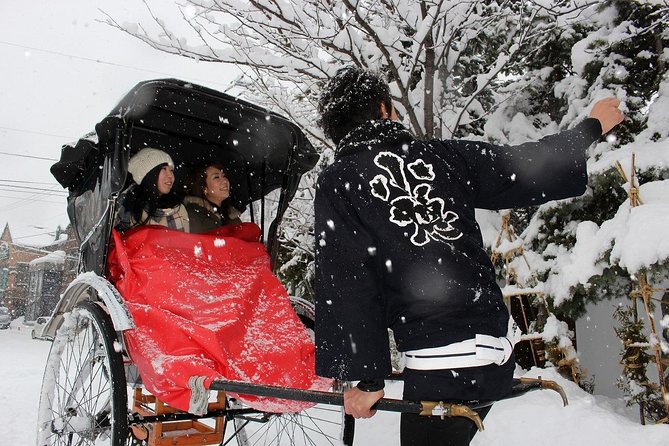
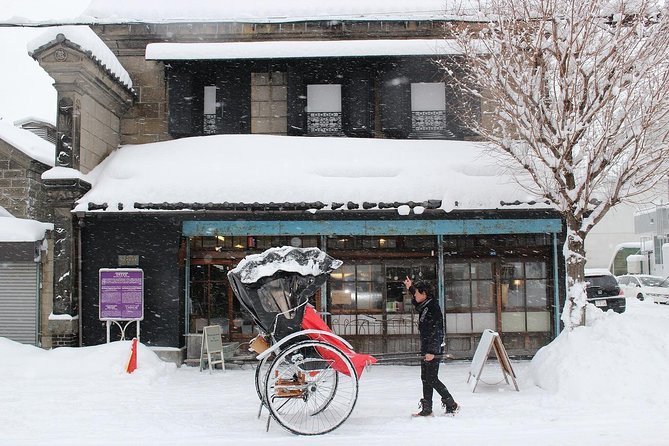
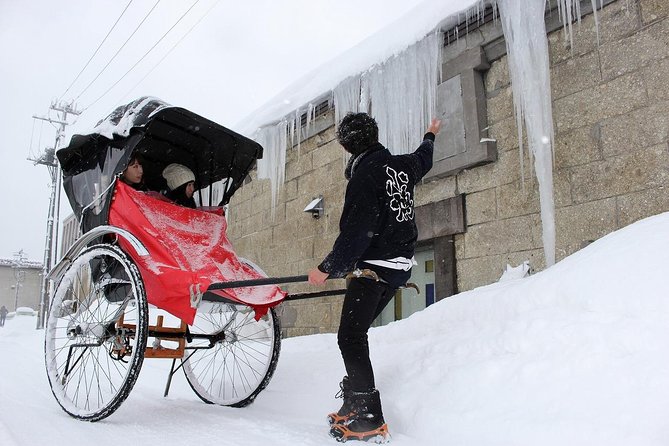
The setting changes with the season. Summer brings a sea breeze around the port and canal. Winter can cover Otaru in snow, giving the old warehouses and streets a very different appearance. The tour operates in all four seasons, so dress for the weather rather than assuming the ride will feel warm or sheltered.
More Rickshaw Tours in Japan
- Tokyo Asakusa Rickshaw Tour
★ 5.0 · 1,375 reviews - Kyoto: Arashiyama Customized Rickshaw Tour & Bamboo Forest
★ 5.0 · 432 reviews - Kyoto Arashiyama Rickshaw Tour with Bamboo Forest
★ 5.0 · 354 reviews
Starting at Chuo Bridge
The tour begins at Chuo Bridge in Otaru. This is a practical meeting point because the canal area is central to the route and close to public transportation. Still, give yourself time to find the exact stand, especially if you are arriving from a cruise ship or train.
A map and photo are provided with the meeting information, which should help you recognize the pickup spot. Your selected start time is not automatically final. The operator confirms it by email within 24 hours of booking, so check your messages before setting out.
The rickshaw is private for your group. That matters because you can ask the guide to explain a building, take a photo, or clarify the route without waiting for a large group. It also makes the ride feel more personal than a standard city transfer.
The driver-guide does the pulling and the talking, so you can simply watch Otaru unfold. Guides may speak several languages, but language availability depends on the day. If you need a particular language, ask at the departure point rather than assuming it will be provided.
The canal district and Otaru’s old trading face
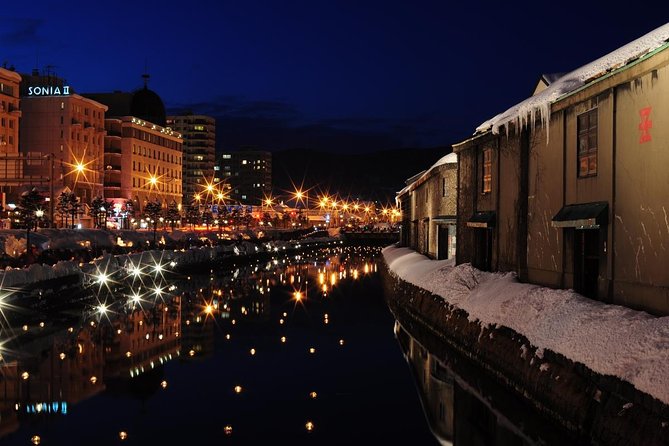
The canal is the natural center of this experience. Its stone edges, bridges, and old warehouse buildings show why Otaru became important as a port town. The route takes in the northern part of the canal and the most popular bridge, where you get a broad view along the water and the line of old warehouses.
That bridge is one of the best photo stops on the ride. From there, the canal stretches past the historic buildings, giving you the classic Otaru image without requiring a long walk. Your guide can also help frame photos, which is useful when you want both people and scenery in the picture.
The canal can be busy, particularly around the most familiar viewpoints. A rickshaw still gives you a better sense of how the area connects, but it does not remove crowds or traffic. Think of this part as an orientation and photo stop rather than a quiet private view.
The historic warehouses are not just pretty backdrops. They point to Otaru’s working past, when the canal and port supported trade and storage. The ride helps connect the buildings to that role, giving the waterfront more meaning than a quick snapshot would.
Inside the Former Nippon Yusen Kaisha Otaru Branch
A stop at the Former Nippon Yusen Kaisha Otaru Branch adds an indoor element to the ride. The tour includes a visit inside the old post office, with about 15 minutes set aside for the stop. Admission is not included, so plan for that extra cost if you want to enter.
This pause breaks up the outdoor ride and gives you a closer look at one of Otaru’s older commercial buildings. It also gives you a chance to stretch your legs, which is welcome on a rickshaw seat.
The stop is short. You will not have time for a long museum visit or a slow architectural study. Instead, treat it as a focused look at an important building along the route. If you have a strong interest in Otaru’s port-era architecture, the longer two-hour option may give you more breathing room elsewhere.
More rickshaw tours around Japan:
- Kyoto Rickshaw Tour
★ 5.0 · 210 reviews - Tokyo: Asakusa Sightseeing Tour by Rickshaw
★ 4.9 · 195 reviews - Kyoto: Private Rickshaw Tour of Gion and Higashiyama Area
★ 5.0 · 144 reviews - Kamakura Rickshaw Tour
★ 5.0 · 53 reviews
Old rail tracks and a small alley
The ride continues beyond the postcard view of the canal. You pass old rail tracks and turn into a small alley, two details that help show a quieter side of Otaru.
The rail tracks connect the port district with the city’s earlier transport network. They offer a change from the canal’s polished sightseeing route and remind you that Otaru was shaped by freight, ships, and movement.
The small alley is another useful change of pace. You may find fewer people there than beside the canal, and the narrower setting lets you see how the city’s older streets fit together. The guide’s explanation is important here because an alley or rail line can be easy to overlook when you explore alone.
This is one reason I favor at least an hour. A 30-minute ride can show you the central scenery, but the longer options allow the guide to include smaller details without rushing from one photo stop to the next.
A quick look at Otaru Marina
The route includes a short stroll through Otaru Marina. This is a useful counterpoint to the old canal warehouses because it shows the port as a living part of town, not only as a preserved historic district.
You get a sense of Otaru’s continuing connection with the sea and fishing. The marina stop is brief, so do not book this expecting a long waterfront walk. It is more of a final piece in the city picture, linking the older trading center with its working coastal identity.
The sea breeze can make this section feel cooler than the inland streets. In summer, that may be welcome. In winter, you will want a warm coat, gloves, and a hat, since the rickshaw leaves you exposed to the weather.
What the guides add to the ride
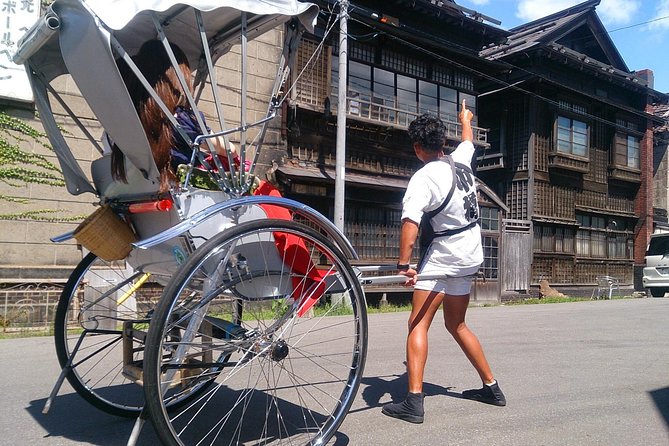
The guide can make or break a short city tour, and this experience places the guide at the center. Koto is praised for polite service and self-taught English, along with clear explanations of Otaru. Kuma is also noted for strong English and a wide range of information, with some ability in Korean and Chinese.
That language detail is useful, but you should still request your preferred language in advance. A multilingual driver may be available, yet it is not guaranteed.
The guides also bring personality to the ride. One guide was especially appreciated for humor and photography, setting up pictures rather than simply pointing at a view. Another took guests to less touristy spots while still finding good views for photos.
I would value that practical help. Otaru’s best pictures often depend on where you stand, not just what you see. A guide who knows the angles can save you time and give you a more enjoyable record of the visit.
The guide also gives the city a human voice. You can ask why a building matters, how the canal area changed, or what a particular street was used for. The supplied information does not promise a formal academic lecture, so expect an informal explanation rather than a specialist history seminar.
Choosing 30 minutes, 60 minutes, 90 minutes, or two hours
The duration range is one of the tour’s strengths, but it also means you should choose carefully.
A 30-minute ride suits you if you have very little time, want a quick introduction, or need a scenic break between other plans. You will get the basic canal-area experience, but there may be less time for side streets, detailed explanations, and relaxed photo stops.
An hour is a sensible middle choice. You can see the key canal sights and add some of the older city details without committing much of your day. For many people, this is the best balance between cost, coverage, and comfort.
The 90-minute option received especially strong praise as a way to understand Otaru before walking around independently. I like this length for a first visit because you can use the ride to get your bearings, then return to the canal or nearby streets with a better sense of what you are seeing.
Two hours makes the most sense if you want a fuller circuit, more conversation, and a slower pace. It is also the better choice if you want the guide to include smaller lanes and less familiar views. The longer ride does mean more time seated in a narrow vehicle, so consider your comfort as carefully as your sightseeing plans.
Price, comfort, and the question of value
At $42.90 per person, the tour is not the cheapest way to see Otaru. You are paying for a private ride, a local driver-guide, and a distinctive form of transport rather than simply paying for entry to a viewpoint.
I think the value is strongest when you use the ride as an introduction to the city. A good guide can help you understand where to spend the rest of your day, which can prevent a short port visit from becoming a series of disconnected photos.
The price also becomes easier to justify for a small private group. You are not sharing the vehicle with strangers, and you can ask questions at your own pace. Group discounts may be available, so check the booking details if you are traveling with several people.
Comfort needs honest attention. Each rickshaw is 74 centimeters wide and fits a maximum of two adults. Two average-size adults may be fine, but the seat can feel tight. If you are broad-shouldered, carrying bulky winter clothing, or simply prefer room, book one rickshaw per passenger.
The operator requires an additional rickshaw for passengers who cannot fit comfortably together. That extra vehicle may not be available on the day, particularly with an English-speaking guide, so arrange it at booking time.
Children aged six and older pay the adult price. Children aged five or under can ride free only when sitting on an adult’s lap without using a separate seat. Two children under five may ride with two adults, but both children must sit on adult laps.
Who will get the most from this Otaru ride
I would recommend this tour to first-time visitors, cruise passengers, couples, families with older children, and anyone who wants a quick introduction before exploring alone. It is also a good choice if walking for several hours is not appealing.
The private format suits people who prefer questions and conversation over a fixed group script. It can also help families, since you are not trying to keep up with a large party.
You may want to skip it if you dislike exposed seating, have trouble getting into a low vehicle, or want a long, independent walk beside the canal. The ride is not a substitute for exploring Otaru on foot. It is a way to see the main area efficiently, then decide where to spend more time.
Expectant mothers in the first 16 weeks of pregnancy are not permitted to ride. The supplied information does not list other medical restrictions, but you should consider the narrow seat and outdoor conditions when deciding.
Cruise-day planning and the return point
The ride starts and ends at the meeting point at Chuo Bridge. A different finishing location may be possible, but an extra drop-off fee can apply and is paid on the day. Some rides may also offer a return toward the cruise terminal if arranged, but do not assume that option is automatic.
For a port visit, build in enough time to reach the meeting point, complete the ride, and return to your ship. Since the start time is confirmed by email rather than guaranteed instantly, check the final message before fixing your other plans.
The experience is usually booked about 62 days in advance. That is a useful signal to reserve early during popular travel periods, especially if you need two rickshaws or a particular language guide.
Free cancellation is available until 24 hours before the start time. Canceling or changing the booking inside that 24-hour window does not qualify for a refund.
Should you book the Otaru Rickshaw Tour?
Book it if you want a friendly, efficient introduction to Otaru with the canal, warehouses, old rail tracks, side streets, and marina tied together by a local guide. The 90-minute ride is the safest pick for most visitors, while an hour works well for a tighter schedule.
I would book two rickshaws for four adults rather than assume every pair will fit comfortably. I would also request your preferred guide language early and wait for the confirmed start time before arranging the rest of your day.
Skip it if you want only a quiet walk or if the narrow seat is likely to be uncomfortable. For everyone else, this is a fun and useful way to get oriented, take strong canal photos, and see more of Otaru than the usual waterfront stop.
FAQ
Where does the Otaru Rickshaw Tour start?
The tour starts at Chuo Bridge in Otaru, Japan. The meeting point is near public transportation, and map and photo information is provided to help you find the stand.
Where does the tour finish?
The activity normally ends back at the meeting point. A different drop-off location may be possible for an additional fee paid on the day.
How long does the rickshaw tour last?
Available durations range from about 30 minutes to two hours. A 90-minute option is useful if you want time for the main sights and a fuller introduction to Otaru.
What is included in the price?
The price includes the rickshaw ride and a local driver-guide. Food, drinks, admission fees, and hotel pickup and drop-off are not included unless specifically stated.
Can two adults ride in one rickshaw?
Yes. Each rickshaw can carry a maximum of two adults, but it is only 74 centimeters wide. Passengers who need more room should book individual rickshaws.
Can young children ride?
Children aged five or under can ride on an adult’s lap without occupying a seat. Up to two young children can ride with two adults in one rickshaw. Children aged six and older pay the adult price.
Is cancellation allowed?
Yes. You can cancel for a full refund if you do so at least 24 hours before the experience start time. Cancellations or changes made less than 24 hours before the start time are not refunded.
Just added around Japan
- Sushi Making Tokyo with Traditional Rickshaw Ride Tour in Asakusa★ 5.0 · 12 reviews
- Exiting Rickshaw ride and Kimono experience★ 5.0 · 4 reviews
- Hot Spring Capital of Yufuin Rickshaw Tour★ 5.0 · 32 reviews
- Kyoto Sagano Insider: Rickshaw and Walking Tour★ 5.0 · 15 reviews
- Private 3-hour Kyoto Arashiyama Rickshaw Tour★ 5.0 · 5 reviews
- Kurashiki Rickshaw Tour★ 5.0 · 39 reviews
- Kamakura Heritage Bike or Walk Tour with ex-Rickshaw guide★ 5.0 · 11 reviews
- Rickshaw Tour of Kagoshima’s Historical and Cultural Sites★ 5.0 · 4 reviews
Rickshaw Tours, compared.
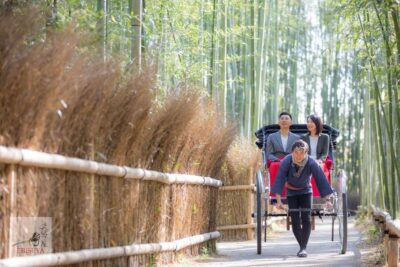
Arashiyama Customized Rickshaw Tour & Bamboo Forest
Read our review →
Split by Private Electric Rickshaw – Palace & Hidden Gems
Read our review →
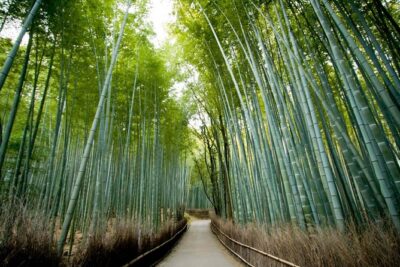
Kyoto Arashiyama Rickshaw Tour with Bamboo Forest
Read our review →Browse the lists this tour appears in