
Review · JAPAN
Kurashiki Rickshaw Tour
Kurashiki is best seen at street level. This private rickshaw ride gives you a gentle introduction to the Bikan Historical Quarter, where white-walled warehouses, old merchant homes, willow trees, and narrow lanes tell the story of the town’s prosperous Edo-period past. I especially like the flexible route and the guides’ talent for mixing local history with useful advice about shops and places to visit afterward. A possible drawback is the price: at $43.04 per person, a short ride costs more than simply walking the district.
The tour also earns its keep through personal attention. Guides such as Sho, Kubo, Ishimatsu, and Asai have been praised for friendly conversation, clear explanations, photographs, and thoughtful suggestions. Still, you should confirm your departure time carefully, since the time you request is not guaranteed until the operator confirms it by email.
Key points to know before you book
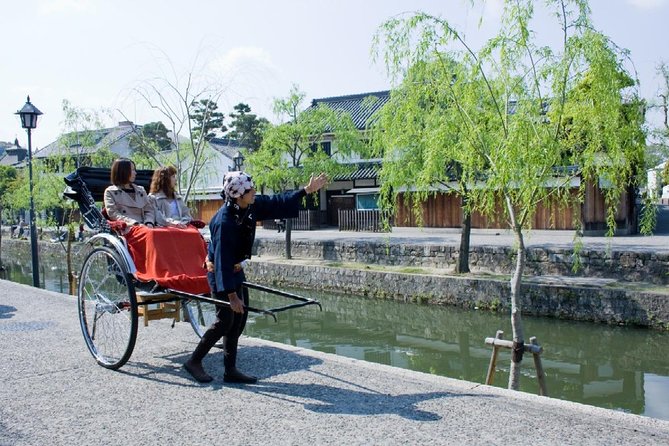
- Willow-lined canal views: The rickshaw follows the pretty canal through Kurashiki’s best-known historic streets.
- Flexible private outing: You can discuss the starting time, route, duration, and finishing point with your guide.
- Four useful time options: Choose roughly 30 minutes, 45 minutes, one hour, or two hours.
- A guide who helps you get your bearings: Local drivers can point out shops, back lanes, buildings, and places worth visiting later.
- Comfort matters: One rickshaw holds up to two adults, but its width is only 74 centimeters.
- Best as an introduction: Take the ride early, then return on foot to museums, shops, cafés, and historic buildings that catch your eye.
Why a rickshaw works so well in Kurashiki
Kurashiki is not a place you need to rush through. Its appeal comes from small details: a dark timber doorway, a white plaster wall, a shop tucked into an old building, or a willow branch hanging over the canal.
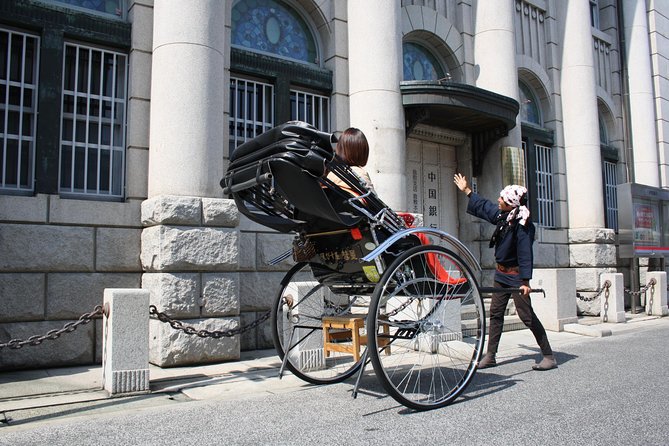
A rickshaw lets you see those details without spending your first hour studying a map. Your driver pedals while you sit back and look around. You can ask questions as you go, and the guide can explain why the streets look the way they do.
The town prospered during the Edo period, from 1603 to 1868, as a major storage and trading center. Goods from across Japan were kept in Kurashiki’s warehouses. That commercial past remains visible in the district’s white walls, traditional houses, merchant residences, and canal-side setting.
I like that this is not only a ride through famous sights. The route can include quieter backstreets and small local shops. That gives you a better sense of how the preserved district fits together, rather than reducing Kurashiki to a single photo stop beside the canal.
The private format is another strong point. Only your group rides with the guide, so you can ask for more history, more photographs, a particular ending point, or a route that suits your schedule. The exact route depends on the length you choose and what you arrange with the driver.
More Rickshaw Tours in Japan
- Tokyo Asakusa Rickshaw Tour
★ 5.0 · 1,375 reviews - Kyoto: Arashiyama Customized Rickshaw Tour & Bamboo Forest
★ 5.0 · 432 reviews - Kyoto Arashiyama Rickshaw Tour with Bamboo Forest
★ 5.0 · 354 reviews
The 30-minute ride: a smart first look
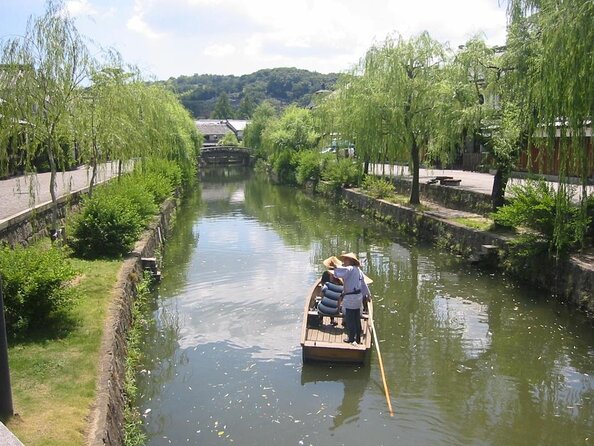
The shortest option begins at Kurashiki Monogatarikan and moves through the Old Town. It is designed to give you the main visual impression of the Bikan Quarter without taking a large part of your day.
The canal is the star. Weeping willows line the water, and traditional buildings run along the banks. From the rickshaw, you get a comfortable view of the façades and the changing angles of the street. Your guide can also take you through nearby backstreets, where Kurashiki-style shops and warehouses provide good chances for photographs.
Thirty minutes is enough if you have limited time, arrive late in the day, or want a quick orientation before exploring independently. It is also useful if you are tired from walking or visiting several other sites.
The trade-off is simple: this is an introduction, not a full tour of Kurashiki. You will see the central historic area, but you will not have much time for the wider route or longer conversations. I would choose this option if you plan to visit the Ohara Museum of Art, Achi Shrine, or the shops on foot afterward.
The 45-minute ride: add merchant homes and side streets
The 45-minute route includes the Old Town and willow-lined canal, then continues past some of the mansions once owned by wealthy merchants.
That extra time matters because Kurashiki’s story is not limited to its warehouses. The merchant residences show how prosperity shaped daily life, architecture, and the scale of the town’s leading families. You also pass more small shops typical of the area.
This is a good middle choice for first-time visitors who want more than a quick circuit but do not want to commit to a long outing. It gives the guide enough time to explain details and answer questions without using up an entire afternoon.
If you want photographs, this option should also feel less hurried than the 30-minute ride. The guide can pause at suitable points, and you still have plenty of time afterward to browse.
The one-hour ride: more time in the Old Town
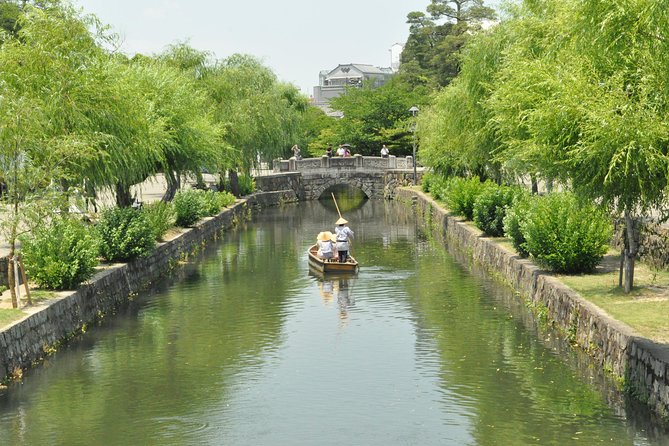
The one-hour option follows the shorter route but gives you more time among the Old Town streets. That extra half-hour is useful if you prefer a slower pace and want the guide to explain the district rather than simply point out its main features.
You may find this the most balanced choice. The canal and central streets remain the focus, but the longer duration gives you room for questions, photographs, and a closer look at the local architecture.
This option suits couples, families, and older visitors who want a relaxed introduction without the wider two-hour route. It is also a practical choice in hot weather. Several visitors have used the rickshaw to reduce walking during very warm conditions, and the guide’s moving seat can make the historic district easier to enjoy.
More rickshaw tours around Japan:
- Kyoto Rickshaw Tour
★ 5.0 · 210 reviews - Tokyo: Asakusa Sightseeing Tour by Rickshaw
★ 4.9 · 195 reviews - Kyoto: Private Rickshaw Tour of Gion and Higashiyama Area
★ 5.0 · 144 reviews - Otaru Rickshaw Tour
★ 5.0 · 76 reviews
The two-hour ride: the broadest view of Kurashiki
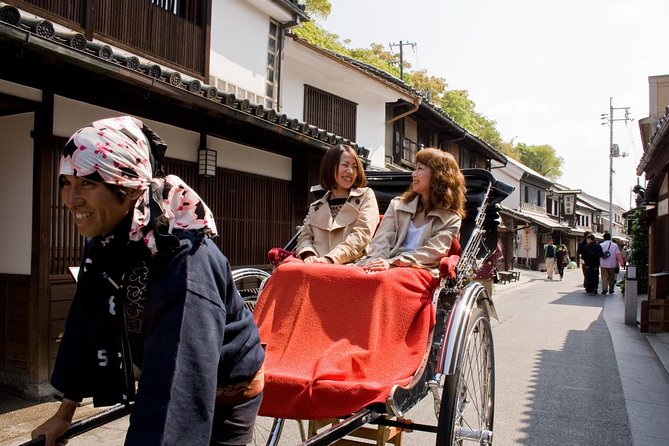
The longest outing starts near the historic merchant mansions by the Old Town. From there, you travel through streets lined with Kurashiki-style warehouses and small shops.
The route then heads toward Mt. Tsurugata before returning past the city’s old cotton mill. It finishes with time along the willow-lined canal. This gives you a wider picture of Kurashiki, connecting its merchant quarter with its industrial and religious sides.
The two-hour ride is the strongest choice if Kurashiki is a main stop on your trip rather than a quick visit between trains. You have more time to see how the area changes from the central canal district to the hill and former mill area.
The drawback is cost and commitment. A long rickshaw ride is not the efficient option if you only want a quick photograph of the canal. It is also worth thinking about seating comfort before booking. Two adults can fit in one rickshaw, but the vehicle is only 74 centimeters wide. Larger passengers may be more comfortable booking one rickshaw per person.
Historic places you may see along the way
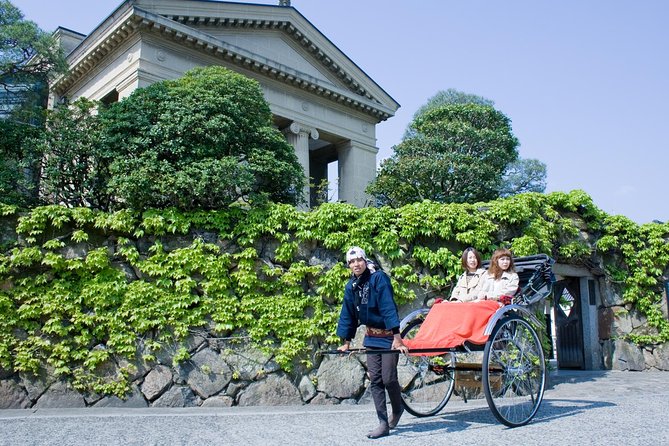
The exact stops depend on your chosen duration and the route agreed with your guide. These are the main places connected with the experience.
Achi Shrine is one of Kurashiki’s major shrines and remains important to local residents. It hosts events and festivals throughout the year. The shrine is on higher ground, so it adds a different view of the town from the low canal streets. A visit can also give your ride a useful change of pace, although the supplied tour information does not promise a stop on every route.
The Ohashi family mansion is a nationally important cultural asset. It was built for and by the Ohashi merchant family, making it a direct link to the people whose commercial success helped shape Kurashiki. If you care about architecture and local business history, this is one of the more meaningful places to add before or after the ride.
The art museum is described as a worthwhile stop before or after the rickshaw outing. The information provided does not name it, so you should ask your guide or check the local map if you want to plan a museum visit around your ride.
Ivy Square is a large open area surrounded by red brick walls covered with ivy. It contrasts with the wooden buildings and white plaster warehouses of the Bikan Quarter. This is one of the places that helps you see Kurashiki as more than a preserved Edo-period district.
The hilltop Buddhist temple offers another change in setting. Since it sits on a hill, expect a different perspective from the flat canal quarter. The tour details do not identify the temple by name or confirm that every duration includes it, so treat it as a possible route point rather than a guaranteed stop.
The old cotton mill appears on the two-hour route. Its presence adds an industrial chapter to Kurashiki’s story and shows that the town’s past was not only about merchant warehouses and canal trade.
What the guides add to the ride
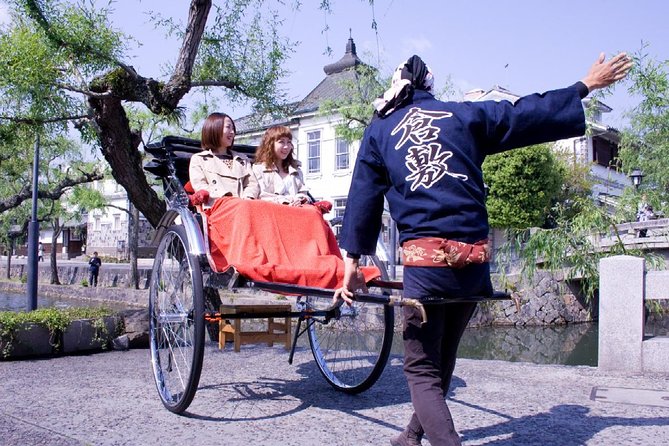
The guide is the main reason to book this rather than simply walk the same streets. A good driver can explain what you are seeing, point out details you would miss, and help you plan the rest of your visit.
The strongest praise has focused on friendly, entertaining guides who make the ride feel like a conversation rather than a formal lecture. Sho has been singled out for his easy manner and interesting explanations of merchant life. Kubo received praise for keeping a rainy-day outing enjoyable, while Ishimatsu was noted for showing lesser-known lanes and sharing practical local information.
You can also ask for photographs. Several accounts describe guides taking pictures and helping create a lasting memory of the ride. That is especially useful for couples or families who otherwise have to rely on timed phone photographs.
Language support depends on availability. The driver may be multilingual, but an English-speaking guide is not guaranteed unless available at the time. Ask at the departure point for your preferred language. If an English guide is essential, contact the operator in advance rather than relying on luck.
Price, comfort, and who gets the best value
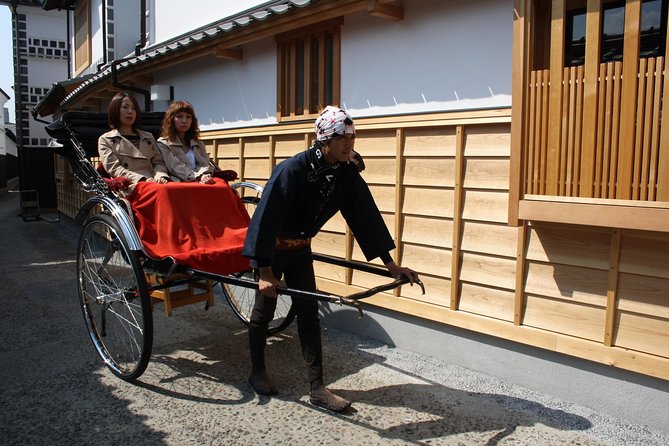
The listed price is $43.04 per person. That is not a bargain transport option, since Kurashiki’s central district is walkable. You are paying for the vehicle, the private format, the driver’s time, local stories, route flexibility, and the chance to cover the area without tiring yourself out.
I think the price makes the most sense for a first visit, a special occasion, a family group, or anyone who values personal guidance. It is also a good choice if heat, rain, or limited mobility makes a long walk less appealing.
The rickshaw can carry a maximum of two adults. Up to two children aged five or under can ride on an adult’s lap without taking a seat. Children aged six and over pay the adult rate. For comfort, larger passengers should consider separate rickshaws. Two people who cannot comfortably fit together will need an additional vehicle, and availability may not be guaranteed if you wait until the day.
Pregnant people in the first 16 weeks are not permitted to ride. Most people can participate, but you should use your own judgment about comfort and seating.
Food, drinks, and hotel pickup are not included. Public transportation is nearby, and the meeting point is at 1-chōme-1-5 Chūō in Kurashiki. The usual finish is the Ebisuya Kurashiki Rickshaw stand, though you can discuss another ending point with your guide. An extra drop-off charge may apply.
The time you request is confirmed by email within 24 hours of booking. Free cancellation is available up to 24 hours before the start time. After that, the fare is not refunded, and late changes are not accepted.
How I would fit it into a Kurashiki day
I would book the rickshaw early in the day, then use the guide’s suggestions to plan the rest of my visit. A 30-minute or 45-minute ride works well before a museum and lunch. The one-hour option gives you a more complete Old Town introduction without taking over the day.
If you have two hours, I would treat the ride as the main Kurashiki activity and leave time afterward for walking. The best rhythm is to see the district from the rickshaw first, then return to the streets that caught your attention.
Bring a camera, but do not spend the whole ride looking through it. The willow trees, canal, merchant houses, and narrow lanes pass quickly. Ask questions, note shop recommendations, and save the longer browsing for afterward.
Should you book the Kurashiki Rickshaw Tour?
Book it if you want a private introduction to the Bikan Quarter, prefer local conversation to a self-guided walk, or need to limit your time on foot. I especially recommend it for a first visit, for couples, and for anyone visiting during hot weather.
Skip it if your budget is tight, you already know Kurashiki well, or you prefer to explore every lane at your own pace. For most first-time visitors, the 45-minute or one-hour ride offers the best balance. Choose 30 minutes for orientation, and two hours when you want the broadest route and have time to make Kurashiki a central part of your day.
FAQ
Where does the Kurashiki rickshaw tour start?
The listed starting point is 1-chōme-1-5 Chūō, Kurashiki, Okayama 710-0046, Japan.
Where does the tour finish?
The usual ending point is Ebisuya Kurashiki Rickshaw in Chūō, Kurashiki. The finish can be customized by discussing it with your guide, and another drop-off location may require an additional fee.
How long does the tour last?
Available options run from about 30 minutes to two hours. Sample durations include 30 minutes, 45 minutes, one hour, and two hours.
What time can I take the tour?
Tours can start between 9:30 a.m. and 5:30 p.m. Your requested time is not guaranteed until it is confirmed by email within 24 hours of booking.
How many adults fit in one rickshaw?
A maximum of two adults can ride in one rickshaw. The vehicle is 74 centimeters wide, so separate rickshaws may be more comfortable for larger passengers.
Can children ride in the rickshaw?
Children aged five or under can ride on an adult’s lap without occupying a seat. Up to two young children can ride with two adults. Adult pricing applies from age six.
Is an English-speaking guide guaranteed?
No. A multilingual driver may be available, subject to availability. Ask for your preferred language at the departure point, and request an English-speaking guide in advance if it is important.
Is hotel pickup included?
No. Hotel pickup and drop-off are not included. Food and drinks are also excluded unless specifically stated.
Can I cancel the booking?
You can cancel for a full refund up to 24 hours before the experience start time. Cancellations or changes made less than 24 hours before the start time are not accepted for a refund.
Just added around Japan
- Sushi Making Tokyo with Traditional Rickshaw Ride Tour in Asakusa★ 5.0 · 12 reviews
- Exiting Rickshaw ride and Kimono experience★ 5.0 · 4 reviews
- Hot Spring Capital of Yufuin Rickshaw Tour★ 5.0 · 32 reviews
- Kyoto Sagano Insider: Rickshaw and Walking Tour★ 5.0 · 15 reviews
- Private 3-hour Kyoto Arashiyama Rickshaw Tour★ 5.0 · 5 reviews
- Kamakura Heritage Bike or Walk Tour with ex-Rickshaw guide★ 5.0 · 11 reviews
- Rickshaw Tour of Kagoshima’s Historical and Cultural Sites★ 5.0 · 4 reviews
- Kamakura Rickshaw Tour★ 5.0 · 53 reviews
Rickshaw Tours, compared.
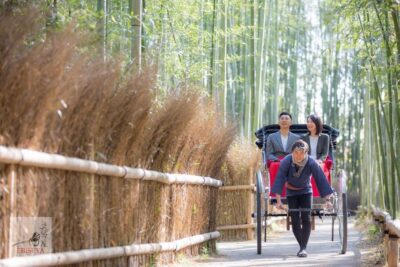
Arashiyama Customized Rickshaw Tour & Bamboo Forest
Read our review →
Split by Private Electric Rickshaw – Palace & Hidden Gems
Read our review →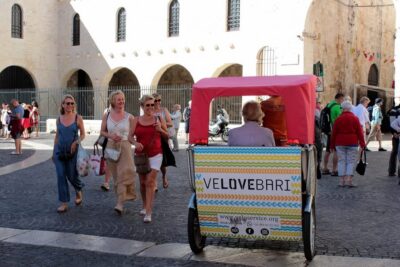
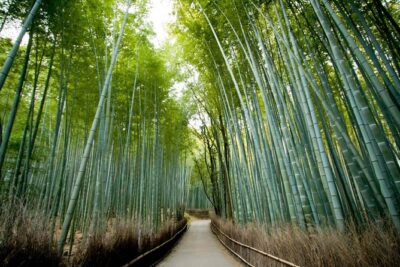
Kyoto Arashiyama Rickshaw Tour with Bamboo Forest
Read our review →Browse the lists this tour appears in