
Review · GERMANY
Rickshaw for 2 and Driver-Shared Guide (Combo Vehicle Group)
See Berlin’s core without wearing out your feet. This 210-minute Berlin-Mitte tour combines a traditional rickshaw for two with a shared guide, making it a smart choice when one person wants to ride and the other prefers to sit. I like the broad route, which links the TV Tower, Museum Island, Brandenburg Gate, the Berlin Wall, Checkpoint Charlie, and other major sights in one outing.
I also like the friendly, story-led guiding style, especially the spontaneous anecdotes praised by Julien from France after a March 2024 visit. The main drawback is the sheer number of stops: you will see a lot, but most places are photo stops and short explanations rather than long visits inside museums or memorials.
Key points to know before booking
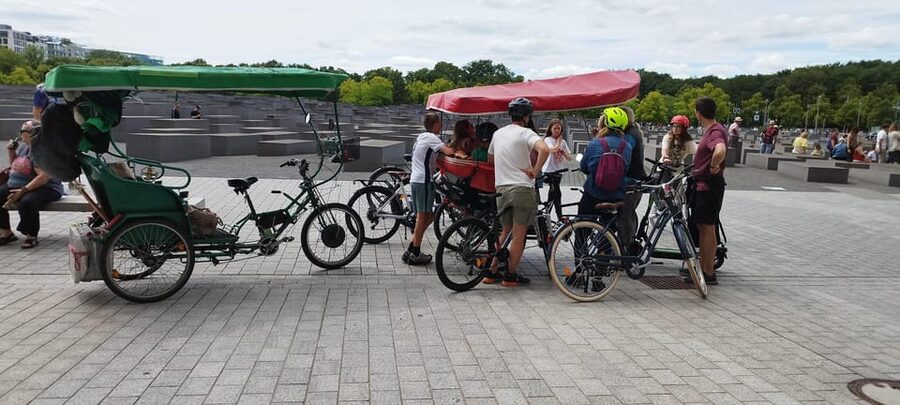
- A rare mixed-mobility option: One person can ride an e-bike or scooter while another sits in the rickshaw.
- A wide Mitte route: The tour connects Alexanderplatz, Museum Island, the government quarter, Cold War sites, and former Nazi power centers.
- Small shared group: The group is limited to eight participants, though your rickshaw booking is for up to two people.
- Three and a half hours on city streets: You get much more coverage than a short walking tour, without committing to a full-day excursion.
- Certified multilingual guide: Tours are offered in English, German, Dutch, and Turkish, with guides certified under DIN EN 15565.
- A practical meeting point: Weinbergsweg 6 is near Rosenthaler Platz and the Rosenthaler Platz U-Bahn station.
Why this Berlin rickshaw tour is useful
Berlin is spread out. The sights of Mitte are close enough to belong on one map, yet far enough apart to make a walking tour tiring. A car can cover the ground, but it gives you little sense of the streets between the landmarks. Public transport is useful for longer trips, but it does not help much when you want to connect several historic places in one steady run.
This tour fills that gap. You move along the streets by rickshaw, e-bike, or e-scooter, with a guide explaining what you are seeing. The pace is gentle enough for sightseeing, and the route is broad enough to give you a useful first picture of central Berlin.
The rickshaw option is the real selling point. If one member of your party cannot cycle, does not feel comfortable on a bike, or simply wants to sit back, the tour does not force everyone into the same vehicle. Grandparents can ride with younger family members, and a mixed group can stay together rather than splitting up.
The experience is shared rather than fully private. You book the rickshaw for up to two people, then join a small group of no more than eight. That means you may not control every pause or change the route to suit your own interests, but you do get the social feel of a small guided outing.
More Rickshaw Tours in Germany
- Berlin: Private Guided E-Rickshaw Tour
★ 4.9 · 157 reviews - Individual City Tour – Rickshaw Sightseeing in Berlin
★ 5.0 · 120 reviews - Berlin Express: Private 1-Hour E-Rickshaw Ride
★ 5.0 · 116 reviews
Starting near Rosenthaler Platz
The stated meeting point is Weinbergsweg 6, close to Rosenthaler Platz in Mitte. The area is served by the Rosenthaler Platz U-Bahn station and has cafes, bars, shops, street art, and easy public transport connections.
That is a useful place to begin a morning tour. You can arrive by U-Bahn, and Weinbergspark is nearby if you have time to wait. The park offers a quiet place to gather before setting off, while Rosenthaler Platz gives you plenty of options for a drink or meal afterward.
The tour information also refers to a 10:00 AM daily meeting and mentions Torstrasse 85 in its general description. Because the detailed meeting instructions identify Weinbergsweg 6, check the confirmed meeting address and start time when you book. That small bit of planning can save you a rushed start.
The vehicle arrangement is formed at the meeting point. You may book an individual vehicle, but the route remains shared. Water and soft drinks are provided, which is useful during a three-and-a-half-hour ride.
Alexanderplatz, the TV Tower, and Rotes Rathaus
The route first heads toward the TV Tower, Berlin’s most recognizable modern landmark. You get a photo stop and a guided view rather than admission to the tower. The sight works well as an opening marker because it helps you understand Berlin’s postwar eastern center.
Nearby Rotes Rathaus, the red-brick city hall, gives the tour another useful reference point. Here the guide can connect present-day Berlin with the former East Berlin center. The stop is brief, so you should think of it as an orientation point rather than a detailed architectural visit.
This early section is also where the vehicle format earns its keep. Alexanderplatz and the central streets can be busy, and cycling between landmarks gives you a stronger feel for the city than jumping from one station to another. At the same time, you should not expect to linger at every corner. The tour is designed to show the main picture.
Museum Island, the cathedral, and Unter den Linden
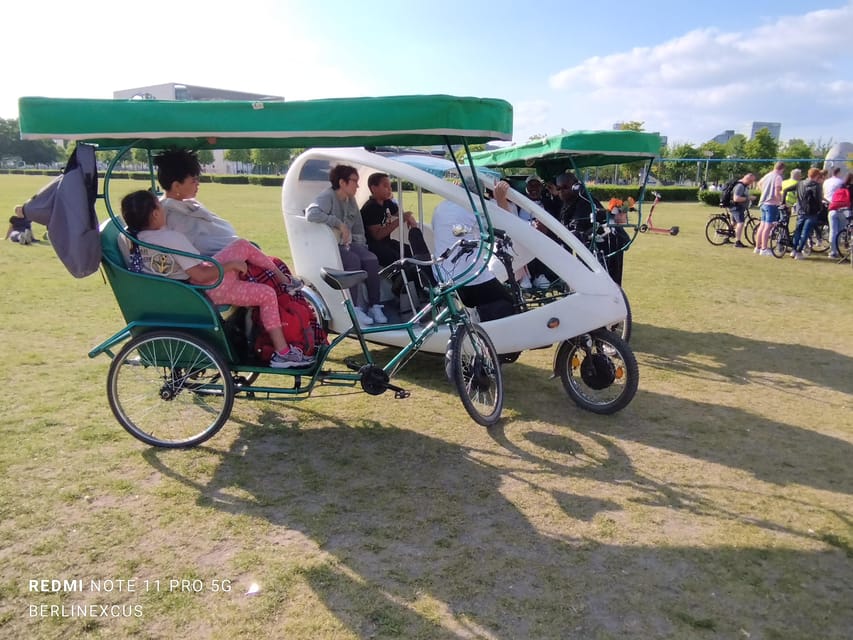
From the eastern center, the route continues through Museum Island, Berlin Cathedral, and Unter den Linden. This is one of the most rewarding stretches because several major sights are packed into a relatively compact area.
Museum Island is a major cultural quarter, but this tour does not include museum entry. You see the buildings and hear about their role in Berlin’s story. If you want to visit the Pergamon Museum, the Neues Museum, or another institution, plan a separate block of time on another day or after checking opening arrangements.
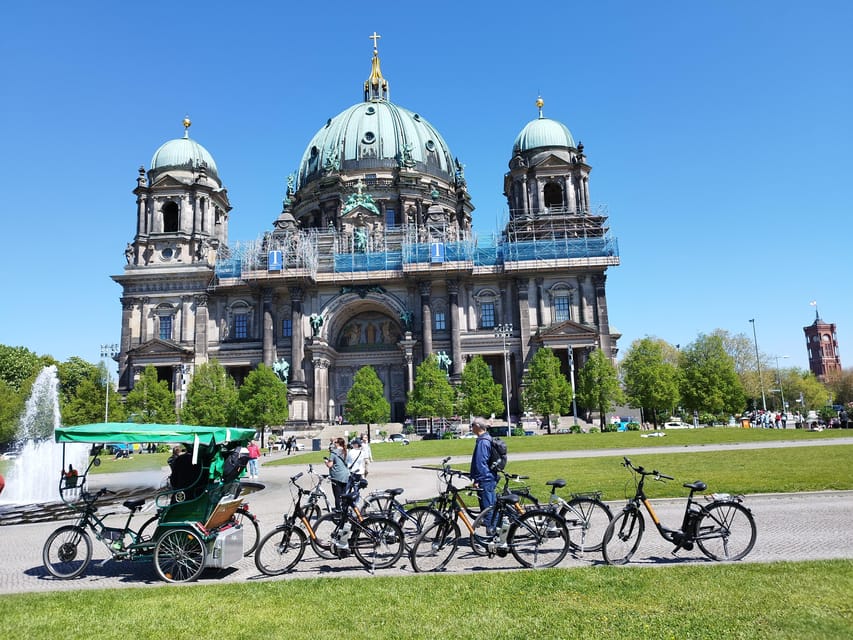
Berlin Cathedral is one of the area’s most striking buildings. The stop lets you see its large dome and riverside setting, while the guide supplies context about the surrounding royal and civic center. Again, the value is in making connections between places, not in touring the interior.
Unter den Linden is Berlin’s grand ceremonial avenue. The route includes the Opera House, Neue Wache, Bebelplatz, and nearby sights. You will hear about the avenue’s political and cultural importance, with the guide linking buildings that can otherwise feel like separate photo opportunities.
Bebelplatz is especially important. The memorial recalls the Nazi book burning of May 10, 1933. It is a small, quiet memorial set into the square, and it rewards a moment of attention. Since the tour keeps moving, listen closely when the guide explains what happened here.
More rickshaw tours around Berlin:
- Rickshaw Tours Berlin – Groups of up to 16 people with several rickshaws
★ 4.0 · 97 reviews - Rickshaw Sightseeing City Tours Berlin – Rikscha Tours
★ 4.0 · 55 reviews - Berlin: Private Sightseeing Tour in an E-Rickshaw
★ 4.9 · 44 reviews - One Up to 3 Rickshaws(6 GUESTS)-Taylor Made Rickshaw Berlin Tour
★ 5.0 · 20 reviews
Brandenburg Gate and the government quarter
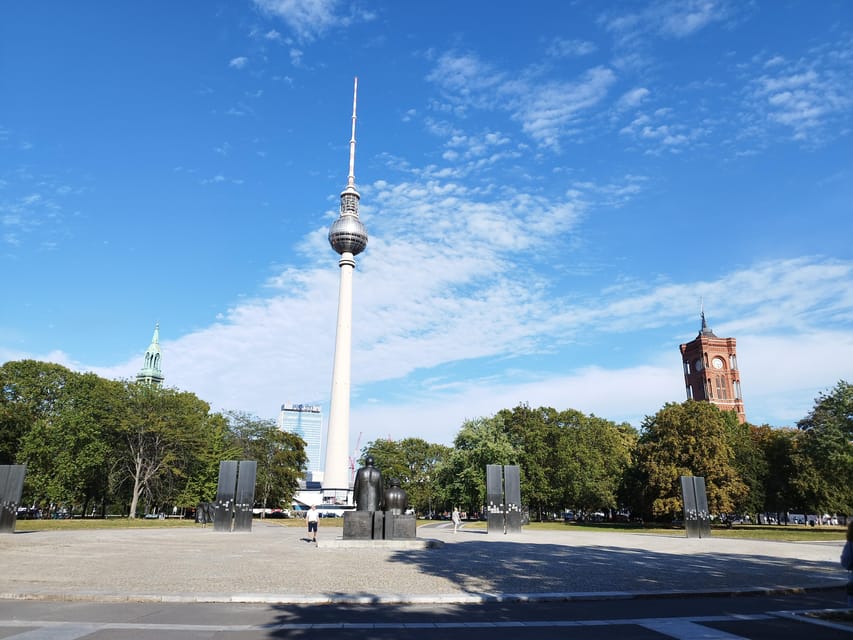
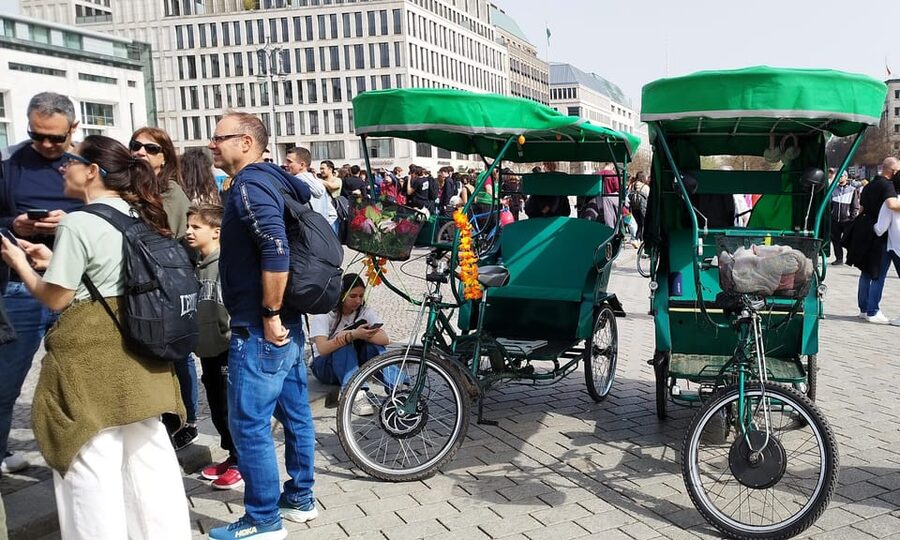
The ride then reaches Brandenburg Gate, perhaps the single most familiar symbol of Berlin. The gate has served as a royal entrance, a political backdrop, and a Cold War symbol. A guided stop adds useful context to what could otherwise be a quick photograph and a crowded plaza.
The route continues toward the Reichstag and Bundestag. You will see the center of German political life and hear about its modern role. The tour does not list entry to the Reichstag dome, so do not expect an interior visit. The value here is seeing how the parliamentary quarter fits into the broader city.
The nearby US and French embassies and the Ministerial Gardens add another layer. This part of Berlin shifts from royal avenues to present-day diplomacy and government. Potsdamer Platz then brings a sharp change in mood, with modern architecture replacing the older streets and monumental buildings.
That contrast is one of the tour’s strengths. In a single ride, you move between imperial Berlin, the divided city, the Nazi period, and today’s political capital. A guide who can make those changes clear is more important here than a guide who simply names buildings.
The Holocaust Memorial and Hitler’s bunker site
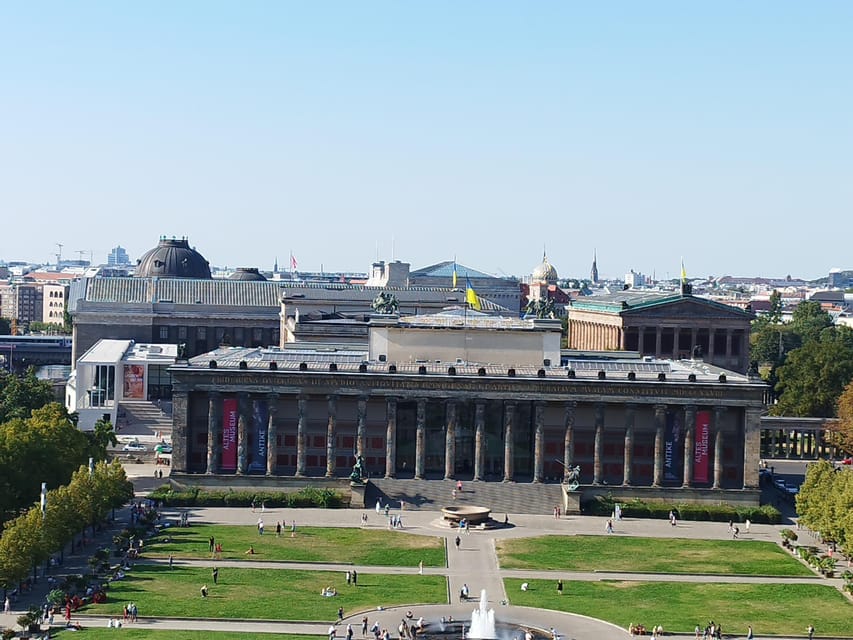
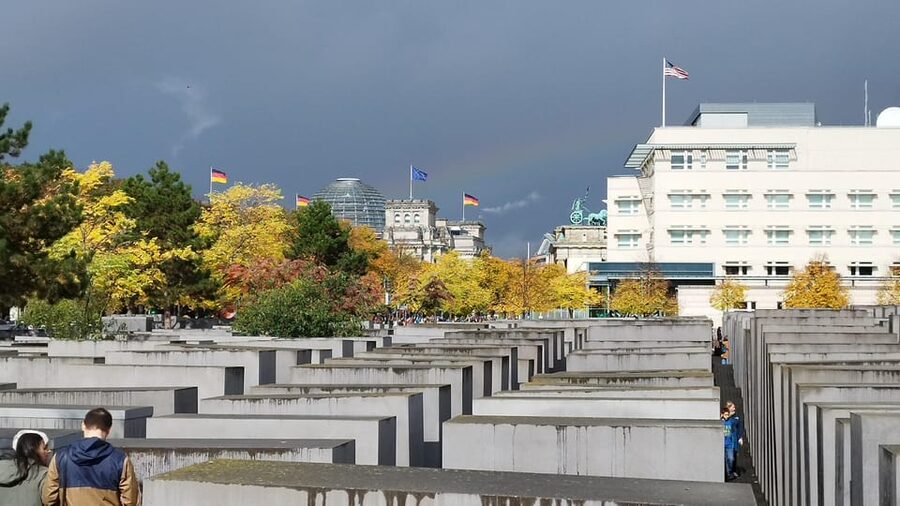
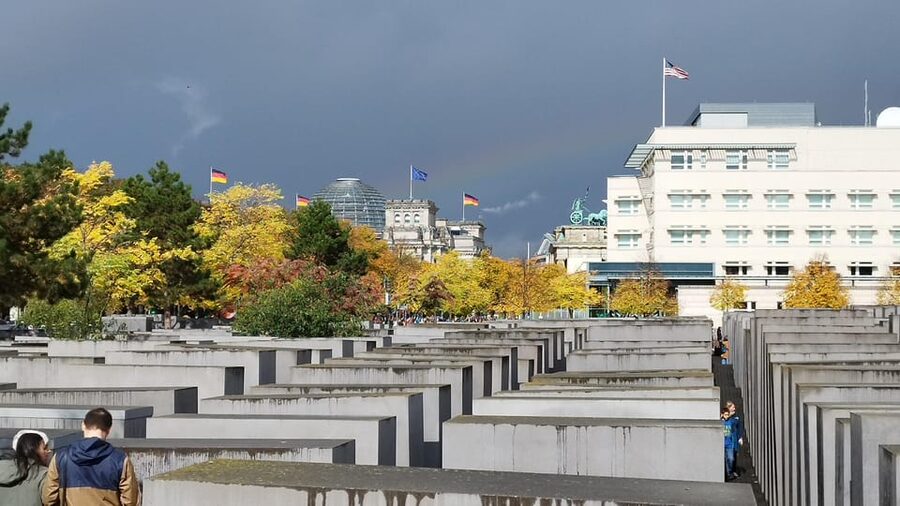
The Holocaust Memorial is one of the tour’s most serious stops. Its field of concrete blocks invites you to walk among the forms, but this outing appears to focus on a guided exterior stop and explanation rather than a full visit to the underground information center.
Give this place your attention. It is not just another landmark on a checklist. The fast route means the visit may feel brief, especially if you want time alone to think or to explore the information center. If this memorial matters deeply to you, return later for a quieter visit.
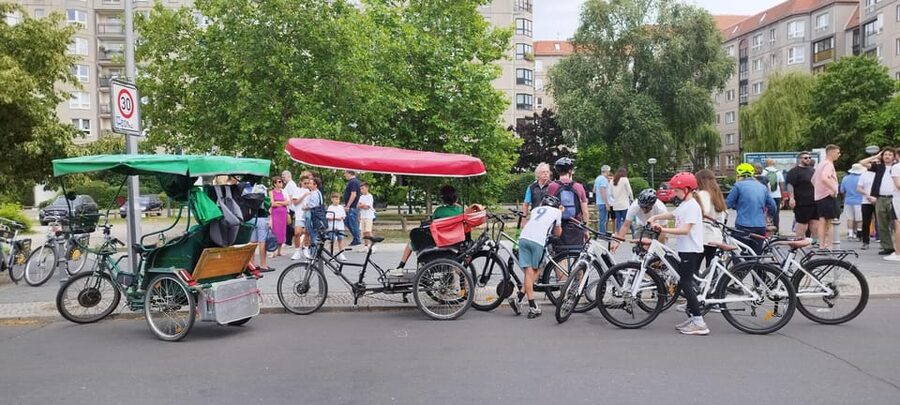
The route also points out the site of Hitler’s bunker. Little remains visible above ground, which is exactly why the guide’s explanation matters. This is a historical location rather than a preserved attraction. Do not expect dramatic ruins or an underground tour. You get the location, the context, and a chance to understand how the site fits into the final days of Nazi rule.
These stops show why a live guide is valuable. Without explanation, an ordinary-looking patch of city can be easy to miss. With a clear account, the absence of visible remains becomes part of the story.
Topography of Terror, the Wall, and Checkpoint Charlie
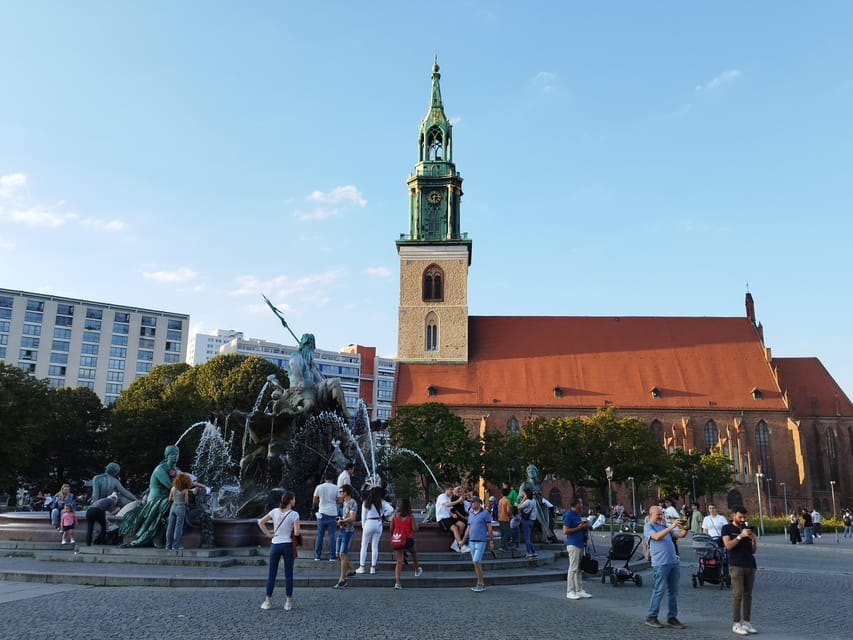
The tour then reaches the Topography of Terror, a documentation center and outdoor memorial area connected with Nazi persecution. The itinerary lists a guided sightseeing stop, not an extended indoor visit. If you want to study the exhibitions carefully, allow separate time.
The Berlin Wall section and Checkpoint Charlie shift the focus to the Cold War. You will see surviving wall-related sights and hear about the division of Berlin, escape attempts, and the border crossing’s symbolic role. Checkpoint Charlie itself is highly photographed and heavily visited, but the surrounding story is more important than the famous sign and guardhouse imagery.
The route is particularly useful for first-time visitors who have trouble placing these sites on a map. The Wall did not run through one small park. It cut across neighborhoods, roads, and the daily lives of Berliners. Traveling between the memorials helps you grasp that the division was a citywide reality.
Still, set your expectations correctly. This is a moving overview, not an in-depth Cold War seminar. The benefit is seeing several connected locations in one afternoon while a guide explains their relationship.
Gendarmenmarkt and the final historic sights
Gendarmenmarkt brings the route back to one of central Berlin’s grandest squares. Its architecture makes a strong final impression, and the stop provides a calmer contrast after the political weight of the Wall and Nazi-era sites.
The itinerary also includes the memorial for the May 10, 1933 book burning, the Opera House, and the Unter den Linden corridor. These stops reinforce a central theme of the tour: Berlin’s most beautiful public spaces can carry difficult memories beneath their polished surfaces.
The vehicle returns to Weinbergsweg 6. Since the outing lasts 210 minutes, the ending should leave you with time to eat or continue sightseeing in Mitte. You are also well placed for public transport from Rosenthaler Platz.
What the $235 price means
The price is $235 per group of up to two, not $235 per person. That makes the calculation important. For two people sharing the rickshaw, the cost is about $117.50 each before any changes in currency or booking conditions.
That is not a budget sightseeing ride. You are paying for a private rickshaw arrangement within a shared small-group tour, a live multilingual guide, a three-and-a-half-hour route, and a vehicle that solves a real mobility problem. If you would otherwise need separate transport, or if one person in your party cannot cycle, the value improves.
The price is harder to justify if you only want a quick introduction to Berlin or are happy to walk and use public transport. You also need to remember that museum and memorial interiors are not listed as included admissions. This is an outdoor sightseeing and interpretation tour, not an all-inclusive attraction pass.
The shared format keeps the outing from becoming a fully private experience. For some people, that is a fair trade for the lower cost compared with a fully private vehicle and guide. For others, a private tour may be worth paying more for if they want to stop longer at selected sights.
Who will get the most from this experience
I would recommend this tour most strongly to:
- Couples where one person prefers not to cycle
- Families with young children
- Grandparents traveling with younger relatives
- Visitors with limited mobility who can comfortably sit for the ride
- First-time visitors who want a clear overview of Mitte
- Anyone who prefers stories and orientation before choosing museums to visit
The tour may be less suitable if you want long, quiet periods at memorials, extensive museum time, or a route built entirely around your own interests. Cyclists who want a fast, athletic ride should also look elsewhere. The stated pace is for seeing and listening, not for covering Berlin at speed.
Language choice matters. The live guide is available in Dutch, English, German, and Turkish. Select the language you will understand most easily, especially because several stops carry complex political and historical information.
The available rating is excellent, though based on only two reviews. The most specific praise came from Julien, who described the guide as interesting, spontaneous, and full of anecdotes that made the visit feel lively. That is exactly the quality you want on a route with many short stops: someone who can bring a location to life before the rickshaw moves on.
Practical details that affect your day
Free cancellation is available up to 24 hours before the tour for a full refund, and you can reserve now while paying later. Check the current starting time when booking, since availability can change.
Water and soft drinks are included. Alcohol is not allowed for people riding the e-bike or e-scooter during the tour. The information says people seated in the rickshaw may have a beer or sparkling wine, but you should still follow the guide’s instructions and keep the ride safe.
The tour has a maximum of eight participants. That is small enough for a more personal guide experience than a large bus tour, while still allowing the shared-group format. The rickshaw is described as a traditional vehicle, and it is intended for comfort rather than speed.
One final tip: wear clothing suited to sitting outdoors for several hours and keep your phone ready for quick photo stops. You will pass many major sights, but the schedule does not suggest long free time at each one.
Should you book the Berlin rickshaw tour?
Book it if you want to cover Berlin’s central historic sights without asking everyone in your party to walk or cycle. The mixed rickshaw and bike format is unusual and genuinely practical, especially for families and couples with different energy levels.
Book it if you value a guide who adds anecdotes and connects the city’s royal, Nazi, Cold War, and modern chapters. Skip it if your priority is entering museums, spending an hour at the Holocaust Memorial, or setting your own pace.
For a first day in Berlin, this gives you a useful map of Mitte and plenty of ideas for later visits. For visitors with limited mobility, it may be one of the easiest ways to see a large number of important places while staying with your group.
FAQ
How long does the Berlin rickshaw tour last?
The tour lasts 210 minutes, or three and a half hours.
How many people can join the small group?
The small group is limited to eight participants.
How many people does the rickshaw booking cover?
The listed price covers one group of up to two people.
Where does the tour meet?
The detailed meeting point is Weinbergsweg 6, near Rosenthaler Platz and the Rosenthaler Platz U-Bahn station.
What languages are available?
The live guide is available in Dutch, English, German, and Turkish.
Which sights are included on the route?
The route includes the TV Tower, Rotes Rathaus, Museum Island, Unter den Linden, Berlin Cathedral, Brandenburg Gate, Reichstag, Holocaust Memorial, Hitler’s bunker site, Topography of Terror, Berlin Wall sights, Checkpoint Charlie, Gendarmenmarkt, and the May 10, 1933 book-burning memorial.
Is the tour suitable for people with limited mobility?
Yes. The rickshaw provides a seated option and is described as suitable for people with limited mobility, grandparents, young children, and anyone who prefers a slower pace.
Are drinks included?
Water and soft drinks are provided. Alcohol is not allowed for e-bike or e-scooter riders during the tour. The tour information says people seated in the rickshaw may have a beer or sparkling wine.
More Private Drivers in Berlin
- 2-Hour TukTuk Rental with an Experienced Guide and Driver
★ 4.5 · 237 reviews - Angkor Wat Private Tour by Tuk-Tuk with English Speaking Driver
★ 5.0 · 142 reviews - Private Udaipur Sightseeing Tour by Tuk-Tuk or Car with Driver
★ 5.0 · 112 reviews - Angkor Wat Tour by Tuk-Tuk with English Speaking Driver
★ 4.5 · 65 reviews
Just added around Berlin
- Romantic Berlin Rickshaw City and Photo Tour – incl. pick-up★ 4.0 · 9 reviews
- Rickshaw Sightseeing Tours Berlin – Highlights Berlin – Rickshaw city tour★ 3.5 · 3 reviews
- Daily First Rickshaw promotion in Combi Vehicle public Group 90€★ 5.0 · 11 reviews
- One Up to 3 Rickshaws(6 GUESTS)-Taylor Made Rickshaw Berlin Tour★ 5.0 · 20 reviews
- Berlin Rickshaw Tours Historical & Photo City Tour 120min – Sightseeing★ 4.5 · 11 reviews
- Private Up to 12 Guests-ONE RICKSHAW, E-Bikes, E-Scooters★ 5.0 · 2 reviews
- Rickshaw Tour-Cruise Ship guests arrive 9.30 upto 11.30 am Berlin★ 5.0 · 7 reviews
- Private Guide Up to Group 6 – ONE Rickshaw, (E)Bikes, E-Scooters★ 5.0 · 3 reviews
Rickshaw Tours, compared.

Arashiyama Customized Rickshaw Tour & Bamboo Forest
Read our review →
Split by Private Electric Rickshaw – Palace & Hidden Gems
Read our review →
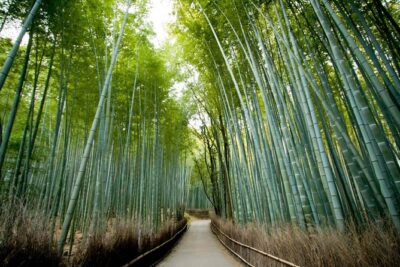
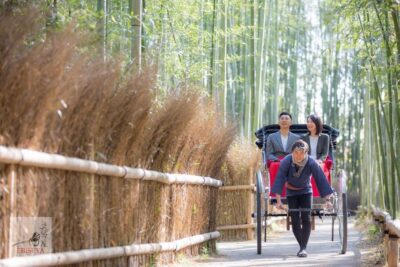
Kyoto Arashiyama Rickshaw Tour with Bamboo Forest
Read our review →Browse the lists this tour appears in