
Review · GERMANY
Individual City Tour – Rickshaw Sightseeing in Berlin
Berlin’s big story fits into one small ride. This private rickshaw tour links Alexanderplatz, Museum Island, the Berlin Wall, Tiergarten, and Brandenburg Gate in about one to three hours, giving you a fast first look without the strain of a long walking tour. I especially like the private format, since your party can ask questions and adjust the route instead of following a fixed group. I also like the close-up access: a rickshaw can use cycle lanes and reach small courtyards and narrow places that are awkward for a bus.
The main drawback is the pace. Fifteen stops sound generous, but many receive only about five minutes, so this is an overview rather than a full visit to Berlin’s museums and memorials. You will also need to dress for the weather. A warm blanket is supplied, and some cold-weather outings have included hot water bottles, but an open-air ride can still feel chilly.
At $53.21 per person, the tour offers good value for a private introduction to Berlin, especially if you are traveling with family, have limited mobility, or want to cover a lot before choosing which sights deserve more time. The guide, Leo Daloiso, receives especially strong praise for his clear English, flexible route planning, and ability to bring Berlin’s past to life.
Four things to know before booking
- A private ride, not a group circuit: Only your party participates, so you can ask questions, request stops, and adjust the focus.
- A useful first-day overview: The route covers central Berlin from Alexanderplatz to Brandenburg Gate, with the Wall, Cold War sites, royal squares, parks, and government buildings along the way.
- A good choice for limited walking: You can see major sights from the seat, with help getting on and off if needed.
- Cold-weather support is included: A blanket comes with the ride, and some outings have also had hot water bottles.
- The route can change: Tell Leo what you plan to visit later, and he can avoid repeating those areas or focus on your interests.
- Pickup is local and practical: Hotel pickup within two kilometers of Museum Island is free. Beyond that area, the extra charge is €5 per kilometer.
Why a rickshaw works well in central Berlin
Berlin is spread out. Alexanderplatz, the Brandenburg Gate, Checkpoint Charlie, the government quarter, and Tiergarten are all central, but walking between them takes time and energy. Public transport is useful, yet it does not give you a running explanation of what you are seeing.
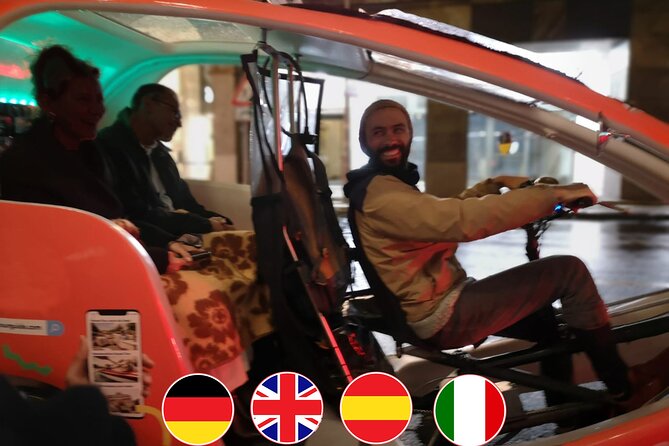
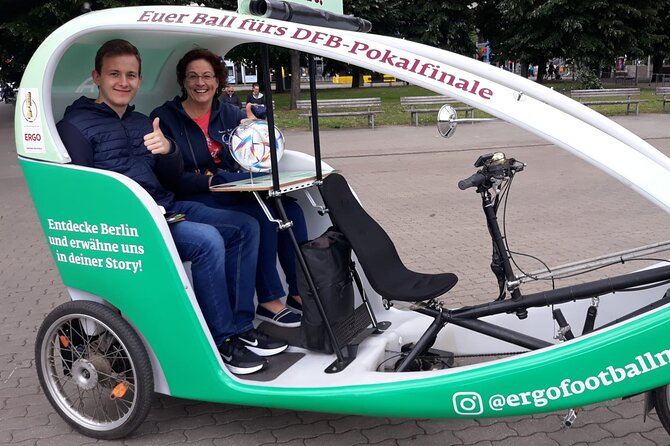
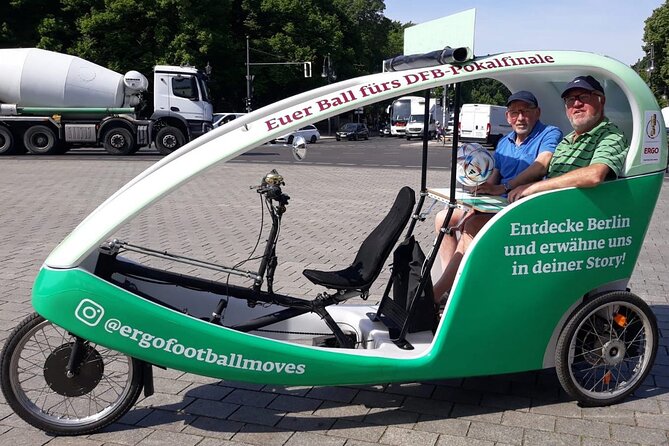
The rickshaw fills that gap. You sit close to street level, hear the guide as you move, and can stop for photographs without dealing with a large coach. The ride also reaches cycle lanes and small urban spaces that a car or tour bus cannot use. That makes the experience feel more personal than a standard sightseeing vehicle.
The private setup matters most. Leo can slow down for questions, adapt the route to a teenager’s interest, or help a person with bad knees get on and off. One solo participant was also able to bring a walker, which shows how useful the small vehicle can be for people who find a full walking tour difficult.
This is not a silent ride. Music can be added by request, and drinks can be ordered separately. The focus, though, is the guide’s explanation and the changing view of Berlin outside the canopy.
More Rickshaw Tours in Germany
- Berlin: Private Guided E-Rickshaw Tour
★ 4.9 · 157 reviews - Berlin Express: Private 1-Hour E-Rickshaw Ride
★ 5.0 · 116 reviews - Rickshaw Tours Berlin – Groups of up to 16 people with several rickshaws
★ 4.0 · 97 reviews
Alexanderplatz and Berlin’s oldest beginnings
The ride begins at the Weltzeituhr, or World Time Clock, on Alexanderplatz. This is one of Berlin’s easiest meeting points, close to public transport and familiar to both locals and visitors.
Alexanderplatz helps set up the city’s modern story. It developed from the medieval edge of Berlin into the center of East Berlin during the German Democratic Republic period. The clock itself is a useful place to begin because it is easy to find and gives the guide a natural opening for explaining how the city changed after the Second World War.
From there, the rickshaw heads toward Nikolaiviertel. This district marks the oldest settlement area of the twin towns of Berlin and Cölln. It was almost completely destroyed in the Second World War and rebuilt for Berlin’s 750th anniversary.
Expect only a short stop, around five minutes, rather than time for a slow wander. That is enough to orient yourself and hear the basic story, but you may want to return later if you care about architecture, restaurants, or the district’s reconstruction.
Museum Island, courtyards, and the Palace of Tears
Museum Island gives the tour its grand royal and cultural setting. The complex was commissioned by Prussian kings and has been a UNESCO World Heritage site since 1999. Berlin Cathedral and the new Berlin Palace are nearby, giving you several major buildings within a compact area.
The rickshaw provides a good outside view, but admission to the museums is not included. This is one of the clearest limits of the tour. You will learn where the museums are and how they fit into Berlin’s center, but you will not have time to explore their collections during the ride.
Next comes Hackesche Höfe, a series of enclosed courtyards in the old Spandauer Vorstadt district. Its mix of decorative facades, small courtyards, shops, and city life gives you a different side of Berlin from the formal avenues and monuments. The rickshaw is especially useful here because it can get close to spaces that feel less accessible from a large vehicle.
At the Palace of Tears, you encounter a more personal reminder of division. This former exit hall at Friedrichstraße station served as a border crossing. The name comes from the farewells that took place there when people crossed between East and West Berlin. You can still see the old control counters.
Again, the stop is brief. Treat it as a preview of Berlin’s divided past, then return on your own if you want a longer look inside.
Prussian squares and the memory of book burning
Bebelplatz is one of the tour’s most powerful short stops. The square shows the elegance of Berlin’s 18th-century culture, with buildings linked to music, learning, and royal power. Beneath that beauty is a dark memory: on May 10, 1933, Nazi-organized book burnings took place here.
An empty library set into the pavement commemorates the event. From the rickshaw, you get the setting and the explanation without spending much time on foot. The five-minute stop cannot cover every detail, but it gives you a reason to return and look more carefully.
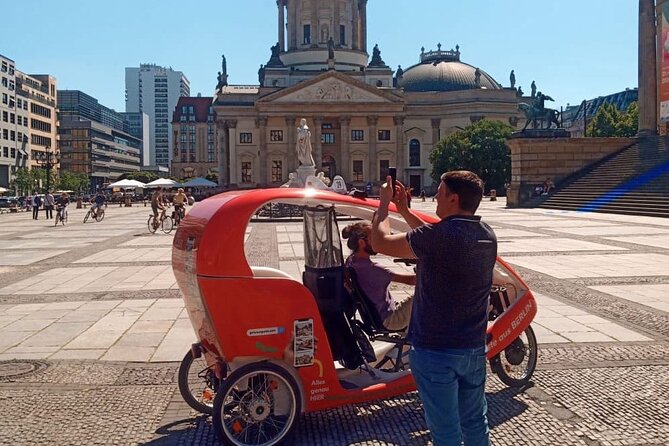
Gendarmenmarkt follows with one of Berlin’s finest architectural ensembles. The square brings together a concert hall and two churches with prominent towers. Its symmetry and scale make it an excellent photography stop, though construction or local conditions can affect what you see on the day.
The appeal here is contrast. Within a short distance, the tour moves from a beautiful public square to a place that recalls political repression. Berlin often works this way. The city’s attractive streets and painful memories sit side by side.
More Tuk Tuk City Tours in Germany
- Rickshaw Sightseeing City Tours Berlin – Rikscha Tours
★ 4.0 · 55 reviews - Berlin: Private Sightseeing Tour in an E-Rickshaw
★ 4.9 · 44 reviews - Berlin Rickshaw Tours Historical & Photo City Tour 120min – Sightseeing
★ 4.5 · 11 reviews - Rickshaw Sightseeing Tours Berlin – Highlights Berlin – Rickshaw city tour
★ 3.5 · 3 reviews
Checkpoint Charlie and the Berlin Wall
Checkpoint Charlie is one of Berlin’s best-known Cold War sites. The former crossing recalls the period when the city was divided, and it also connects to tragic attempts to escape from East Berlin.
The stop is useful for orientation, but keep your expectations measured. The modern setting is busy and commercial, and the original border crossing is no longer intact in the way many first-time visitors expect. The value comes from the guide’s explanation and the chance to place the site within the wider story of divided Berlin.
The route then reaches the Topography of Terror. Here, the longest remaining section of the Berlin Wall remains in its original position. The site also deals with the institutions of Nazi terror, so it adds another major layer to the city’s 20th-century story.
Five minutes gives you a clear introduction, not a museum visit. If you want a full understanding of the documentation center and its exhibits, plan a separate visit. The rickshaw tour helps you identify which places deserve that extra time.
Potsdamer Platz and Berlin’s sharpest contrasts
Potsdamer Platz has changed more than almost any other area on the route. Before the Second World War, it was a major traffic junction. After the war and the division of Berlin, the area was cut apart and left heavily damaged.
Today, modern buildings dominate the view. The old and new do not always blend quietly here, and that is the point. The guide can explain how an important urban center became a border zone and then a symbol of reunified Berlin.
You should think of this as a moving city lesson rather than an architectural tour. The stop is short, and the district is best understood by seeing its position in relation to the Wall, the former no-man’s-land, and the rebuilt city center.
Thirty minutes through Tiergarten
The longest part of the experience is the ride through Tiergarten, Berlin’s green heart. You get about 30 minutes here, much more than at the individual monuments. This helps break up the history-heavy route with trees, bridges, paths, and open space.
The route passes the Victory Column, Bellevue Palace, the House of World Cultures, the Carillon, and the Soviet Memorial. You will also see the Federal President’s office and other important sites connected with Berlin’s civic life.
The rickshaw is a pleasant match for this section. You can cover a large park without tiring your legs, and the slow pace lets you take in the surroundings. If you are visiting in cold weather, this is also the point where the blanket matters most.
Victory Column, Bellevue, and the government quarter

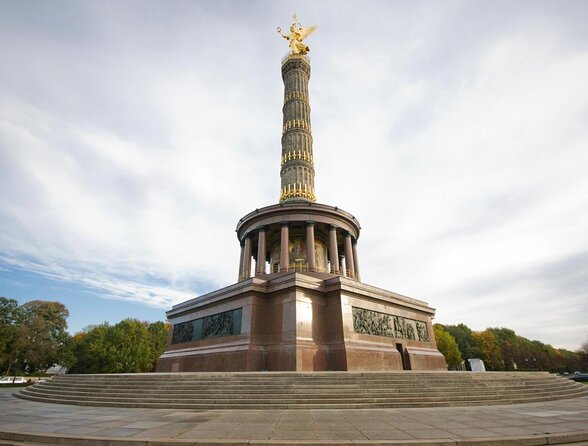
The Victory Column rises from Tiergarten with its gilded Victoria figure above the column. It commemorates three Prussian victories, and the guide can point out details such as the gilded cannons that are easy to miss from a distance.
Entry to the column is not included, so the tour gives you an outside view only. That is perfectly reasonable for a quick city orientation, but anyone interested in the view from the top will need a separate visit.
Bellevue Palace is the official residence of the German Federal President and has served in that role since 1994. It began as a prince’s residence, which makes it another example of Berlin’s habit of placing royal, republican, and modern political history close together.
The government quarter is a newer addition to the city. Built largely around the year 2000 along the Spreebogen, it includes the historic Reichstag building and modern government architecture. The ride gives you a useful sense of how reunified Germany reshaped this part of Berlin.
Brandenburg Gate finishes the central circuit
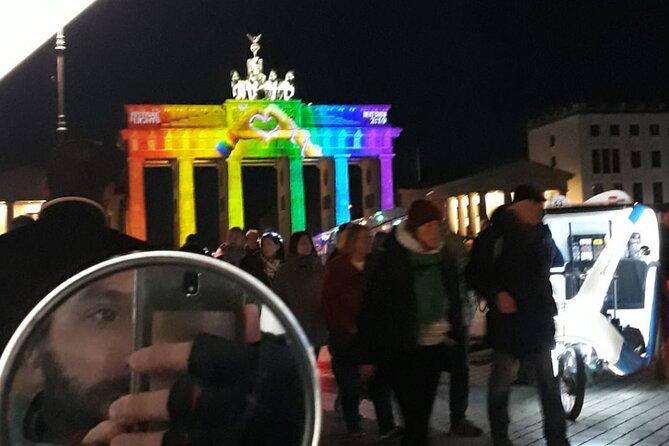
The final major stop is Brandenburg Gate, at the end of Unter den Linden. It is Berlin’s only surviving city gate and the city’s most famous landmark.
Its meaning has changed many times. It once marked the edge of the city, later became associated with division, and then became a public symbol of reunification. That shifting role makes it more than a grand photo backdrop.
The tour ends back at the starting point. Since the route includes so many major places, you can use the return journey to decide what deserves a longer visit. Museum Island, the Palace of Tears, Topography of Terror, and the Victory Column are all sensible candidates for a second look.
The guide, comfort, and flexibility
Leo Daloiso is the guide most often named in the feedback, and his strengths are clear. He explains complicated events in plain English, answers detailed questions, and uses old photographs on some tours to show how Berlin has changed.
His flexibility is just as useful as his historical background. He has adjusted routes around a family’s next-day plans, followed a teenager’s interests, and included requested sights. If you already know you will visit several museums or memorials later, tell him before departure so the ride can give you a different view of the city.
Comfort is better than you might expect, but this remains an outdoor activity. The rickshaw is covered, and blankets are provided in cold weather. Some chilly rides have also included hot water bottles, though you should not assume those are guaranteed for every booking.
People with bad knees or limited walking ability may find this a smart choice. The guide can help with boarding, and the private vehicle allows your group to move at a calmer pace. Service animals are allowed, and the tour is near public transport.
Is $53.21 a fair price?
At $53.21 per person, the value depends on how many people are in your party and how much time you have. For a private party, the price buys a personal guide, transport between widely separated sights, and the freedom to ask for changes. It can be especially worthwhile for a family or small group that would otherwise pay for several separate transport trips.
The tour is less valuable if you want to enter museums, spend a long time at memorials, or study each landmark in detail. Admission to Museum Island and the Victory Column is not included, and the short stops are designed for orientation.
Hotel pickup within two kilometers of Museum Island is free. Pickup farther away costs €5 per kilometer, so check the location before you book. Confirmation arrives at booking, and free cancellation is available up to 24 hours before the start time. Changes or cancellations inside that window are not refunded.
Who should book this Berlin ride?
I would choose this tour for a first full day in Berlin, a family group, older visitors, anyone managing sore knees, or a person who wants a quick overview before planning museum visits. It is also a strong choice for a short stay because it covers a wide area without asking you to spend the day on foot.
It may not suit you if you dislike open-air rides, need guaranteed warm weather, or want lengthy time at each site. Nor is it a replacement for visiting the museums and memorial centers themselves.
FAQ
How long does the rickshaw tour last?
The experience lasts approximately one to three hours. The exact length depends on the version of the tour you book and the route agreed with your guide.
Where does the tour begin?
The meeting point is the World Time Clock at Alexanderplatz, Alexanderplatz 1, 10178 Berlin.
Does the tour return to the starting point?
Yes. The activity ends back at the meeting point.
Is hotel pickup available?
Free pickup is available from hotels or other locations within two kilometers of Museum Island. Pickup farther away costs €5 per kilometer.
Is the tour private?
Yes. Only your own party participates in the activity.
Is the tour offered in English?
Yes. The tour is offered in English.
Are blankets provided in cold weather?
Yes. A warm blanket is included when the weather is cold. Music can also be provided by request, while drinks cost extra.
Should you book it?
Book this rickshaw tour if you want a personal, low-walking introduction to Berlin rather than a detailed visit inside each attraction. Leo’s clear explanations, flexible route, and thoughtful cold-weather preparation make the ride more than simple transport.
The best plan is to take it early in your stay, then return on foot to the places that catch your interest. For a compact overview with plenty of history and a little Berlin-style street-level adventure, $53.21 is a fair price.
More Tuk Tuk City Tours around Berlin
- Private Lisbon Sightseeing Tuk-Tuk Tour: Alfama, Belém & More
★ 5.0 · 4,277 reviews - Madrid: Private City Tour by Eco Tuk Tuk
★ 4.9 · 3,465 reviews - Lisbon Highlights: Private Tuk Tuk Tour Adventure Sightseeing
★ 5.0 · 3,284 reviews - Colombo: Private Tuk-Tuk City Tour with All Entry Fees
★ 4.9 · 2,154 reviews
More Rickshaw Tours around Berlin
- One Up to 3 Rickshaws(6 GUESTS)-Taylor Made Rickshaw Berlin Tour
★ 5.0 · 20 reviews - Daily First Rickshaw promotion in Combi Vehicle public Group 90€
★ 5.0 · 11 reviews - Romantic Berlin Rickshaw City and Photo Tour – incl. pick-up
★ 4.0 · 9 reviews - Rickshaw Tour-Cruise Ship guests arrive 9.30 upto 11.30 am Berlin
★ 5.0 · 7 reviews
Just added around Berlin
- Romantic Berlin Rickshaw City and Photo Tour – incl. pick-up★ 4.0 · 9 reviews
- Rickshaw Sightseeing Tours Berlin – Highlights Berlin – Rickshaw city tour★ 3.5 · 3 reviews
- One Up to 3 Rickshaws(6 GUESTS)-Taylor Made Rickshaw Berlin Tour★ 5.0 · 20 reviews
- Daily First Rickshaw promotion in Combi Vehicle public Group 90€★ 5.0 · 11 reviews
- Berlin Rickshaw Tours Historical & Photo City Tour 120min – Sightseeing★ 4.5 · 11 reviews
- Private Up to 12 Guests-ONE RICKSHAW, E-Bikes, E-Scooters★ 5.0 · 2 reviews
- Rickshaw Tour-Cruise Ship guests arrive 9.30 upto 11.30 am Berlin★ 5.0 · 7 reviews
- Private Guide Up to Group 6 – ONE Rickshaw, (E)Bikes, E-Scooters★ 5.0 · 3 reviews
Rickshaw Tours, compared.
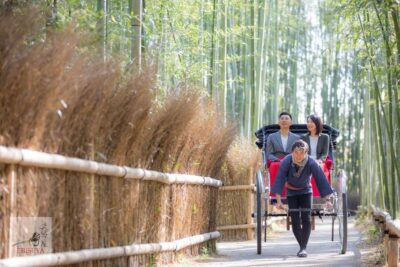
Arashiyama Customized Rickshaw Tour & Bamboo Forest
Read our review →
Split by Private Electric Rickshaw – Palace & Hidden Gems
Read our review →
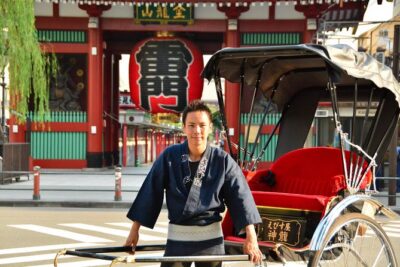
Kyoto Arashiyama Rickshaw Tour with Bamboo Forest
Read our review →Browse the lists this tour appears in