
Review · GERMANY
Promotion Berlin Rickshaw Shared Guide (Combo Vehicle Group)
Berlin’s major sights are spread across a wide area. This rickshaw tour makes seeing them far easier, especially if you want to cover central Berlin without spending four hours on foot. I like the small-scale format and the chance to travel through squares, parks, and bicycle routes rather than simply following a bus. I also like the generous photo stops and guide-led storytelling, which turn a long sightseeing ride into a useful introduction to Berlin.
The main consideration is price. At $235 for up to two people, this is not a cheap way to get around. It makes more sense if you value comfort, personal attention, and saving energy, particularly if walking is difficult or you want one compact tour at the start of your stay. The tour lasts 210 minutes, or three and a half hours, and one rickshaw is offered at the promotional rate each day.
The experience begins at Weinbergsweg 6 near Rosenthaler Platz and visits Alexanderplatz, Museum Island, Unter den Linden, Checkpoint Charlie, the Holocaust Memorial, Brandenburg Gate, the Reichstag, and several sites tied to the Nazi era. Your guide pedals and drives while providing commentary in Dutch, English, German, or Turkish. One account names the guide Levent, while another spells the name Levant, so it is sensible to confirm the assigned guide when booking.
Key Points Before You Book
- Three and a half hours in a traditional rickshaw: You cover a large part of Berlin-Mitte without walking between every sight.
- A practical choice for limited mobility: The rickshaw can carry a walker, stop close to monuments, and reduce the need to get in and out repeatedly.
- A photo-friendly route: There are many planned picture stops, and the guide helps with angles and timing.
- Routes beyond ordinary car traffic: The rickshaw can use squares, parks, and bicycle roads where appropriate.
- A private booking for up to two: The advertised price covers the rickshaw, guide, and two people, with the wider activity limited to six participants.
- Weather matters: Blankets are available in cold weather, but you still need to dress for the conditions. In summer, shade and water become important.
Starting at Rosenthaler Platz and Weinbergsweg
The meeting point is Weinbergsweg 6, close to Rosenthaler Platz in Berlin’s Mitte district. Rosenthaler Platz is well connected by public transportation and surrounded by cafes, bars, shops, and street art. That makes it a useful place to meet, but it is not a quiet historic square where you should expect a grand ceremonial start.
Weinbergsweg leads toward Weinbergspark, a greener and calmer pocket near the busy junction. Arrive with a little time to spare so you can find the exact address and settle in before departure. The tour returns to the same location, which simplifies the rest of your day.
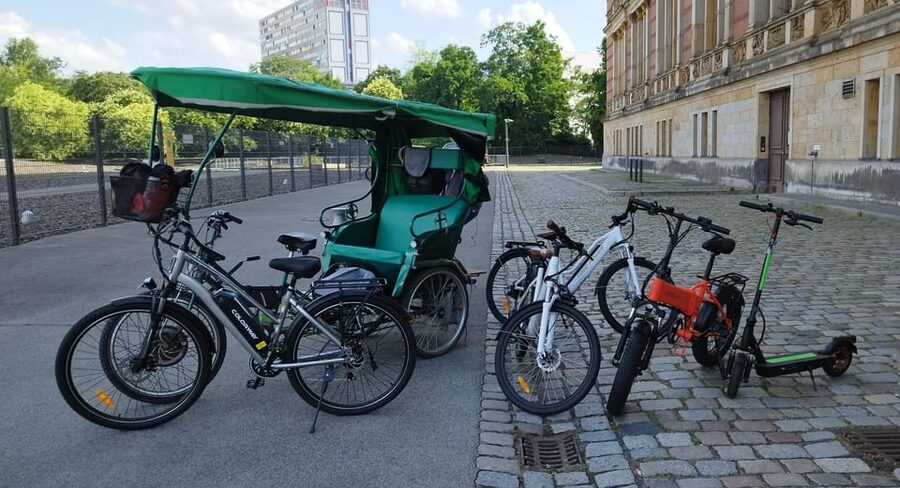
The traditional rickshaw is the central feature here. You sit back while the guide handles the route and the pedaling. That changes the pace of sightseeing. You are not rushing from one landmark to the next, but you are also not trapped inside a large vehicle that can only stop at ordinary roads.
The rickshaw is designed for one or two people on the booking. The wider activity is described as a small group of no more than six participants, so clarify the setup if you are booking as part of a larger party. The advertised price of $235 is per group of up to two, not per person.
More Rickshaw Tours in Germany
- Berlin: Private Guided E-Rickshaw Tour
★ 4.9 · 157 reviews - Individual City Tour – Rickshaw Sightseeing in Berlin
★ 5.0 · 120 reviews - Berlin Express: Private 1-Hour E-Rickshaw Ride
★ 5.0 · 116 reviews
Alexanderplatz to Berlin Cathedral
Alexanderplatz is the first major sight. Once an important square in East Berlin, it is now one of the city’s busiest transport and shopping areas. You can expect a photo stop, an explanation from the guide, and views as the rickshaw moves onward.
This is a useful opening stop because it gives you a quick sense of Berlin’s divided past and its modern scale. It is not the prettiest section of the route, but it helps place the city in context. The broad spaces and mix of older East German planning, modern buildings, and public transport make Alexanderplatz a good place for your guide to explain how Berlin changed after the Second World War and reunification.
The ride then continues toward Berlin Cathedral and Museum Island. The rickshaw format works well here because you can approach the monumental buildings without a long walk from a distant parking area. Expect time for photographs and spoken commentary rather than an interior visit. Admission to museums or the cathedral is not included.
Museum Island and Unter den Linden
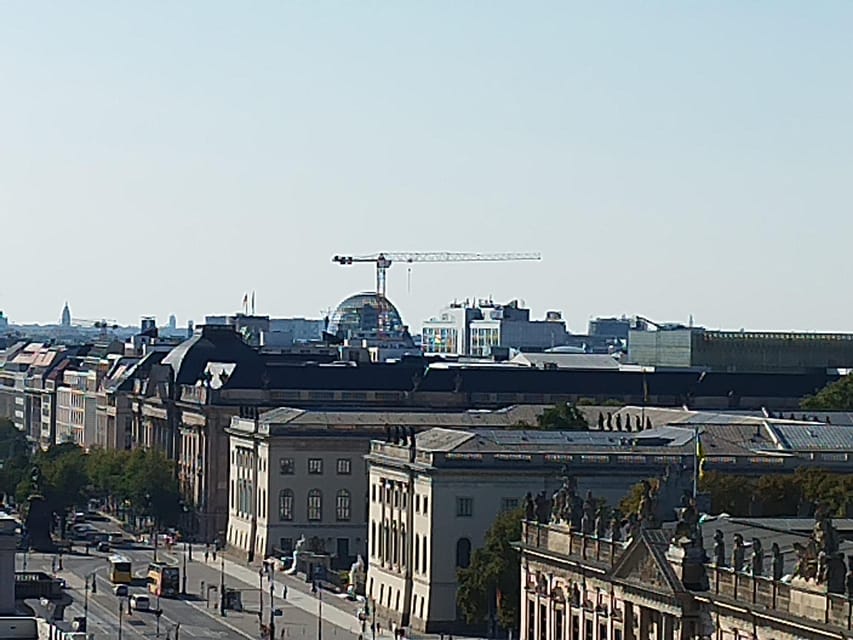
Museum Island is one of Berlin’s most impressive urban settings. The cathedral, museums, riverfront, and broad approaches create a concentrated group of major sights. From a rickshaw, you get a close view without needing to hurry through the area on foot.
The stop is mainly about exterior sightseeing and pictures. If you want to visit the Pergamon Museum, Neues Museum, or another collection, plan that separately. This tour gives you orientation and context, but it does not replace museum time.
From there, the route follows Unter den Linden, Berlin’s grand central boulevard. This stretch connects Museum Island with Brandenburg Gate and the government district. The guide can point out architectural details and explain how the boulevard fits into Berlin’s royal, imperial, wartime, and modern story.
I like this part of the tour because the route connects individual sights instead of treating them as isolated photo backgrounds. You see how the center fits together. The tradeoff is that a moving commentary can never offer the same depth as a dedicated walking tour or museum visit.
The Book-Burning Memorial and Berlin’s Difficult Past
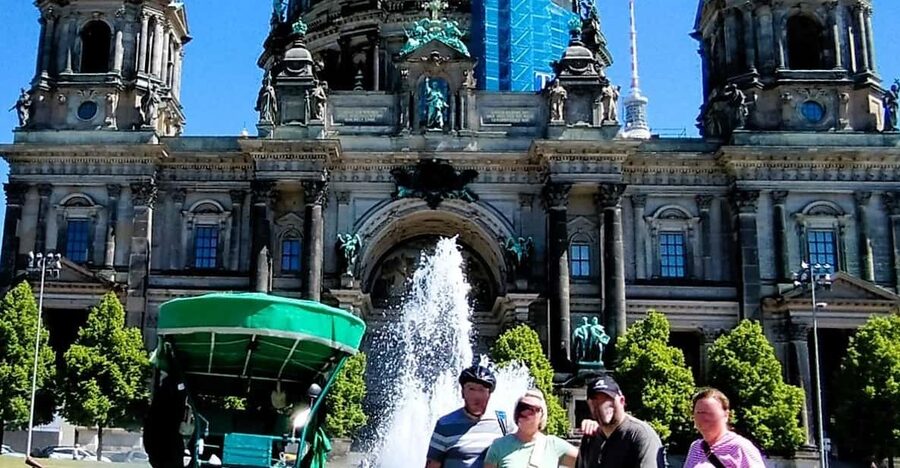
The Memorial to the May 10, 1933 Nazi Book Burning is a small but powerful stop. The memorial is easy to miss if you are moving quickly through central Berlin, so having a guide bring you directly to it adds real value.
The site recalls the Nazi book burning carried out by students and supporters in 1933. The memorial’s location near Bebelplatz makes it part of a larger story about censorship, propaganda, and the destruction of free expression. Your guide provides the setting and explanation while you have time for a photograph.
This is one of the moments when the rickshaw’s slower pace helps. You do not have to spend the whole day on foot to pause at places that deserve attention. Still, the experience depends heavily on the guide. The advertised guides are certified under DIN EN 15565 and speak the language selected at booking, but the amount of historical detail may vary by guide.
More rickshaw tours around Berlin:
- Rickshaw Tours Berlin – Groups of up to 16 people with several rickshaws
★ 4.0 · 97 reviews - Rickshaw Sightseeing City Tours Berlin – Rikscha Tours
★ 4.0 · 55 reviews - Berlin: Private Sightseeing Tour in an E-Rickshaw
★ 4.9 · 44 reviews - One Up to 3 Rickshaws(6 GUESTS)-Taylor Made Rickshaw Berlin Tour
★ 5.0 · 20 reviews
Checkpoint Charlie and the Topography of Terror
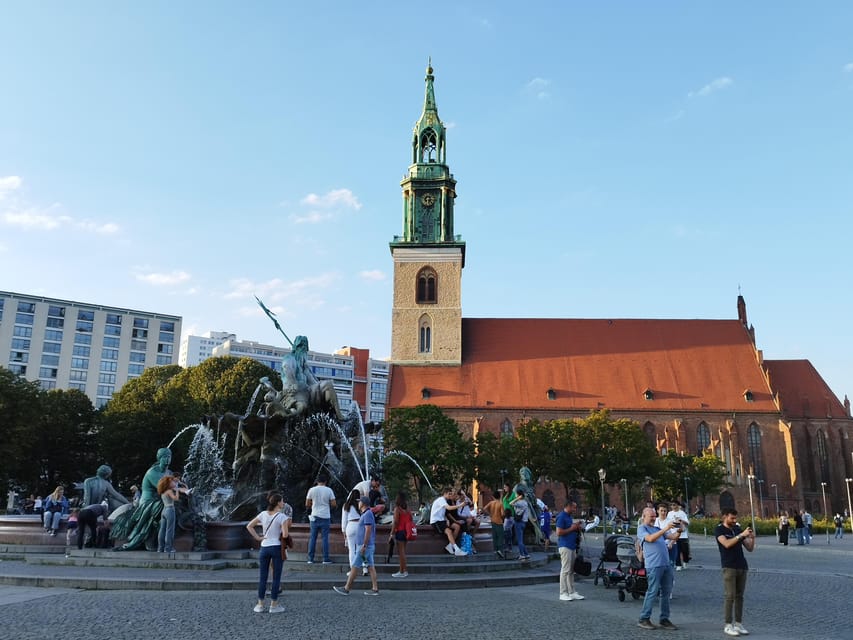
Checkpoint Charlie is next, one of Berlin’s best-known Cold War locations. The former border crossing is now a busy tourist stop, with displays, signs, and photo opportunities. It can feel commercial and crowded, so keep your expectations realistic. You are seeing a reconstructed and highly visited site, not a preserved border crossing in its original working form.
The rickshaw lets you stop close to the main area and avoid an unnecessary walk. Your guide can explain the role of Checkpoint Charlie in the divided city, including the fact that it was a crossing point between East and West Berlin.
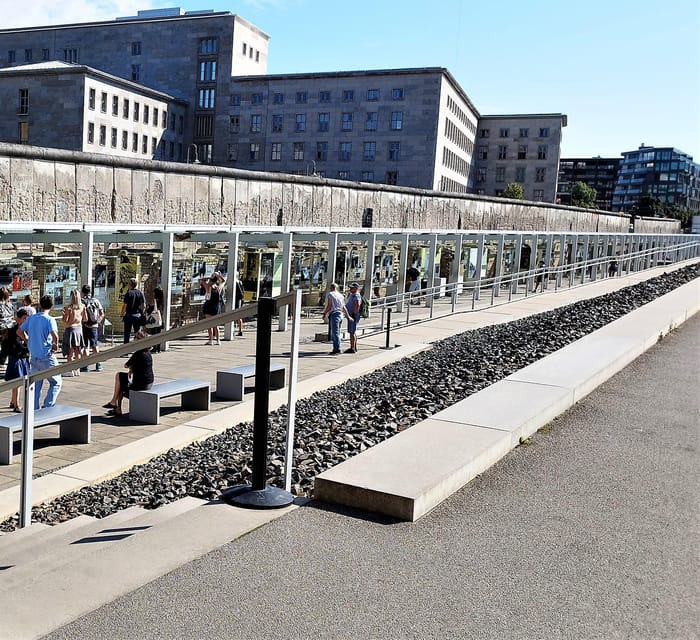
The nearby Topography of Terror adds much stronger historical weight. This documentation center occupies the former site of Nazi security and police institutions. The outside area and exhibitions focus on the machinery of Nazi persecution. The tour can introduce the location, but you will need extra time if you want to study the indoor displays properly.
I would treat these two stops differently. Checkpoint Charlie is a quick orientation point and photo stop. The Topography of Terror deserves a return visit if you want a fuller understanding of the period.
Hitler’s Bunker and the Holocaust Memorial
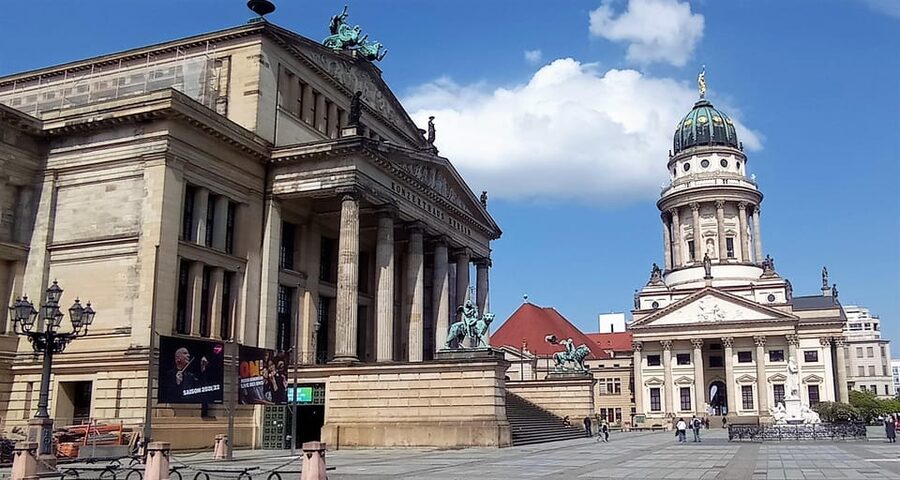
The stop connected with Hitler’s bunker is deliberately understated. The bunker site is not presented as a grand attraction, and there is no preserved interior open for a standard sightseeing visit. The value is in understanding where the final days of the Nazi leadership took place and why the site is marked so quietly.
This is a place where a guide’s explanation matters more than the view. Do not expect dramatic remains. Expect a location, context, and a chance to ask questions.
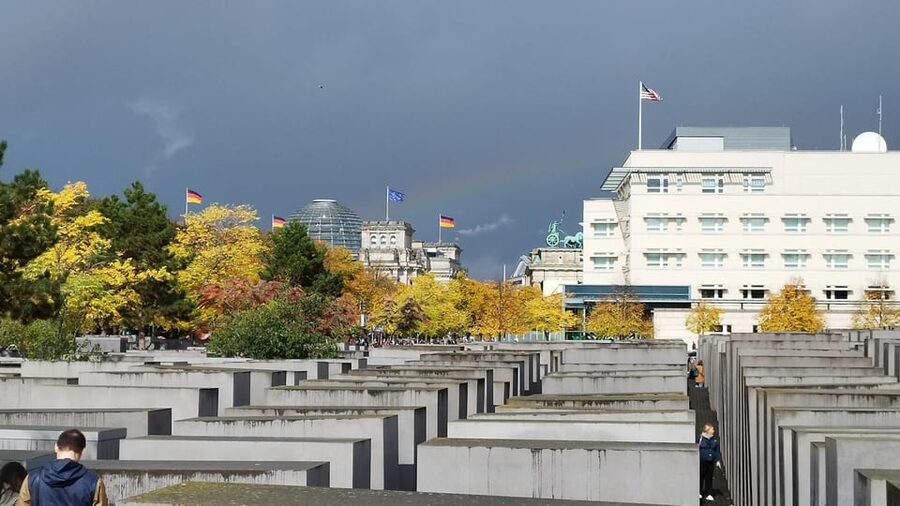
The nearby Holocaust Memorial is one of Berlin’s most important modern memorials. Its field of concrete slabs creates a changing sense of height, space, and uncertainty as you move around it. The tour includes a photo stop and guided sightseeing, but the rickshaw may not provide the same experience as walking between the slabs yourself.
If you want to enter the underground information center, allow separate time and check current access arrangements. The ride gives you the setting and a brief introduction. It does not turn a memorial into a quick checklist item unless you choose to treat it that way.
Brandenburg Gate and the Reichstag
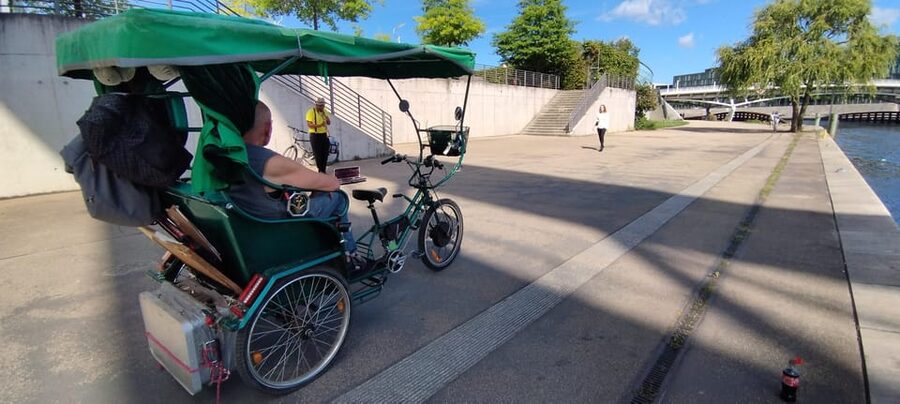
Brandenburg Gate is the visual high point of the route. This neoclassical gate once marked the edge of Berlin and later became a symbol of division, reunification, and the modern capital. The broad space around it gives you a strong view for photographs, though the area can be busy.
A rickshaw is useful here because you can get close to the monument and stop without searching for a place to leave a large vehicle. The guide can also help with photographs. One account specifically praised the guide’s ability to find good angles, while another noted that the tour allowed plenty of time for pictures and even buying postcards.
The Reichstag is nearby. Its glass dome is one of Berlin’s most recognizable sights, but this tour covers the exterior and surrounding government quarter rather than an included dome visit. If you want to enter, register separately and set aside extra time.
Together, Brandenburg Gate and the Reichstag provide a fitting finish. One represents the city’s older power and changing political meaning. The other represents modern Germany’s parliament. You get the strongest sense here of Berlin as a capital shaped by war, division, and reunification.
What the Rickshaw Adds to the Route
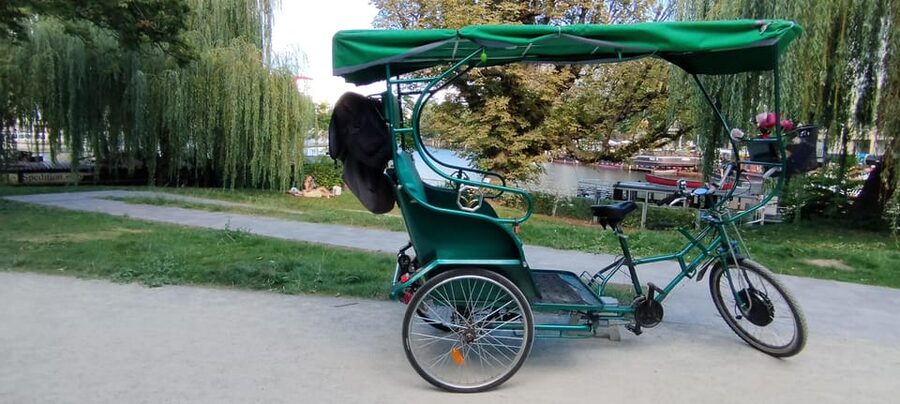
The main benefit is not speed. Berlin’s central sights are not all far apart on a map, but the route includes enough ground to make walking tiring, especially in hot or cold weather. The rickshaw lets you see the major points while saving your legs for museums, neighborhoods, or evening plans.
I also like the access offered by a small vehicle. The rickshaw can travel through selected parks, squares, and bicycle roads, and it can approach monuments more closely than a standard sightseeing coach. You get an open-air view rather than a window view, which makes the city feel more immediate.
The tour is also designed for people who cannot or do not want to cycle. A walker can be taken along, and the guide can stop whenever you want a photograph. The description says you may come very close to monuments without stepping out, though you should discuss your specific mobility needs before booking.
There are simple comforts, too. Free water and soft drinks are provided, and the description says people in the rickshaw may enjoy beer or sparkling wine. Cold-weather blankets are available. These extras are pleasant, but they should not be the reason you book. The real value lies in the route, the guide, and the reduced physical effort.
Weather, Comfort, and the Guide
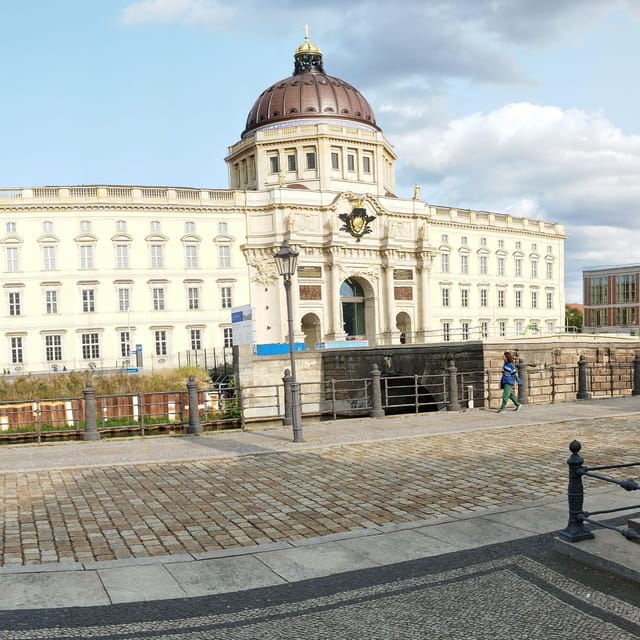
Berlin weather can shape the experience. On a cold day, blankets help, but one account gives the sensible warning that you still need proper clothing. On a hot day, the guide is doing demanding physical work while pedaling for about three hours, so bring sun protection and use the provided water.
The open design also means you remain exposed to the conditions. That is part of the charm, but it can become uncomfortable if you dress for indoor sightseeing only. Check the forecast before you go and avoid assuming that a blanket will solve every cold-weather problem.
Guide quality is especially important on this tour. You are relying on one person to pedal safely, manage the route, explain complicated history, and help with photos. The strongest praise focuses on Levent or Levant being friendly, informative, good at answering questions, and able to stop at the key places. Confirm the spelling and assigned guide when you book, since the name appears differently in the supplied accounts.
Languages are Dutch, English, German, and Turkish. Choose carefully so the history and practical instructions are easy for you to follow.
Is $235 Good Value for Two People?
At $235 for up to two people, the cost works out to $117.50 per person if the rickshaw is full. That is a high price compared with public transport or a self-guided walk, but the comparison is not quite fair.
You are paying for a three-and-a-half-hour route, a dedicated driver and guide, a traditional rickshaw, many photo stops, drinks, and a level of personal attention that a large bus cannot offer. You also save the time and effort of navigating between Alexanderplatz, Museum Island, Checkpoint Charlie, the Holocaust Memorial, Brandenburg Gate, and the Reichstag.
The value is strongest for a couple, parent and child, or two friends who want a gentle overview at the start of a Berlin visit. It is also more persuasive if one person has limited mobility or if you prefer not to cycle. The price is harder to justify if you enjoy long walks, already know central Berlin, or plan to spend most of your time inside museums.
Free cancellation up to 24 hours before the tour and a reserve-now, pay-later option reduce the financial risk. The promotional offer is limited to one rickshaw per day, so availability may matter if your dates are fixed.
Who Should Book This Berlin Rickshaw Tour?
I would recommend it to you if you want to see the main central sights in one sitting, need to conserve energy, or prefer a personal guide to a large coach. Families and older participants may appreciate the easy access and regular stops. It also suits photographers, since the route includes many planned picture opportunities and the guide can help with angles.
It is a good first-day activity because it gives you a map in your head. Afterward, you can return to the Holocaust Memorial, Topography of Terror, Museum Island, or the Reichstag for more time.
I would hesitate if your main goal is detailed historical study. The route covers many places, so each stop receives limited time. You should also think twice if you dislike open-air transport in bad weather or want a fully private experience for a large group, since the wider activity is limited to six people and the price is based on two.
FAQ
Where does the Berlin rickshaw tour begin and end?
It begins and ends at Weinbergsweg 6, near Rosenthaler Platz in Berlin’s Mitte district.
How long does the tour last?
The tour lasts 210 minutes, which is three and a half hours.
How many people can book one rickshaw?
The advertised price covers one rickshaw for up to two people. The overall activity is limited to six participants.
Which languages are available?
The live guide is available in Dutch, English, German, and Turkish.
Can someone with limited mobility join?
Yes. The rickshaw is recommended for people who cannot or do not want to cycle, and a walker can be taken along. Discuss your needs before booking.
What happens if the weather is cold?
Blankets are available in cold weather, and free water and soft drinks are provided. You should still dress appropriately for the forecast.
Should You Book It?
Book this tour if you want a comfortable, photo-friendly way to cover Berlin’s central landmarks without walking the entire route. The strongest reasons are the personal guide, close access to monuments, flexible photo stops, and help for people with limited mobility.
Skip it if you prefer exploring slowly on foot, want extended time inside museums, or find $235 too steep for a sightseeing overview. For two people who value comfort and a strong first look at Berlin-Mitte, the price can be fair. For a solo visitor on a tight budget, public transport and walking will deliver more time for less money.
Just added around Berlin
- Romantic Berlin Rickshaw City and Photo Tour – incl. pick-up★ 4.0 · 9 reviews
- Rickshaw Sightseeing Tours Berlin – Highlights Berlin – Rickshaw city tour★ 3.5 · 3 reviews
- Daily First Rickshaw promotion in Combi Vehicle public Group 90€★ 5.0 · 11 reviews
- One Up to 3 Rickshaws(6 GUESTS)-Taylor Made Rickshaw Berlin Tour★ 5.0 · 20 reviews
- Berlin Rickshaw Tours Historical & Photo City Tour 120min – Sightseeing★ 4.5 · 11 reviews
- Private Up to 12 Guests-ONE RICKSHAW, E-Bikes, E-Scooters★ 5.0 · 2 reviews
- Rickshaw Tour-Cruise Ship guests arrive 9.30 upto 11.30 am Berlin★ 5.0 · 7 reviews
- Private Guide Up to Group 6 – ONE Rickshaw, (E)Bikes, E-Scooters★ 5.0 · 3 reviews
Rickshaw Tours, compared.
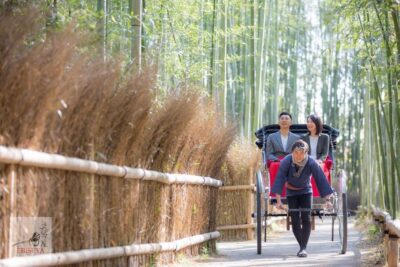
Arashiyama Customized Rickshaw Tour & Bamboo Forest
Read our review →
Split by Private Electric Rickshaw – Palace & Hidden Gems
Read our review →
Kyoto Arashiyama Rickshaw Tour with Bamboo Forest
Read our review →Browse the lists this tour appears in