
Review · GERMANY
Rickshaw Tours Berlin – Groups of up to 16 people with several rickshaws
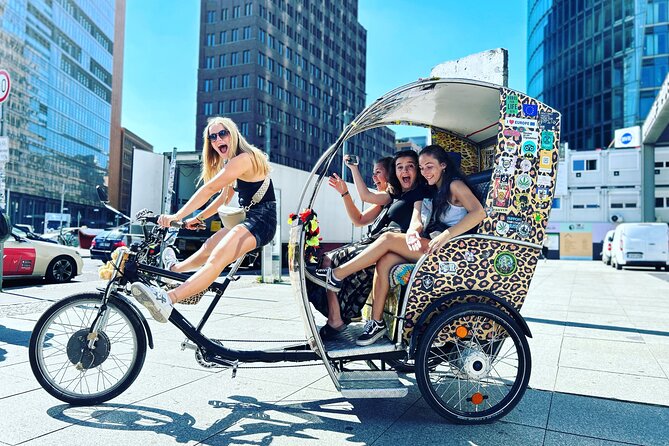
See Berlin without wearing out your shoes. This private rickshaw ride covers major landmarks from Brandenburg Gate to Alexanderplatz, with friendly guides such as Leo and Hugo often adding humor, music, photos, and personal stories. I like the easy pace and the chance to move through Tiergarten without a bus window between you and the city. I also like that groups of up to 16 can travel together in several rickshaws.
The main concern is reliability. Several bookings ended in a no-show or late cancellation, sometimes with the operator unreachable. Guide quality also varies, from highly praised history talks to rides where loud music replaced useful commentary. I would book only after confirming the meeting details and accepting that this is a light sightseeing ride, not a fully detailed history tour.
Key points to know before booking
- Best for a quick first look: The route links Berlin’s main central sights in one ride, useful when you have limited time.
- Private group format: Your party travels together, with several rickshaws used for groups of up to 16.
- Strong guides can make the tour: Leo, Hugo, and Ufuk Ayik receive especially warm praise for humor, history, flexibility, and care.
- Pickup is limited: Pickup is included within 2 kilometers of Brandenburg Gate. Beyond that, the charge is €10 per kilometer.
- Expect a panoramic overview: Most stops are brief photo and explanation stops, not extended visits inside museums or buildings.
- Reliability needs attention: Repeated no-show reports and weather-related cancellations are the biggest risks.
Why a Berlin rickshaw can work so well
Berlin is spread out. Brandenburg Gate, Checkpoint Charlie, Museum Island, the Wall Memorial, and Alexanderplatz are not next door to one another. Walking between them can take much of your day, while a standard sightseeing bus can feel sealed off from the streets.
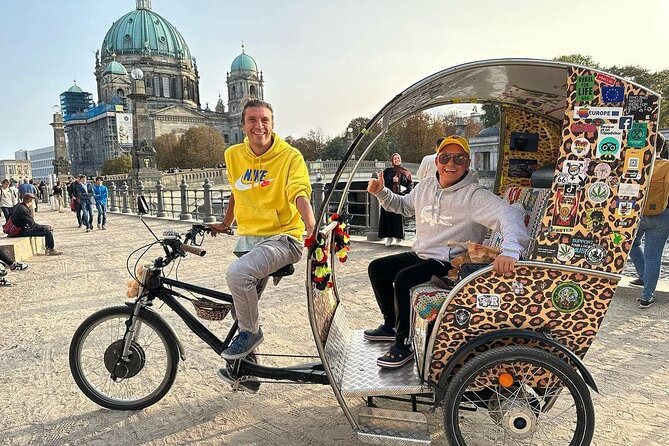
A rickshaw offers a useful middle ground. You sit close to the action, move more quickly than on foot, and can usually stop for photos without the formality of a large coach. The route also passes through Tiergarten, where a smaller vehicle feels more at home than a bus.
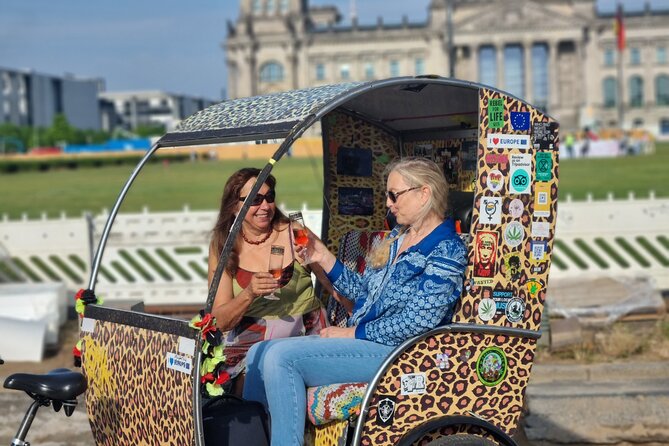
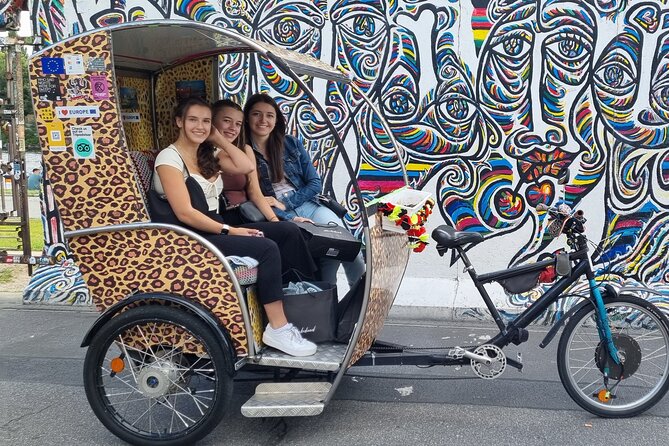
The tour is private, so only your group participates. That matters if you are traveling with family or friends and want to ask questions, change the emphasis, or request a slower pace. Music is available on request, and a photographer is included. Several guides have also taken photos during the ride, which is handy when nobody wants to be left out of the group picture.
The ride is priced at about $53.10 per person. That is fair if you are splitting the cost among a group and using the tour as a fast orientation to central Berlin. It is less compelling if you expect long visits, museum admission, or a detailed lecture at every stop. Most listed stops last between one and five minutes.
The advertised duration ranges from one to four hours. That is a wide spread. A one-hour ride cannot sensibly give equal attention to all 17 listed sights, while a longer booking allows more time for photos, questions, and a fuller route. Ask what length you are actually booking and what the guide plans to cover.
More Rickshaw Tours in Germany
- Berlin: Private Guided E-Rickshaw Tour
★ 4.9 · 157 reviews - Individual City Tour – Rickshaw Sightseeing in Berlin
★ 5.0 · 120 reviews - Berlin Express: Private 1-Hour E-Rickshaw Ride
★ 5.0 · 116 reviews
Brandenburg Gate and the government quarter
The tour begins at Brandenburg Gate, the grand sandstone gateway at the end of Unter den Linden. Built from 1788 to 1791 under Carl Gotthard Langhans, it was inspired by the entrance buildings of the Acropolis in Athens. King Friedrich Wilhelm II wanted a fitting architectural finish for Berlin’s grand boulevard.
This is a good opening stop because the gate carries several layers of Berlin’s story. It was once connected with Prussian power, later became a symbol of division, and now represents reunified Berlin. You will likely get a short explanation and time for photographs rather than an architectural lecture.
From here, the rickshaw moves to the Reichstag, home of Germany’s federal parliament. The building is tied to major turning points: Philipp Scheidemann proclaimed the republic from its west balcony in 1918, the Reichstag fire took place in 1933, and Soviet troops raised a flag there in 1945 after the fall of Nazi Germany.
The stop is brief, around five minutes, and admission is not included. You should not expect to enter the dome during this ride. Think of it as an outside look at a building where Germany’s political story changed dramatically.
The nearby Federal Chancellery gives you a very different view of Berlin. Its central 36-meter-high structure rises above lower administrative wings, with broad glass areas, concrete pillars, large arches, and open courtyards. The building was designed to look transparent and light, though its solid side walls also give it a serious government character.
The Soviet War Memorial in Tiergarten is a compact but powerful stop. Two T-34 tanks flank a bronze Soviet soldier, while the rear section contains graves for around 2,500 soldiers. The site is free to visit, but the rickshaw stop itself is only about three minutes, so you will have time to look and take a quick photograph rather than study every inscription.
Tiergarten and Potsdamer Platz
Tiergarten gives the ride a welcome change of pace. The former hunting ground became a public pleasure park in the late 17th century, and Peter Joseph Lenné reshaped it as an English-style public park between 1833 and 1838.
You pass through a large central green space dotted with monuments, bridges, memorials, the Victory Column, the Federal President’s Office, the House of World Cultures, and the English Garden. The park covers roughly 200 hectares, so a rickshaw is a practical way to see its major sections without turning the day into a long walk.
I especially like this part of the route for anyone who wants more than a string of city streets. You get trees, open paths, and a slower rhythm. If you have mobility limits or are recovering from an injury, the ride can be a useful alternative to a walking tour, though the supplied information does not promise a particular vehicle design or formal accessibility service. Discuss your needs before booking.
Potsdamer Platz supplies the modern contrast. Once cut apart by Berlin’s division, it was rebuilt as a planned district of high-rise buildings, shops, cinemas, cafes, and the Daimler City complex. The new quarter covers 6.8 hectares between Potsdamer Platz and Reichpietschufer.
The stop lasts about two minutes and is free. You will get a quick look at the architecture and city planning rather than time to shop or visit a cinema. It is a useful reminder that Berlin is not only monuments and wartime memory. It is also a city that has rebuilt, experimented, and changed its skyline.
Nazi history and the Berlin Wall
The Topography of Terror is one of the most serious locations on the route. From 1933 to 1945, the Gestapo, the SS leadership, and the Reich Security Main Office operated here. The site was a central place for planning and directing Nazi persecution and crimes.
The tour gives you an outside orientation, with around five minutes listed for the stop. Admission is free, but a short rickshaw visit cannot replace time inside the documentation center. If this part of Berlin matters deeply to you, plan a separate visit so you can read the displays at your own pace.
The nearby Gropius Bau is a striking cultural building devoted to cultural history, modern art, and photography. The ride allows about two minutes, and admission is not included. You will see where it is and hear a brief explanation, but you should not plan to explore its exhibitions during the tour.
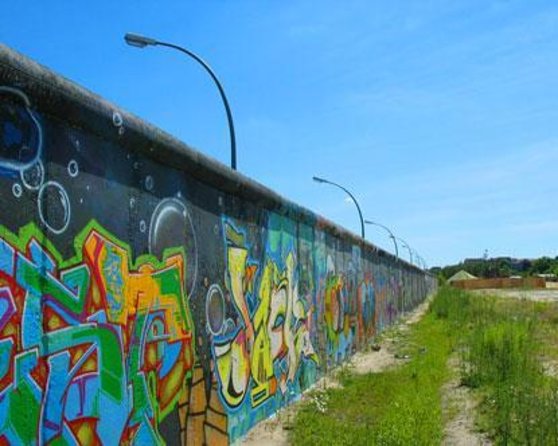
At the Berlin Wall Memorial on Bernauer Strasse, the focus shifts to the division of the city. This street once marked the boundary between Wedding in the West and Mitte in the East. Some East Berlin residents attempted escape by jumping from apartment windows, and the memorial preserves the memory of those dangerous efforts.
The official memorial opened in 1998, 37 years after construction of the Wall began. The listed stop is only one minute, which is enough to identify the site but not enough to grasp its full story. I would treat this as a useful introduction and return later if you want to understand the Wall’s layout, escape attempts, and daily effect on local residents.
Checkpoint Charlie is another famous symbol of divided Berlin. It was the best-known American-controlled checkpoint in the city, used by foreigners, officials of West Germany’s permanent representation, and East German officials. The stop is free and lasts about two minutes.
You will see a place that carries enormous historical weight but also a great deal of modern tourism. The rickshaw helps you connect it with the Wall Memorial and other Cold War sites, but the short visit will not explain every detail of Berlin’s border system.
Friedrichstrasse follows naturally. This north-south avenue developed into a popular shopping street after reunification, especially between Checkpoint Charlie and Friedrichstrasse station. The stop is brief and free, so it is best understood as part of the moving city view rather than a shopping break.
More rickshaw tours around Berlin:
- Rickshaw Sightseeing City Tours Berlin – Rikscha Tours
★ 4.0 · 55 reviews - Berlin: Private Sightseeing Tour in an E-Rickshaw
★ 4.9 · 44 reviews - One Up to 3 Rickshaws(6 GUESTS)-Taylor Made Rickshaw Berlin Tour
★ 5.0 · 20 reviews - Daily First Rickshaw promotion in Combi Vehicle public Group 90€
★ 5.0 · 11 reviews
Gendarmenmarkt and the historic center

Gendarmenmarkt is one of Berlin’s most elegant squares. Its roots reach back to the late 17th century, when French Protestant immigrants settled in the area. The square changed names several times before becoming Gendarmenmarkt in 1799, after the Gens d’armes regiment had its guardhouse and stables nearby.
The square brings together the German Cathedral, French Cathedral, and Konzerthaus. The tour allows about five minutes, enough to take in the arrangement and photograph the facades. It is a strong stop for architecture, though restoration work or restricted access can affect what you see on the day.
The German Cathedral contains a permanent exhibition on the development of liberal parliamentary democracy in Germany. It covers five floors, but admission is not included and the tour allows only two minutes. You will need a separate visit if you want the full exhibit.
The Konzerthaus is one of Karl Friedrich Schinkel’s major classical buildings. A small comedy theater opened here in 1776 under Frederick the Great, and it became the Royal National Theater in 1787. The rickshaw stop is again about two minutes, with no included admission.
Bebelplatz brings a darker memory into this beautiful central district. On May 10, 1933, Nazi groups burned more than 20,000 books there, targeting works by authors including Erich Kästner, Thomas and Heinrich Mann, Magnus Hirschfeld, Lion Feuchtwanger, Karl Marx, Else Lasker-Schüler, and many others.
The memorial is set into the square, so you can see it during a short stop. The ride cannot provide the quiet time needed for reflection, but the guide can connect the square’s grand architecture with the cultural destruction that took place there.
Museum Island, Berlin Cathedral, and Alexanderplatz
Museum Island sits between the Spree and the Kupfergraben. Its museum complex began with the Old Museum, completed in 1830 from plans by Karl Friedrich Schinkel. Today, the island houses major archaeological and 19th-century art collections.
The tour gives you about five minutes, with museum admission excluded. This is one of the places where the rickshaw works best as an introduction. You can identify the buildings, decide which museum interests you, and return later without trying to squeeze a full museum visit into a short ride.
Berlin Cathedral rises beside the island, marked by its large dome and ornate exterior and interior. A separate visit includes the chance to climb toward the dome for views over the Spree, Lustgarten, and Museum Island. The tour stop lasts only one minute and does not include admission, so consider it a photo stop.
Lustgarten, the former pleasure garden connected with the city palace, sits between the cathedral, the Old Museum, the river channel, and Karl-Liebknecht-Strasse. Its double rows of linden trees, large red granite bowl, lawns, and fountain make it a pleasant pause in the middle of the historic center.
Finally, Alexanderplatz gives you Berlin’s eastern city center. Berliners call it Alex, and it has been an important public square in the 1920s, during the German Democratic Republic period, and today. The television tower, World Clock, Friendship Fountain, shops, and transport links all gather around it.
The listed stop is only one minute, so do not expect time to visit the tower or shop. Still, ending here gives you a clear sense of how the route moves from Prussian monuments and Nazi history to Cold War memory and modern city life.
Guides, music, photos, and safety
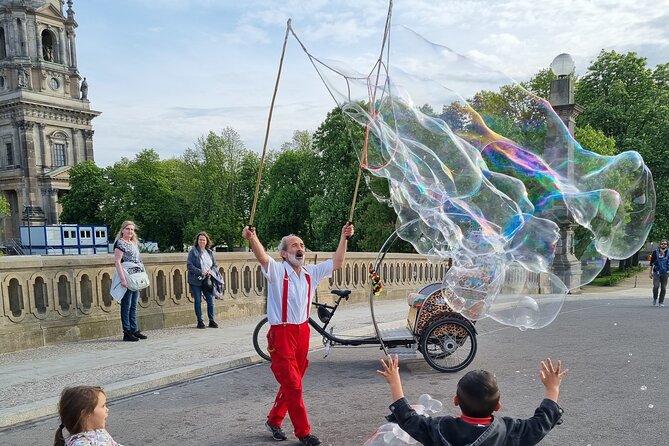
The strongest part of this experience is the guide. Leo receives especially warm praise for humor, local recommendations, music, and a lively presentation suitable for adults and teenagers. Hugo is repeatedly praised for clear historical explanations, flexibility, and taking photos. Ufuk Ayik is noted for being accommodating in difficult weather.
That personal touch can change the whole ride. A good guide may ask what you want to see, allow photo time, and point out places beyond the standard list. One especially useful account described a guide helping a passenger find bubble wrap while the group was dealing with injuries, a small act that shows the value of a flexible local host.
But the quality is not uniform. One ride used music so loudly that the passengers struggled to hear the guide. Another guide offered little historical explanation. There is also a report of rough driving and a minor collision with a van. I would ask the driver to keep the music low and speak clearly, and I would say something immediately if the driving feels unsafe.
The tour includes WiFi, private transportation, a guide, music on request, and a photographer. Alcoholic drinks are not included. Service animals are allowed, and most people can participate, but specific accessibility arrangements are not detailed.
Pickup, weather, and the reliability question
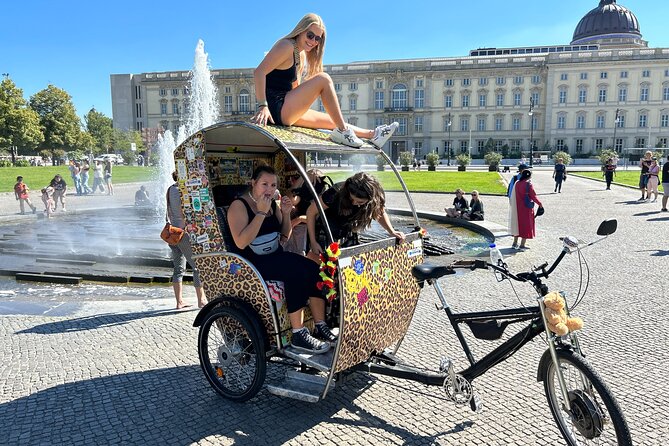
The standard meeting point is Brandenburg Gate, and the ride ends there. Pickup is included within a 2-kilometer radius of the gate. Beyond that, the charge is €10 per kilometer, so confirm the fee before asking for a hotel pickup.
The service requires good weather. If poor weather cancels the ride, you are offered another date or a full refund. Some cancellations have also been blamed on cold-weather battery problems with the electric bikes. That explanation may be understandable from a safety point of view, but it is still a major inconvenience if you have built your only Berlin day around this booking.
Several reported bookings involved the driver not appearing, unanswered calls, or long waits in cold or rainy conditions. Some customers received refunds through the booking platform, but the delay and lost sightseeing time were still serious. I would not schedule this as the only activity on a short visit, and I would confirm the appointment shortly before departure.
Free cancellation is available up to 24 hours before the start time. Changes or cancellations inside that window are not accepted for a refund.
Who should book this Berlin ride?
I would recommend it most strongly to groups that want a relaxed overview without walking across the city. Families, older visitors, people recovering from an injury, and anyone with only a few hours in Berlin may find the format useful. It is also a fun choice for a group that wants its own vehicle rather than joining a large tour.
You should book with more caution if your main goal is detailed history. The route covers important places, but many stops last one or two minutes. Your experience depends heavily on the assigned guide, and the no-show record cannot be ignored.
Should you book Rickshaw Tours Berlin?
Book it if you value convenience, fresh air, photos, and a personal ride through Berlin’s central sights. Aim for two to four hours if you want the route to feel comfortable, and choose a guide known for clear commentary if that option is available.
I would skip it if you cannot tolerate schedule uncertainty, need guaranteed transportation, or have only one irreplaceable sightseeing window. The best rides with Leo or Hugo sound genuinely enjoyable, but the repeated service failures mean you should confirm everything and keep a backup plan. At about $53.10 per person, it can be good value when the guide shows up and brings the city to life. The risk is not the price. It is losing precious Berlin time.
FAQ
Where does the rickshaw tour start?
The standard meeting point is Brandenburg Gate at 10117 Berlin, Germany. The activity ends back at the meeting point.
Is hotel pickup available?
Yes. Pickup is included within 2 kilometers of Brandenburg Gate. Pickup farther than 2 kilometers costs €10 per kilometer.
How long does the tour last?
The experience is listed as lasting approximately one to four hours. The exact length depends on the option booked.
How many people can join?
Groups of up to 16 people can participate, using several rickshaws.
Is the tour private?
Yes. Only your group participates in the activity.
Are attraction admissions included?
No. Admissions for places such as the Reichstag, Gropius Bau, the German Cathedral, Konzerthaus, Museum Island, and Berlin Cathedral are not included. The Soviet War Memorial, Potsdamer Platz, Topography of Terror, Checkpoint Charlie, Friedrichstrasse, Gendarmenmarkt, Bebelplatz, Lustgarten, and Alexanderplatz are listed as free stops.
What happens if bad weather cancels the tour?
You will be offered a different date or a full refund if the experience is canceled because of poor weather.
Can I cancel for a full refund?
Yes, if you cancel at least 24 hours before the experience start time. Cancellations or changes made less than 24 hours beforehand are not refundable.
Just added around Berlin
- Romantic Berlin Rickshaw City and Photo Tour – incl. pick-up★ 4.0 · 9 reviews
- Rickshaw Sightseeing Tours Berlin – Highlights Berlin – Rickshaw city tour★ 3.5 · 3 reviews
- Daily First Rickshaw promotion in Combi Vehicle public Group 90€★ 5.0 · 11 reviews
- One Up to 3 Rickshaws(6 GUESTS)-Taylor Made Rickshaw Berlin Tour★ 5.0 · 20 reviews
- Berlin Rickshaw Tours Historical & Photo City Tour 120min – Sightseeing★ 4.5 · 11 reviews
- Private Up to 12 Guests-ONE RICKSHAW, E-Bikes, E-Scooters★ 5.0 · 2 reviews
- Rickshaw Tour-Cruise Ship guests arrive 9.30 upto 11.30 am Berlin★ 5.0 · 7 reviews
- Private Guide Up to Group 6 – ONE Rickshaw, (E)Bikes, E-Scooters★ 5.0 · 3 reviews
Rickshaw Tours, compared.
Arashiyama Customized Rickshaw Tour & Bamboo Forest
Read our review →
Split by Private Electric Rickshaw – Palace & Hidden Gems
Read our review →
Kyoto Arashiyama Rickshaw Tour with Bamboo Forest
Read our review →Browse the lists this tour appears in