
Review · INDIA
Delhi Rickshaw Tour: Explore Old Delhi Hertiage by Cycle Rickshaw
Old Delhi rewards a slow start. This seven to eight hour private outing combines a guided walk with short rickshaw rides through lanes that cars cannot easily reach, linking the Red Fort, Jama Masjid, and Chandni Chowk with markets, shrines, and old homes.
I like the clear mix of major sights and ordinary street life. I also like the chance to visit Khari Baoli, Asia’s largest spice market, where family-run shops have traded for seven or eight generations. The main drawback is that the day is long, and Old Delhi can feel crowded, noisy, and tiring, especially if you are hoping for a quiet sightseeing tour.
The price is $68.97 per person, with pickup, an air-conditioned vehicle, a private guide, and an e-rickshaw ride included. Monument admission, meals, drinks, camera fees, and tips cost extra, so your final price will be higher if you enter both the Red Fort and Jama Masjid.
Key points before you book
- A full Old Delhi day: Plan on roughly seven to eight hours, beginning at 8:30 am.
- Private touring: Only your own group participates, which makes it easier to adjust the pace and ask questions.
- A strong market focus: Khari Baoli gives you a close look at spices, traders, and old family businesses.
- Two kinds of rickshaw rides: The plan includes an e-rickshaw, while the Nau-Ghara section also refers to a hand-operated three-wheeled rickshaw.
- Several extra costs: Red Fort and Jama Masjid admission, food, camera fees, and tips are not included.
- A guide who helps with the chaos: Bikram is praised for explaining the small streets and shops while helping people feel safe in the busy old city.
Why this route works so well
Old Delhi is best understood in layers. The grand Mughal buildings explain imperial power, while the narrow lanes reveal trade, religion, family businesses, and daily routines that continue around those monuments.
This tour does not simply drive from one famous building to another. You walk through parts of Chandni Chowk, ride through lanes too tight for a standard vehicle, stop at a Sikh gurdwara, pass a historic mosque, and enter the spice market. That combination gives you more context than a monument-only visit.
The private format is important here. Old Delhi is not always easy to follow. Streets change character quickly, traffic can squeeze into very small spaces, and signs may not be obvious. A guide can keep the route moving and explain what you are seeing without forcing you to stay with a large group.
The 8:30 am start also makes sense. The morning portion is described as calmer, before the full crush of traffic and commercial activity builds. You should still expect noise and movement, but an early start gives you a better chance of walking through the lanes without constantly stopping for vehicles.
More Rickshaw Tours in India
- Old Delhi Food, Heritage&Cultural Walk with Rickshaw ride to Masterji Kee Haveli
★ 5.0 · 742 reviews - 3-hour Old Delhi Heritage Walking tour with Rickshaw Ride
★ 5.0 · 240 reviews - 3-Hour Old Delhi Heritage Walking tour with Rickshaw ride
★ 4.6 · 158 reviews
Red Fort: starting with Mughal power
The Red Fort is the tour’s grand opening. Emperor Shah Jahan built it in 1639, and it served as the Mughal residence in Delhi for nearly two centuries. Its red sandstone walls make an immediate impression, but the fort is more than an imposing exterior.
Inside, the route highlights the Rang Mahal, or Color Palace, along with the Diwan-i-Aam, the hall for public audiences, and the Diwan-i-Khas, the private audience hall. These spaces help you picture the courtly life that once took place behind the fort’s massive walls.
The fort also connects to the end of Mughal rule. During the 1857 revolt, the last Mughal emperor was tried there and later exiled to Yangon, formerly Rangoon. That detail gives the site a useful historical arc, from imperial residence to a place linked with the collapse of Mughal authority.
Allow about an hour here. The Red Fort admission fee is not part of the tour price, and camera fees may also apply at monuments. If you care about seeing the interiors rather than only the outside walls, budget for the extra entrance cost.
The fort is a large site, so comfortable shoes matter. You will have more space here than in the lanes later in the day, but the scale can also make the stop feel less intimate. The guide’s explanations are valuable because the courtyards and halls can otherwise become a series of impressive names without much meaning.
Gurudwara Sis Ganj Sahib: a quiet change of mood
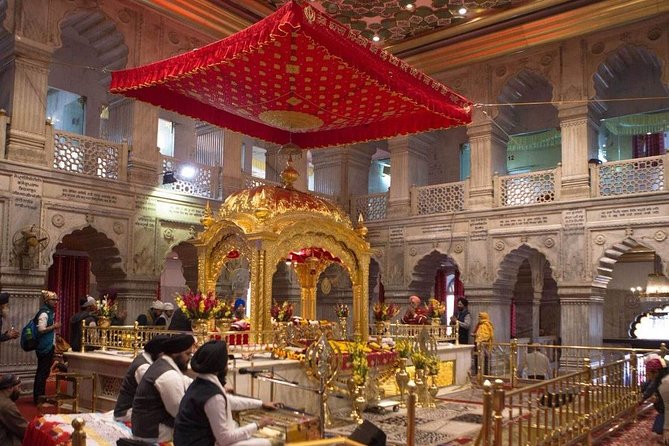
The move from the Red Fort to Gurudwara Sis Ganj Sahib shows how quickly Old Delhi changes. Within minutes, the route shifts from imperial architecture to a place of Sikh worship and remembrance.
The name refers to the head of Guru Tegh Bahadur, the ninth Sikh guru, who was beheaded at this location. The site honors him, and its white walls create a calmer setting after the fort and the street walk.
This stop is free and is scheduled for about an hour. That length gives the guide time to explain the site rather than treating it as a quick photo stop. You should approach the gurdwara with respect and follow any instructions given by the guide or staff.
I like this part of the route because it broadens the story of Old Delhi. The area is not only about Mughal rulers and grand buildings. Religious communities, memory, and present-day worship remain part of the city’s daily character.
Chandni Chowk and Fatehpuri Mosque
After the gurdwara, the tour continues toward the spice market by battery-powered e-rickshaw. This is where the transport becomes part of the sightseeing rather than merely a way to get from one attraction to another.
The route passes Fatehpuri Mosque, built under Shah Jahan. Its location near the market gives you a clear sense of how architecture and commerce overlap in Old Delhi. You may be looking at the mosque while smelling spices from nearby shops, a very Old Delhi combination.
The scheduled time around Chandni Chowk is about 45 minutes, followed by a longer visit to Khari Baoli. Chandni Chowk can feel intense, so do not expect a polished pedestrian avenue. The appeal is the opposite: narrow routes, working shops, pedestrians, rickshaws, and layers of commerce happening close together.
The e-rickshaw should make the transition easier, but it will not remove the sensation of congestion. Keep your belongings secure and stay aware when getting on or off. The guide is especially useful here because the streets can be confusing even when the route looks simple on a map.
More Rickshaw Tours in New Delhi
- Old Delhi: 3-Hour Tuk-Tuk/Rickshaw Tour
★ 4.7 · 137 reviews - Luxury Rickshaw Tour of Old Delhi
★ 5.0 · 106 reviews - Old Delhi Heritage Walk with Rickshaw Ride
★ 5.0 · 68 reviews - Old Delhi – Hidden Gems Tour on Rickshaws with Guide & Audio Headsets
★ 5.0 · 54 reviews
Khari Baoli: the tour’s most memorable market stop
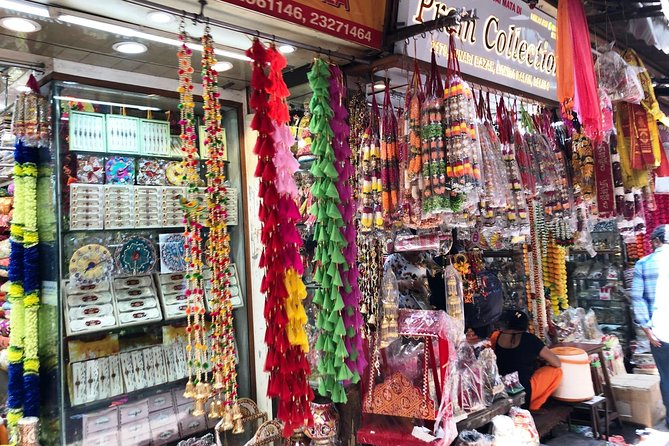
Khari Baoli is the strongest stop for people who want to see a working market rather than a staged shopping area. It is described as Asia’s largest spice market, and the route gives you about an hour to walk through it.
The smells arrive before the full view. Spices fill the air, and the guide can explain how the different shops fit into a trading district that has supported family businesses for seven or eight generations.
This is a good place to pay attention to small details. Each shop has its own stock, rhythm, and history. You may see familiar ingredients beside spices you do not recognize, but the value is not only in buying something. The market shows why India has long been associated with spice trading.
The stop also gives the tour a more grounded feel. You are not only looking at preserved buildings. You are seeing people work, trade, move goods, and keep old businesses operating in a crowded part of the city.
Be prepared for strong aromas and a busy setting. If you dislike crowded markets, this may be the most demanding portion of the day. If you enjoy food culture and local commerce, it is likely to be a highlight.
Nau-Ghara: tiny lanes and a 500-year-old Jain temple
From Khari Baoli, the route heads toward Nau-Ghara, meaning nine mansions. The area was built for royal Jain jewellers, though only two of the original nine homes remain.
The surviving houses are known for carved windows and small decorated doors. Their details are easy to miss from a main road, which is why the rickshaw ride through the narrow lanes is useful. The route gets you closer to the old residential character of the district.
Nau-Ghara is also home to a Jain temple said to be about 500 years old. Shah Jahan rebuilt the temple to honor his royal jewellers, adding another link between the Mughal court and the commercial communities that served it.
This part of the outing is scheduled for about an hour and includes admission to the temple. The lane is described as a quiet pocket within the surrounding activity, so it offers a welcome pause before Jama Masjid.
The transport description is slightly mixed. The included service specifically lists an e-rickshaw, while the Nau-Ghara section describes a three-wheeled rickshaw operated by a person. You should expect short rickshaw travel through the lanes, but ask your operator what vehicle will be used on your date.
Jama Masjid: ending beneath Shah Jahan’s domes
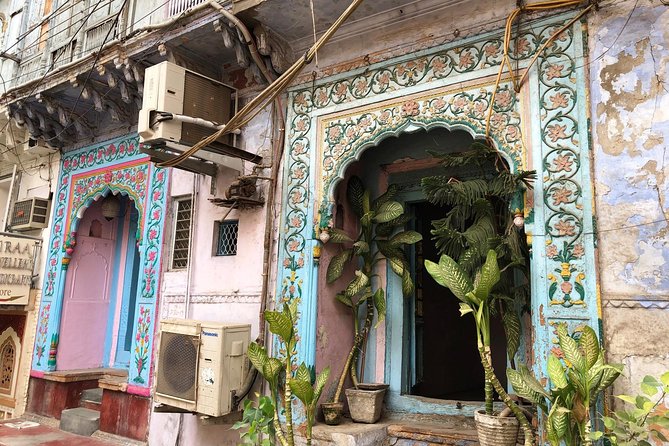
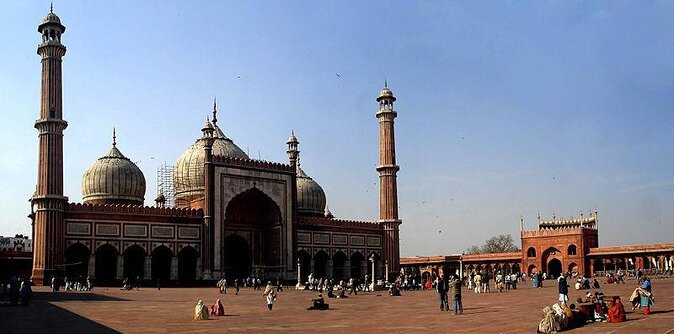
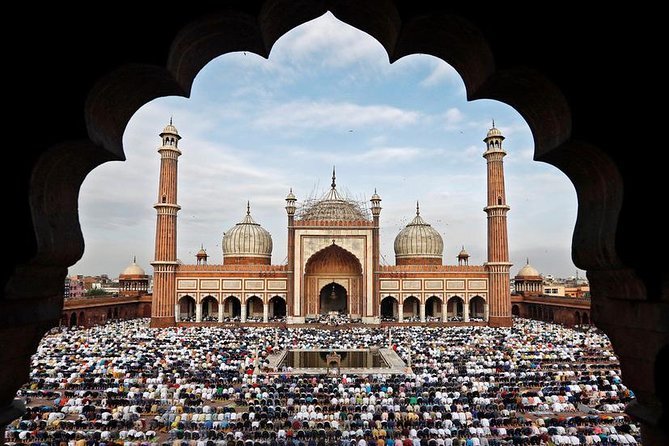
The final major stop is Jama Masjid, built by Shah Jahan between 1649 and 1656. It is described as India’s largest mosque and can hold about 25,000 people.
The mosque’s red sandstone and marble reflect the same architectural taste seen at the Red Fort. Its three domes, open courtyard, calligraphy, and tall minarets give the visit a strong visual finish.
The minarets provide broad views over the city, according to the tour description. That perspective helps you understand the density of Old Delhi after spending hours at street level. You have seen the lanes up close, then get a chance to look across them from above.
Admission is not included, and camera fees may apply. Allow around an hour, and follow any clothing or photography rules in effect at the mosque. The tour leaves you to explore this final stop before returning you to your accommodation or departure point.
Ending here works well, but it can also make the day feel full. You will have already visited the fort, gurdwara, market, spice district, Jain quarter, and several lanes. If you prefer a slower pace, tell the guide early that you want time at the places that interest you most.
What the $68.97 price really covers
At $68.97 per person, this is not simply an admission ticket or a short rickshaw ride. The price covers an air-conditioned vehicle, pickup and drop-off, a local guide, taxes and fees, an e-rickshaw ride, and a private arrangement for your group.
That can be good value if you want a structured day in a part of Delhi that is difficult to navigate alone. You are paying for transport between areas, explanations at several sites, and help moving through streets where the route is not always obvious.
The value is weaker if you only want to see the Red Fort and Jama Masjid from outside. Both monument admission fees are extra, and food is not provided. You should add money for breakfast, lunch, drinks, camera charges, and tips for the guide and chauffeur.
Group discounts are offered, though no discount amount is given. Since the tour is private, the per-person cost may make more sense when shared among several people. You should confirm the total for your group before booking.
Who should choose this Old Delhi outing?
I would recommend it to first-time Delhi visitors who want the major Mughal sights plus a closer look at markets and religious sites. It also suits anyone who prefers a guide and private transport instead of trying to work out Old Delhi’s streets alone.
The route is a good fit for people who enjoy food markets, architecture, local business, and short walks. The strongest praise goes to the guide’s ability to make the crowded old city feel manageable. Bikram, in particular, is noted for walking people through small streets and shops, explaining what they were seeing, and helping them feel safe before taking them on the rickshaw ride.
You may want a different plan if you dislike crowds, strong spice smells, or a long day with several changes of scene. The experience is not built around luxury or silence. Its value comes from seeing a working part of Delhi in motion.
Free cancellation is available when you cancel at least 24 hours before the 8:30 am start. A late cancellation is not refundable, and poor weather or failure to meet the minimum number of participants can lead to a new date or a full refund.
Should you book it?
Book this tour if you want Old Delhi explained as a living district, not just a collection of monuments. The Red Fort and Jama Masjid provide the major landmarks, while Khari Baoli, Nau-Ghara, and the narrow lanes supply the character.
I would be especially inclined to book it for a first visit, a small private group, or anyone who wants a guide to handle the traffic and route. Just budget for admission and meals, wear comfortable shoes, and accept that the day will be crowded and energetic. That is the trade-off for seeing the old city at street level.
FAQ
What time does the tour start?
The tour starts at 8:30 am.
How long does the tour last?
The outing lasts approximately seven to eight hours.
Is this a private tour?
Yes. Only your own group participates in the activity.
Is hotel pickup available?
Pickup is offered, and the tour includes drop-off at your preferred accommodation or departure point.
Is an e-rickshaw ride included?
Yes. An e-rickshaw ride is included. The route also describes rickshaw travel through the Nau-Ghara lanes.
Are monument admission fees included?
No. Admission to the Red Fort and Jama Masjid is not included. The Nau-Ghara Jain temple admission is included.
Are meals included?
No. Breakfast, lunch, drinks, and table beverages are not included.
More Cycling Tours in New Delhi
- Penang George Town All-In-One Heritage Tour By Bicycle & Trishaw (Metro Bike)
★ 5.0 · 168 reviews - Paris: 2 hours Emily Tour in a Private Rickshaw bike
★ 4.7 · 38 reviews - Paris : Private guided tour in Rickshaw bike – Napoléon
★ 4.5 · 23 reviews - Paris: Private guided tour in Rickshaw bike – Gustave Eiffel
★ 4.6 · 22 reviews
More Rickshaw Tours around New Delhi
- Half-Day Food Tour with Cycle Rickshaw ride to Masterji Kee Haveli
★ 5.0 · 31 reviews - Old Delhi Photography & Food Tour with Rickshaw Ride to Masterji Kee Haveli
★ 5.0 · 22 reviews - Old & New Delhi Tour : Monuments , Rickshaw Ride & Local Heritage
★ 5.0 · 21 reviews - Delhi: Old City Guided Tour with Rickshaw Ride & Pickup
★ 4.7 · 20 reviews
Just added around New Delhi
- Private Full-Day Tour visit Old and New Delhi with Rickshaw Ride★ 4.5 · 5 reviews
- Old Delhi Chandi Chowk Food Tour with Rickshaw Ride – 4-5 Hours★ 5.0 · 8 reviews
- Old Delhi Street Food Tour with TUK-TUK Adventures★ 5.0 · 4 reviews
- Tuk Tuk Delhi Experience★ 4.5 · 3 reviews
- Private Rickshaw Tour of Old Delhi Heritage with Food Tasting★ 5.0 · 2 reviews
- Old Delhi Tour by Tuk-Tuk Street Food and Shopping Experience★ 5.0 · 12 reviews
- Taj Mahal Sunrise View With Tuk-Tuk★ 5.0 · 10 reviews
- Private Old Delhi Tour of Chandni Chowk, Tuk Tuk & Food★ 5.0 · 8 reviews
Rickshaw Tours, compared.


Arashiyama Customized Rickshaw Tour & Bamboo Forest
Read our review →
Split by Private Electric Rickshaw – Palace & Hidden Gems
Read our review →
Kyoto Arashiyama Rickshaw Tour with Bamboo Forest
Read our review →Browse the lists this tour appears in