
Review · CHINA
Beijing Old Hutongs Tour by Rickshaw
Small alleys reveal old Beijing best. This three-hour outing combines a rickshaw ride through hutongs with a local-home visit, a climb at the Bell or Drum Tower, and tea tasting. I like the easy hotel pickup and the chance to see daily life away from Beijing’s grand monuments. I also like that excellent guides such as Gale, William, and Cynthia have made the tour personal and informative. The main concern is consistency: some departures include sales stops, a short rickshaw ride, or less guiding than expected.
At $77 per person, the tour can be fair value if you want transport, admission tickets, an English-speaking guide, and several cultural stops in one morning. But you should book with realistic expectations. This is not always a long pedicab journey through untouched lanes, and the local-home visit may feel brief or arranged for visitors rather than like a relaxed family conversation.
Key points to know before booking

- The rickshaw ride may be shorter than expected: The hutong portion can include a ride and a walk, but the pedicab is not always the main event.
- The Drum and Bell Towers anchor the visit: You may climb steep stairs for a view over old Beijing, though timing can affect which tower or performance you see.
- The home visit offers a glimpse, not a full cultural exchange: Some departures include a gracious host, while others provide only a short greeting and explanation.
- Tea tasting can turn into a sales stop: You can sample several teas, but the shop may encourage you to buy expensive tea or accessories.
- Hotel pickup is convenient inside the Fourth Ring Road: Hotels outside that area use a meeting point at Prime Hotel on Wangfujing Avenue.
- Guide quality matters greatly: Gale, William, Cynthia, and Mr. Goo received especially warm praise, while other departures suffered from poor communication or missing stops.
What this hutong tour is really about
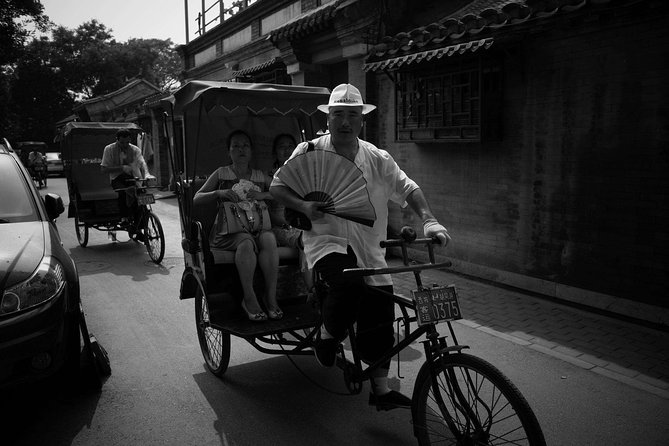
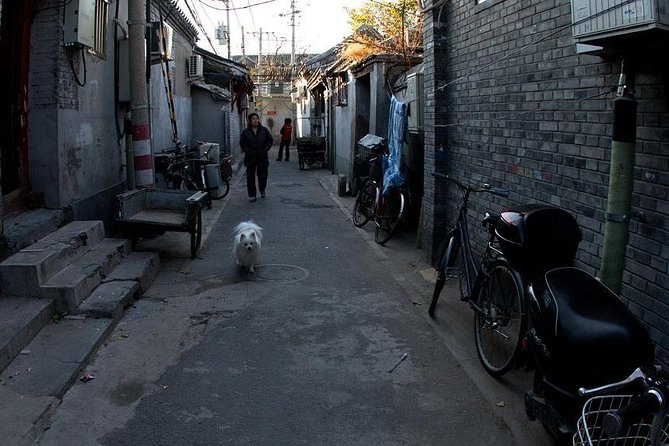
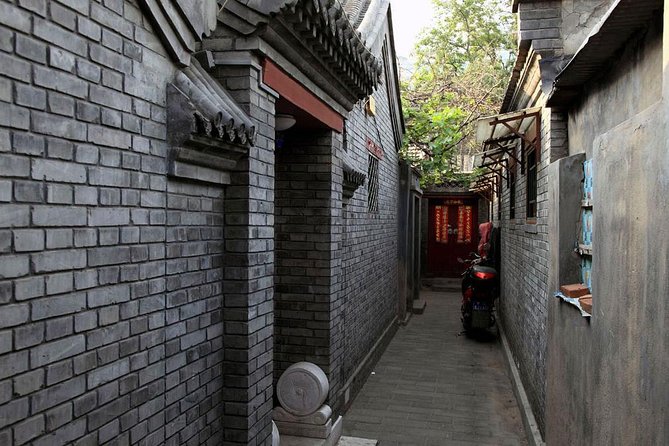
Beijing’s hutongs are narrow lanes formed by rows of traditional courtyard homes. They offer a very different view of the city from the Forbidden City, Tiananmen Square, or the Great Wall. You see older neighborhoods, local streets, small courtyards, and the routines of people who live in central Beijing.
The tour begins with pickup in an air-conditioned vehicle. The included pickup area covers hotels inside Beijing’s Fourth Ring Road. If you stay farther out, you must reach Prime Hotel at No. 2 Wangfujing Avenue for an 8:30 a.m. or 1 p.m. departure.
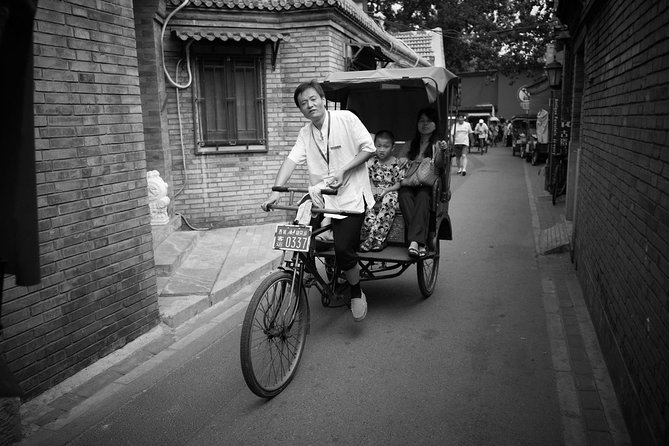
From there, you head toward the Bell and Drum Tower area. The rickshaw ride is meant to give you a quick look at the hutongs without requiring you to walk every alley. It also adds a little old-fashioned fun, especially for children. One parent found the ride a hit with a seven-year-old son, while another family enjoyed watching the drivers handle the tight lanes.
I like the basic idea. A pedicab lets you see more than you would from a large tour vehicle, and you can look into side streets as you move. Still, you should not picture a long, leisurely ride lasting most of the three hours. The hutong section is listed at about two hours, but part of that time can include walking, the home visit, and movement between stops.
More rickshaw tours around China:
- Beijing Half Day : Summer Palace Tour with Hutong Rickshaw Rides
★ 5.0 · 7 reviews - Houhai Hutong Tour: Rickshaw + Prince Gong & Soong Residences
★ 5.0 · 6 reviews - Summer Palace, Hutong Rickshaw, Lama and Confucius Temple Tour
★ 5.0 · 6 reviews
Riding through the hutongs by pedicab
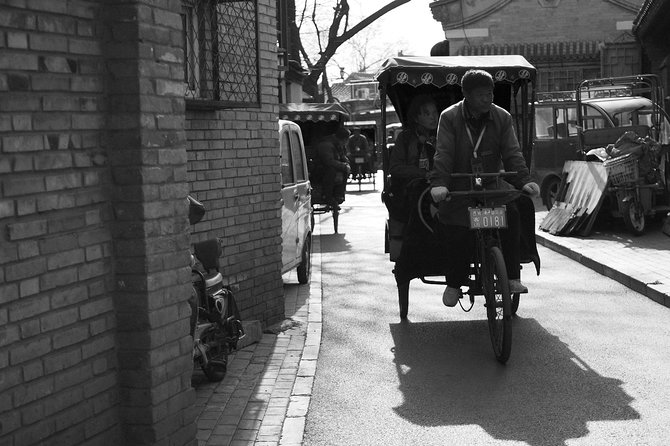
The best part of the tour is the change in scale. Beijing can feel huge and hard to read from a main road. In a rickshaw, you move slowly through the smaller lanes and see the city at eye level.
You may pass everyday scenes rather than formal sights. That is the point. The value lies in seeing courtyards, alley entrances, old homes, and local routines. One especially positive experience described the hutongs as a good way to watch people go about ordinary life and understand how older Beijing communities were arranged.
The ride itself is not always equal from one departure to another. Some people had a satisfying circuit through a historic neighborhood. Others felt the pedicab portion was only a quick trip through an inactive area. One solo participant, already staying in a hutong, found the ride less interesting and felt better lanes could have been chosen.
That variation matters. If your main goal is simply to ride a rickshaw, you might find the experience too brief for the price. If your goal is a guided introduction to old neighborhoods, the ride works better as one part of a wider outing.
You may also be asked to tip the rickshaw driver. One experience included a request for 20 yuan per person, even though the ride was part of the booked tour. Carry a small amount of Chinese currency, but ask your guide clearly if you are unsure what is included.
Climbing the Bell and Drum Towers
The Bell and Drum Towers give the tour its strongest sightseeing stop. The buildings once helped mark time in the imperial city, and today their upper levels offer a view across the older central districts.
The stairs are steep. One person described running up the Drum Tower because the group was late, while another found the climb worthwhile for the view. If you have knee problems or dislike stairs, tell your guide before the visit. One guide, Michael, reportedly did not climb because of bad knees, leaving the group to explore without him.
Timing can also affect what you see. The Drum Tower has drum performances, but not every departure arrives at the right moment. A morning group enjoyed the towers but wished it had seen the drums being played. The tour may take you to the Bell Tower instead, or divide your time between the two.
I would treat the towers as a useful historical stop rather than the main reason to book this outing. You can reach the area independently, and one disappointed participant felt the towers were easy enough to visit without a package. The advantage here is having transport and a guide who can explain the setting, provided your guide stays with you and gives more than a quick introduction.
The local home visit, from warm welcome to brief stop
The home visit is meant to show you how a traditional Beijing household was organized. You greet a local host, hear about customs, and look at household objects or small artworks.
At its best, this is the most human part of the morning. One guide brought a group to a home where the host showed miniature glass-bottle painting. Another visit gave a family a pleasant chance to see how people lived in hutong housing. The hosts were described as gracious and welcoming, and there was no pressure to buy during that particular stop.
Expect something short and structured, though. Some visits included only a greeting from the homeowner, followed by the guide explaining objects in the room. Another person felt the building was presented as a family home but did not seem to be actively occupied by a family.
This is not a long meal or a relaxed conversation around the kitchen table. Food is not included, and the program does not promise a home-cooked meal. I would value the stop for its setting and context, not for an extended personal exchange.
The quality of the explanation makes a big difference. Gale was praised for giving detailed information and answering questions. Cynthia was described as warm and enthusiastic, and her conversation helped make a solo departure feel comfortable. With a less engaged guide, the home can become little more than a quick room visit.
A few more tuk tuk tours around China worth a look
- Xi’an Evening Food Tour by TukTuk
★ 5.0 · 715 reviews - Tuktuk Food Tour Through Chengdu’s Local Eats
★ 5.0 · 435 reviews - Xi’an Morning Food & Market Tour by TukTuk
★ 5.0 · 46 reviews - Private Xi’an Foodie Tour by Tuktuk
★ 5.0 · 34 reviews
Tea tasting and the sales-stop question
Tea tasting is included. You visit a traditional tea house, sample freshly brewed varieties, and learn something about tea grown in local plantations. Several departures included around five types of tea, and the ceremony took place in a decorated setting.
I like this as a pause after the hutong ride. Tea gives the tour a sensory element, and it is a simple way to connect a daily Chinese habit with regional agriculture and hospitality. If you enjoy tea, you may find the tasting worthwhile even if you do not buy anything.
The catch is the attached shop. The tasting can lead directly into a sales presentation for tea, teaware, or accessories. Some people bought tea as a souvenir and were happy with it. Others felt the prices were high and the visit was mainly designed to sell goods.
You are not required to buy. Keep that in mind before you enter, and decide in advance how much time and money you want to spend. If your preference is a history-focused tour with no commercial stops, this part may irritate you.
The possible silk factory detour
The program sometimes ends with a visit to a silk factory, depending on interest. This is not part of the core hutong experience, and it is best understood as an optional commercial stop.
The factory can be interesting. You may see silk production, silkworm cocoons, clothing, bedding, and household goods. One family enjoyed seeing the cocoons, especially their child. Another group bought silk pillows and liked them.
Still, the purpose is also to sell products. Several people felt the stop took time away from the historic areas and pushed expensive merchandise. If you are eager to shop for silk, it may be a pleasant extra. If you have only a few days in Beijing, ask how long it will take and say clearly if you want to return to your hotel instead.
A similar concern applies to reports of a pearl stop on one private departure. That extra visit was enjoyable for one family, but it was separate from the main hutong program. Confirm the plan before you agree to additional shopping stops.
Guide quality can make or break the morning
The strongest praise is reserved for the guides. Gale, also spelled Gayle in some accounts, was repeatedly described as warm, punctual, informative, and especially good with children. William was called professional and helpful. Cynthia made a solo visitor feel at ease through a mix of explanation and conversation. Mr. Goo was also praised for providing an excellent first introduction to Beijing.
These examples show what the tour can be when the guide takes responsibility for the experience. A good guide explains what you are seeing, answers questions, watches the clock, and tells you what is included at each stop.
The weaker departures had serious problems. One guide allegedly demanded additional payment by claiming only half the tour had been paid for. Another person was told the rickshaw companies could not operate for two weeks because of a parade, resulting in no hutong tour. One guide failed to arrive on time, and another departure lasted less than two hours instead of the expected three or four.
Those reports are not small service issues. They show why you should keep your confirmation, verify the pickup time, and contact the operator quickly if the plan changes. The experience provider is Hantang International Travel Service, and customer support through the booking platform may matter if a major part of the tour is canceled or missing.
A few descriptions also promoted Prince Gong’s Mansion, but some departures did not include it. Do not book this tour mainly for that mansion. Confirm the day’s route if that sight matters to you.
Is $77 a fair price?
At $77 per person, the price is reasonable only if you use several included elements: hotel transportation, an English-speaking guide, admission tickets, the rickshaw ride, the home visit, and tea tasting.
For a private or nearly private departure, the value improves. Some people found themselves with only one companion or alone with a guide and driver. That arrangement allows more questions and can make the hutong visit feel personal.
For a large group, the value is less certain. The stated maximum is extremely high, up to 999 people, although actual experiences ranged from solo tours to small private groups. A large departure would make the home visit and alley ride feel less personal.
You can visit the Drum and Bell Tower area on your own, and you can walk hutongs without a package. The fee pays for convenience and organization more than for rare access. I would book it if you have limited time, want hotel pickup, or prefer a guide to explain what you are seeing. I would skip it if you enjoy arranging your own walks and strongly dislike shopping stops.
The tour is often booked about 76 days ahead, suggesting that advance planning is sensible. Free cancellation is available until 24 hours before the start time. Changes or cancellations inside that window are not accepted for a refund.
Who will enjoy this Beijing experience?
This tour suits first-time visitors who want an introduction to old Beijing without handling local transport. It also works well for families, especially children who are excited by a rickshaw ride, towers, tea, or silk production.
It can be a good first-day activity. The route introduces neighborhood life before you tackle bigger sights, and the included vehicle keeps the morning simple. Solo visitors can also enjoy it when the guide is attentive, though a solo departure can feel awkward if the guide leaves you alone at each stop.
I would be cautious if you have limited mobility. The towers involve steep stairs, and the rickshaw ride does not remove all walking. The supplied information says most people can participate, but it does not promise wheelchair access or step-free entry.
Cold weather also matters. One family enjoyed the tour but found the day very cold. Dress for outdoor riding and walking, rather than assuming the vehicle will keep you warm throughout.
Should you book the Beijing hutong rickshaw tour?
Book it if you want a convenient, guided look at old Beijing and you value meeting a local host more than checking off major monuments. The strongest departures offer a friendly guide, a pleasant rickshaw ride, a tower view, a short home visit, and a relaxed tea tasting.
Do not book it expecting a long pedicab adventure, a guaranteed Prince Gong’s Mansion visit, or a completely commercial-free morning. Ask about the exact route, confirm the pickup time, and make clear that you do not want optional silk or shopping stops if your schedule is tight.
The experience earns its price when the guide is engaged and the itinerary runs as planned. It falls short when the rickshaw ride is rushed, the explanation is thin, or sales stops replace cultural time. For a first look at hutong life, I would consider it, but I would keep the expectations modest and protect your limited Beijing days with a clear confirmation of what is included.
FAQ
How long does the Beijing Old Hutongs Tour by Rickshaw last?
The tour lasts about three hours. The hutong portion is listed at around two hours, while the Bell and Drum Tower visit is listed at about 30 minutes. Actual timing can vary, and some departures have been shorter.
Is hotel pickup included?
Yes. Pickup and drop-off are included for hotels inside Beijing’s Fourth Ring Road. Hotels outside that area use Prime Hotel at No. 2 Wangfujing Avenue as the meeting point for the 8:30 a.m. or 1 p.m. departure.
What is included in the price?
The $77 price includes the rickshaw ride, hotel pickup and drop-off within the stated area, an English-speaking guide, tea tasting, and admission tickets. Food and other beverages are not included.
Will I visit a local Chinese family?
The tour includes a visit to a local home where you may meet a host and hear about traditional customs and daily life. The length and depth of the visit can vary, and some departures include only a brief greeting and explanation.
Does the tour include the Drum and Bell Towers?
Yes. The route includes the Bell and Drum Tower area, with admission tickets included. You may climb steep stairs for a view of old Beijing, but the exact tower visited and the chance to see a drum performance depend on timing.
Is the silk factory visit included?
A silk factory visit may be offered at the end, depending on interest. It is an optional stop and includes opportunities to see silk production and shop for silk goods.
Can I cancel for a full refund?
You can cancel for a full refund at least 24 hours before the experience begins. Cancellations or changes made less than 24 hours before the start time are not accepted for a refund.
Just added around China
- Private Xi’an Night & Food Tour by Tuk Tuk and Public Transportation★ 5.0 · 23 reviews
- Private Xi’an Foodie Tour by Tuktuk★ 5.0 · 34 reviews
- Xi’an Terracotta Warriors, City Wall and Tuktuk Food Tour★ 5.0 · 6 reviews
- Xi’an Morning Food & Market Tour by TukTuk★ 5.0 · 46 reviews
- Beijing Private Tour to Summer Palace plus Drum Tower Performance and Rickshaw★ 5.0 · 3 reviews
- 4-Hour Private Tour to Beijing Drum Tower with Drum Performance and Rickshaw★ 5.0 · 2 reviews
- Beijing: Hutong Private Tour – Rickshaw Ride & English Guide★ 5.0 · 2 reviews
- Beijing Half Day : Summer Palace Tour with Hutong Rickshaw Rides★ 5.0 · 7 reviews
Rickshaw Tours, compared.

Arashiyama Customized Rickshaw Tour & Bamboo Forest
Read our review →
Split by Private Electric Rickshaw – Palace & Hidden Gems
Read our review →

Kyoto Arashiyama Rickshaw Tour with Bamboo Forest
Read our review →Browse the lists this tour appears in