
Review · ITALY
Rome by Ape Calessino Auto Rickshaw
Rome looks best from a little vehicle. This private Ape Calessino tour gives you a breezy way to cover major sights, ancient roads, hilltop viewpoints, and local corners in about three hours. I like the easy hotel pickup and the personal attention from a driver-guide who can adjust the route to your interests. I also like the coffee or gelato stop, a small touch that makes the outing feel less like a checklist.
The main drawback is simple: this is a panoramic tour, not an admission tour. You will see the Colosseum, Baths of Caracalla, and Vatican area from outside, but entry tickets are not included. At $505.23 per group of up to three, it makes the most sense when you value private transport and a flexible route more than a low per-person price.
Key points to know before booking
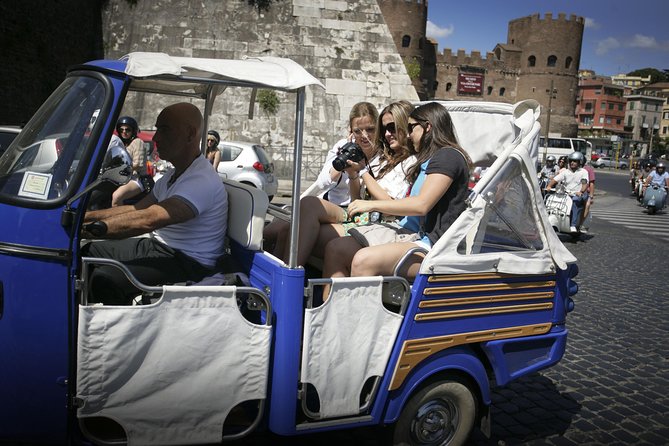
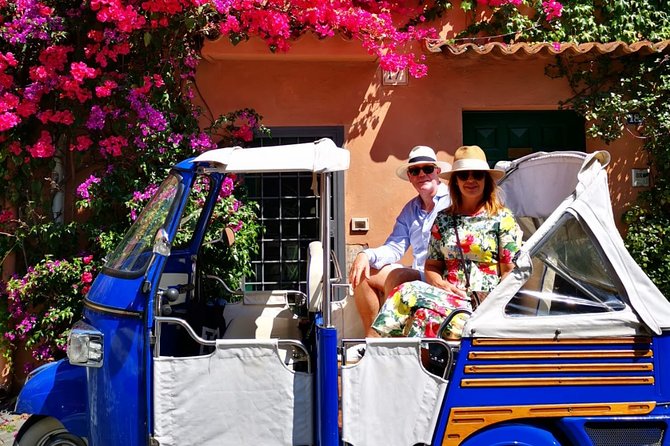
- Ride in a classic Italian Ape Calessino: This 1960s-designed vehicle is the Italian cousin of the tuk tuk, with a colorful, open-air feel.
- Cover a lot without wearing out your feet: The route links the Colosseum, Appian Way, Circus Maximus, Pyramid of Cestius, and several hilltop viewpoints.
- Expect a panoramic tour: The experience does not include entry inside the Colosseum, Baths of Caracalla, or Vatican.
- Enjoy a private guide: Only your group participates, with room to ask questions and request small itinerary changes.
- Plan for a coffee or gelato stop: A caffè, cappuccino, or gelato is included.
- Use it early in your stay: The route gives you a useful first look at Rome’s layout and helps you decide which sites deserve a longer visit.
Why an Ape Calessino works well in Rome
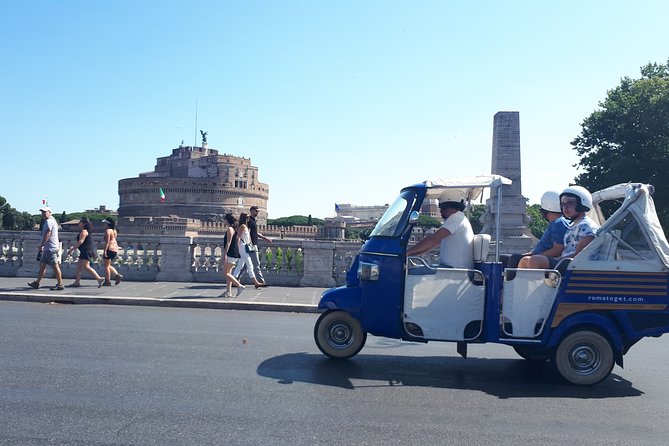
Rome is spread across a wide area, and its most important sights are not all packed into one tidy center. Walking between the Colosseum, Aventine Hill, Appian Way, and Vatican area can take a large part of your day. Public transport helps, but it does not give you the same steady flow of explanations and views.
The Ape Calessino solves that problem in a playful way. You sit in the back while your guide handles the traffic and points out landmarks. The vehicle is small enough to feel close to the city, yet it saves your legs for the places where you actually want to walk.
The ride itself is part of the appeal. The Ape Calessino was designed in Italy in the 1960s and is widely used in Asia under the name tuk tuk. It looks more memorable than a standard car and creates plenty of photo opportunities. You can photograph Rome, and someone in your group can photograph the colorful vehicle carrying you around town.
This is a private outing for up to three people. That matters in Rome, where questions often lead to the best stories. Guides such as Ricardo, Marco, Michael, and Mimmo are praised for being friendly, funny, and generous with local suggestions. Michael, for example, recommended lobster tail pastries during one outing, while Marco provided pastries and helped make the food stop part of the experience.
More Rickshaw Tours in Italy
- Florence Private Transportation in Rickshaw
★ 5.0 · 730 reviews - Florence: Private Transport by Rickshaw
★ 5.0 · 659 reviews - Bari: Old Town Guided Eco-Friendly Rickshaw Tour
★ 4.9 · 355 reviews
Hotel pickup makes the three hours count
Pickup and drop-off are offered at your hotel, Airbnb, or private accommodation in Rome. That saves you from finding a meeting point and is especially useful if you are staying outside the immediate historic center. Confirmation is normally provided at booking, though reservations made within nine days of the date can take up to 48 hours to confirm, subject to availability.
Once you are settled in the backseat, the route begins as a moving introduction to Rome. You are not expected to navigate buses, watch for traffic, or keep checking a map. That lets you focus on the city around you.
All passengers must wear helmets. The experience operates in all weather, so you should dress for the forecast rather than assuming Rome will be warm and dry. Since the vehicle is open to the surroundings, a light layer is useful even on a pleasant day.
The three-hour length is enough for a broad overview, but not enough for long visits inside major monuments. Think of it as a guided orientation with selected short stops, not a substitute for a full Colosseum or Vatican visit.
Baths of Caracalla: Rome’s idea of leisure
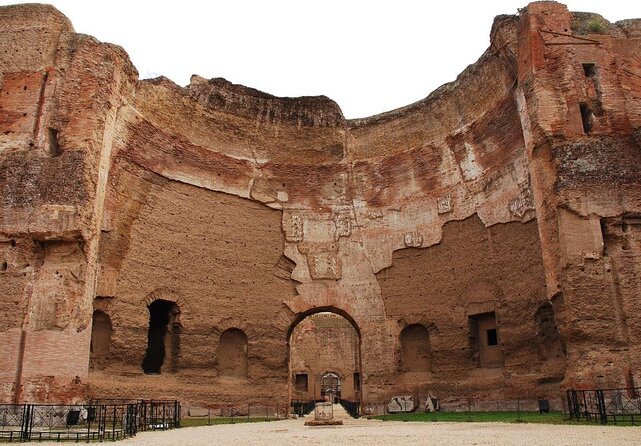
The Baths of Caracalla are among the most impressive surviving Roman bath ruins. Construction began under Septimius Severus in AD 206 and was completed by his son Caracalla in AD 216. The complex could accommodate roughly 1,600 bathers and remained in use until the sixth century.
Your stop here is brief, about 10 minutes, and admission is not included. That short visit is enough to see the scale of the ruins and understand why Roman bathing was far more than a quick wash. The complex included a cold room called the frigidarium, a hot room called the caldarium, and a warm room called the tepidarium. There were also exercise areas, gardens, swimming pools, marble decoration, mosaics, frescoes, and sculpture.
The surviving structures give you a good sense of the engineering involved. Huge vaulted chambers once covered the main halls, with clerestory windows bringing light into the interior. The great vault of the central hall later served as a model for the vaulted naves of medieval churches.
The limitation is that you will not have time for a full archaeological visit. If the Baths of Caracalla are high on your list, plan a separate entry on another day. On this tour, the stop works best as a visual introduction and a chance to hear why Roman otium, or cultivated leisure, mattered so much.
Circus Maximus and the Imperial Forum
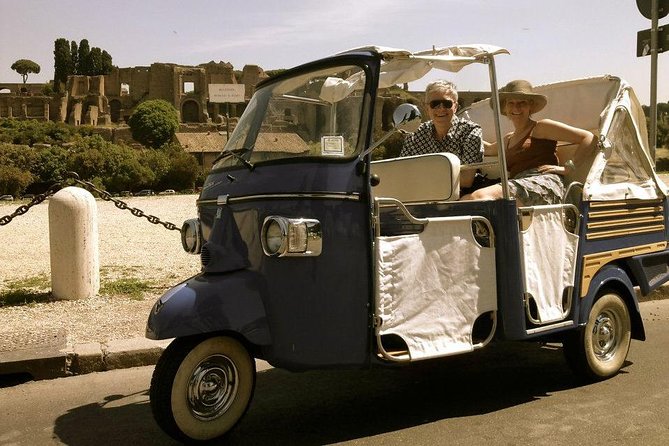
The route also passes the Circus Maximus, Rome’s giant chariot-racing arena. Its U-shaped track once held seats on three sides, with a low central spine dividing the racing course. Julius Caesar began the major construction in the first century BC, and later emperors enlarged it.
At its greatest size under Constantine, the arena measured about 2,000 by 600 feet and may have held as many as 250,000 spectators. Two Egyptian obelisks once decorated the central spine after being brought from Africa. The Circus Maximus is the setting that many people picture when they think of an ancient chariot race.
The stop is largely about seeing the site and listening to the explanation. Do not expect a modern arena with intact seating. Much of the original structure is gone, so the guide’s description helps you picture the crowds, racing teams, and imperial spectacle.
The route also takes in the Imperial Forum and Piazza Venezia. Here you can see the Vittoriano, the enormous white monument dedicated to Victor Emmanuel II. It is one of Europe’s largest monuments and one of Rome’s most unmistakable landmarks. The scale can seem almost excessive, which is part of its story. Your guide can place it beside the older Roman remains and help you understand how Rome keeps adding new layers to the same small area.
More rickshaw tours around Rome:
- Tokyo Asakusa Rickshaw Tour
★ 5.0 · 1,375 reviews - Bruges: Guided Rickshaw Tour
★ 4.9 · 1,199 reviews - Old Delhi Food, Heritage&Cultural Walk with Rickshaw ride to Masterji Kee Haveli
★ 5.0 · 742 reviews - Kyoto: Arashiyama Customized Rickshaw Tour & Bamboo Forest
★ 5.0 · 432 reviews
The Colosseum without the ticket line
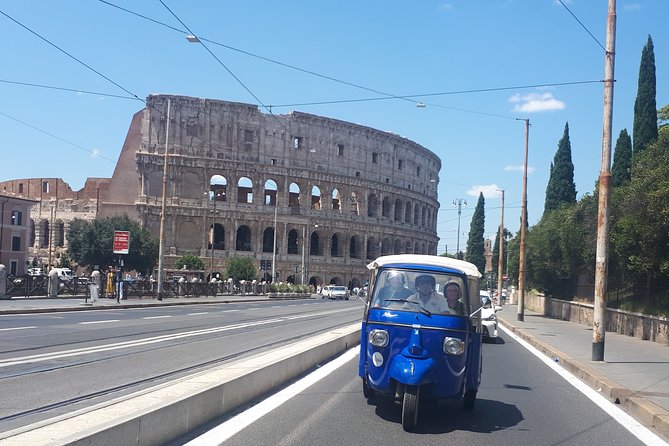
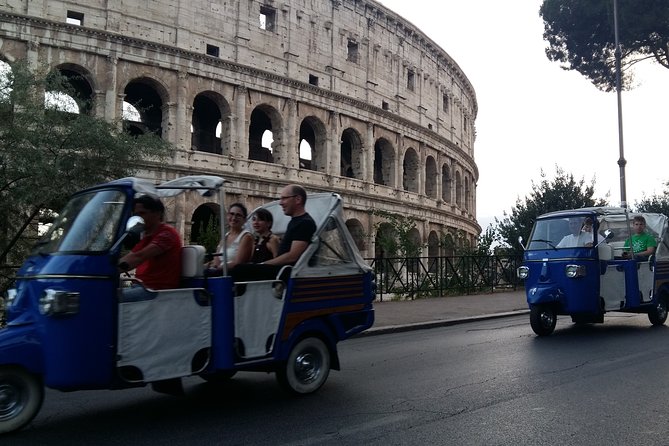
The Colosseum is one of the main visual anchors of the tour. You will see it from outside and hear about its bloody history, but the experience does not include entry. That distinction matters if you have never been inside and want to walk through the arena, underground levels, or upper sections.
For a first afternoon in Rome, the outside view is still useful. The Colosseum is hard to understand from photographs alone because its size and position beside the ancient ruins are part of the impact. A guide can point out how the structure functioned and connect it to the wider Roman Forum area.
I would use this tour to get oriented, then book a separate timed admission for the interior if the Colosseum is a priority. Do not assume the panoramic stop replaces that visit. It does, however, save you from spending the entire first day on foot while still giving you a strong sense of the monument.
Appian Way and the Pyramid of Cestius
The Appian Way, or Via Appia Antica, is one of the most meaningful parts of the route. Construction began in 312 BCE under the censor Appius Claudius. This was Rome’s first major road and its most famous ancient highway, running south toward the ports and the eastern Mediterranean.
Romans called it the queen of long-distance roads. The original road averaged about 20 feet wide and used heavy foundation stones covered with carefully fitted volcanic lava blocks. Milestones, inscriptions, tombs, and other monuments once lined the route.
The stop is listed at about five minutes, with no admission included. That is enough to see a section and understand its importance, but not enough for a long walk along the road. Wear comfortable shoes if you plan to take advantage of any chance to stretch your legs.
The Pyramid of Cestius offers a sharp change of scene. This 36-meter white marble pyramid was built in the first century BC as the tomb of Caius Cestius, a powerful Roman magistrate. The Aurelian Walls later absorbed it into the city’s defenses, and an inscription says the pyramid was built in only 330 days.
You can see the pyramid free of charge. The short stop works well because this monument is easy to miss on a standard ancient Rome route. It is a reminder that Roman society borrowed and adapted ideas from across the Mediterranean.
Aventine Hill and the Knights of Malta keyhole
The stop at Piazza dei Cavalieri di Malta is one of the tour’s most distinctive moments. The famous keyhole in the Knights of Malta door frames Saint Peter’s Basilica in the distance. The view is carefully aligned, and the simple act of looking through an otherwise uninviting door has become a favorite Roman curiosity.
This is not a major monument visit. It is a quick, unusual photo stop with a small sense of discovery. You may find a line of people waiting for their turn, and the view is more impressive in person than in a rushed photograph.
The Aventine Hill also gives you a change in pace from the heavy traffic and dense monument zone. The city looks different from above, and the hill helps explain Rome’s layered shape. This is one of the reasons a private vehicle is useful. You can reach viewpoints that would take more effort to connect on foot.
Campo de’ Fiori, coffee, and gelato
Campo de’ Fiori adds a more everyday side of Rome. By day, the square hosts one of the city’s best-known markets. At night, it becomes a place for aperitivo, cocktails, restaurants, cafés, and people-watching.
The name means field of flowers, though the square today is surrounded by the usual Roman mix of shops, churches, food places, bars, and monuments. It is close to Piazza Navona, the Pantheon, Via del Corso, Trastevere, and the Colosseum, so it is a useful point for continuing your own exploration after the tour.
The scheduled stop is short, about five minutes, but the included caffè, cappuccino, or gelato gives you a chance to slow down. This is more valuable than it might sound. Rome can become a long march between monuments, and a small food break lets you ask the guide for suggestions while taking in the city at street level.
The food advice is a strong part of the experience. Guides have pointed people toward pastries and gelato, including lobster tail pastries. You should still treat specific recommendations as personal suggestions rather than a formal food tour, but they can add a welcome local touch.
Hilltop views and a flexible route
The route includes Aventine and Janiculum Hills, along with views toward the Vatican. The itinerary also includes the Vatican area as a panoramic sight, not an interior visit. If you want the Vatican Museums or Saint Peter’s Basilica, you will need separate admission and more time.
Janiculum Hill is especially useful for seeing Rome from above. The elevated view puts the domes, rooftops, and historic core into a clearer pattern. The guide can also show you how the city’s major districts relate to one another, which helps when you set out on your own later.
Flexibility is one of the strongest reasons to choose a private tour. Ricardo adapted one outing to include sights requested by the group, and another guide adjusted the experience so the group could look at something specific. You should raise your priorities at the start, since the tour cannot give every monument a long stop within three hours.
The route may change with traffic, weather, or your interests. That is a benefit, but it also means you should not expect every moment to follow a rigid timetable. The more clearly you explain what you want, the more useful the private format becomes.
Is $505.23 a fair price?
The price is $505.23 per group of up to three people. For three people, that works out to about $168 per person. For two people, it is about $253 per person, and a solo booking would carry the full group price.
That is not a bargain sightseeing ride. You are paying for private transport, hotel pickup and drop-off, a professional driver-guide, helmets, and a drink or gelato stop. You are also paying to avoid organizing transport between distant parts of Rome.
The value is strongest for a group of three that wants comfort and a private schedule. It can also make sense for a special first day, an older family member who would find a long walking route tiring, or anyone with limited time in Rome. The value is weaker if you mainly want low-cost transportation or inside access to the Colosseum and Vatican.
Because admission tickets are excluded, budget separately for those sites. The tour gives you context and an overview. It does not remove the need to reserve the attractions you most want to enter.
Who should book this Rome tour?
I would recommend it to first-time visitors who want to get their bearings quickly. It is also a good fit for couples or small families who like asking questions, taking photos, and changing the route slightly as they go.
People who enjoy ancient Roman history will appreciate the links between the Baths of Caracalla, Circus Maximus, Imperial Forum, Colosseum, and Appian Way. People who prefer quieter or less expected stops will enjoy the Pyramid of Cestius and the Knights of Malta keyhole.
I would be cautious about booking it if you want a deep visit inside each monument, dislike open-air vehicles, or prefer to explore every stop on foot. Three hours passes quickly, and several stops are only about five minutes long. The vehicle is the tool that makes the broad route possible, not a replacement for walking through Rome’s major sites.
The experience has earned a perfect five-star rating from 14 published ratings, with all recommending it. The praise centers on the guides’ humor, local suggestions, flexibility, and clear explanations. Names that come up include Ricardo, Marco, Michael, and Mimmo, though the specific guide assigned to your booking is not guaranteed.
Free cancellation is available until 24 hours before the start time. After that point, the amount paid is not refunded, and changes are not accepted. Children must be accompanied by an adult, and most people can participate.
Should you book the Ape Calessino tour?
Book it if you want a private Roman overview with personality, especially during your first day or two in the city. The Ape Calessino makes it easy to connect ancient ruins, hilltop views, the Appian Way, and central squares without turning your day into a long walk.
Skip it if your main goal is interior access or the lowest possible price. For everyone else, this is a practical and entertaining way to see Rome’s big sights, hear the stories that connect them, and leave with a clearer plan for the rest of your visit.
FAQ
How long is the Rome Ape Calessino tour?
The tour lasts approximately three hours.
How much does the tour cost?
The price is $505.23 per group of up to three people.
Is hotel pickup available?
Yes. Pickup and drop-off are offered at your hotel, Airbnb, or private accommodation in Rome.
Is the tour private?
Yes. Only your group participates in the private activity.
What language is offered?
The tour is offered in English.
Are entrance tickets included?
No. The tour is panoramic and does not include entry fees for the Colosseum, Baths of Caracalla, or Vatican.
Is food or drink included?
Yes. A caffè, cappuccino, or gelato is included.
Do passengers need to wear helmets?
Yes. All passengers must wear helmets.
Does the tour operate in bad weather?
Yes. It operates in all weather conditions, so you should dress appropriately.
Can children join the tour?
Yes, but children must be accompanied by an adult.
Just added around Rome
- Private 2 Hour VIP Tuk Tuk Tour with Hotel Pickup and Prosecco★ 5.0 · 45 reviews
- Private Electric Tuk Tuk Tour in Rome★ 4.5 · 33 reviews
- Rome:Tuk-Tuk Private Tour of the City Center★ 5.0 · 15 reviews
- Rome 2h Tuk-tuk Tour with Prosecco & Hidden Gems★ 5.0 · 7 reviews
- Private Electric Tuk Tuk Tour in Rome★ 5.0 · 19 reviews
- Rome Tuk-tuk Tour with Hotel Pickup and Prosecco★ 5.0 · 22 reviews
- Private Tuk Tuk Tour in Rome★ 5.0 · 22 reviews
- Rome: City Center Private Tour With Tuk-Tuk★ 5.0 · 29 reviews
Rickshaw Tours, compared.
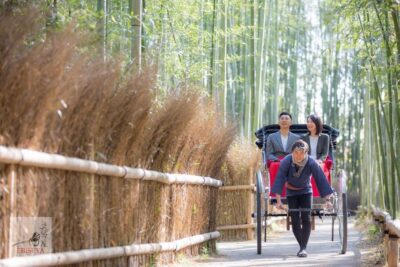
Arashiyama Customized Rickshaw Tour & Bamboo Forest
Read our review →
Split by Private Electric Rickshaw – Palace & Hidden Gems
Read our review →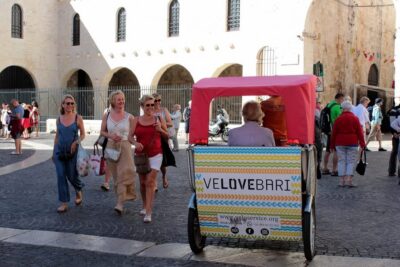
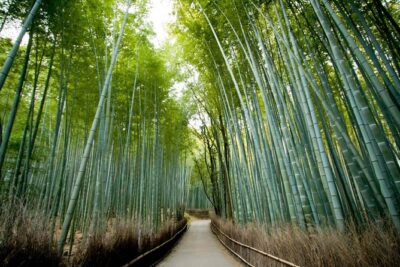
Kyoto Arashiyama Rickshaw Tour with Bamboo Forest
Read our review →Browse the lists this tour appears in