
Review · SPAIN
Valencia: Full 2-Hour Tuk Tuk Tour
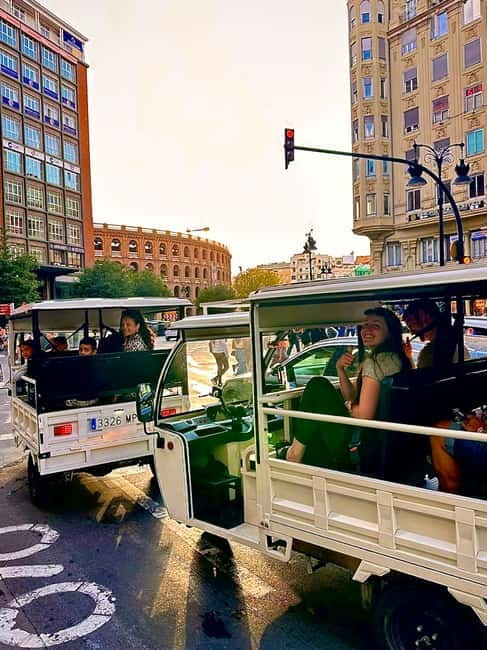
Valencia reveals itself quickly from a tuk-tuk. This two-hour electric ride links the old town, beaches, Marina, modern architecture, and major markets without asking you to cross the city on foot. I like the small-group feel and the chance to shape some stops around your interests. I also like the guides’ mix of local stories, history, and practical tips.
The main tradeoff is time. You see a great deal, but several stops are short or panoramic rather than full visits. The open-air vehicle can also feel chilly, windy, or a little bumpy, and taller or larger passengers may find the seating tight.
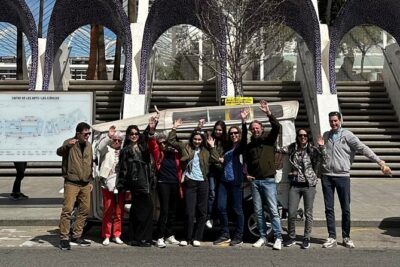
Several guides receive especially warm praise, including Tony, Luigi, Salvador, Silvio, Sebastian, Christian, and Vincent. The strongest part of the experience is the human touch: guides often take family photos, help passengers in and out, and adjust the pace when possible. This is a very good first-day tour, especially if you want a quick sense of Valencia before choosing where to spend more time.
Key points to know before booking
- Two hours cover an impressive spread: You travel from Torres de Serranos through the center, Turia area, Marina, beaches, and City of Arts and Sciences.
- Small vehicles make the tour feel personal: You can ask questions and, depending on the group, discuss which places deserve more attention.
- The City of Arts and Sciences is a real highlight: You get a photo stop and time to see the futuristic buildings from outside.
- Most famous sights are viewed briefly: The Plaza de Toros, Central Market, Estación del Norte, and city gates are mainly orientation stops.
- The ride is open-air but weather-ready: Clear covers are available in rain, and blankets are provided in cooler weather.
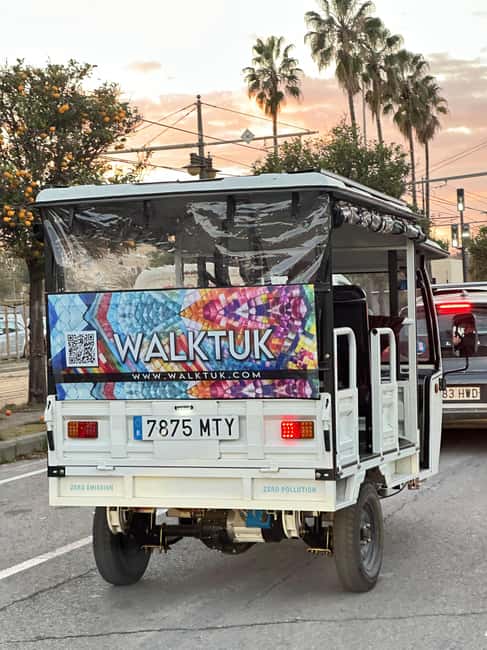
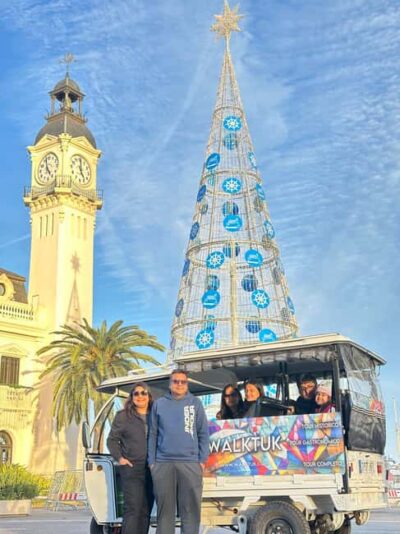
- The meeting point needs care: Look for the WALKTUK tuk-tuk beside the Torres de Serranos and allow extra time for traffic delays.
Why a tuk-tuk works well in Valencia
Valencia is spread across several distinct areas. The medieval center sits inland, the former Turia riverbed cuts through the city as a long public garden, and the Marina and beaches lie farther east. The City of Arts and Sciences adds another major cluster of sights beyond the old center.
Walking between all these places would take much of your day. A standard sightseeing bus can cover distance, but it may feel less personal and cannot use some of the smaller streets. The tuk-tuk gives you an efficient overview while keeping you close to the street.
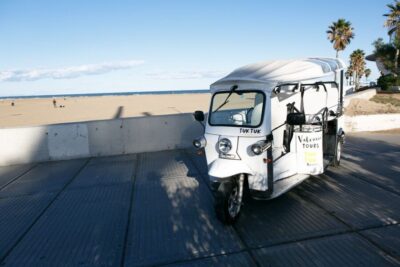
You sit in an open-air electric vehicle, so you get a better sense of the city than you would through a sealed coach window. The ride is quiet and generally smooth, though uneven streets can produce a few bumps. In summer, the airflow is welcome. In cooler months, bring a jacket or layers.
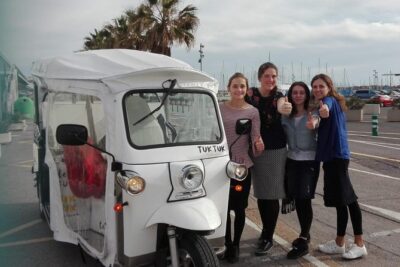
The small format is especially useful for families, couples, and groups who want to ask questions as they go. The tour is not a private experience by definition, so the exact feel depends on who shares your vehicle. Still, the compact setup makes conversation much easier than on a large bus.
A few more tuk tuk tours around Valencia worth a look
- Valencia: 2-hour City Highlights Guided Tour by Tuk Tuk
★ 4.5 · 388 reviews - Private TukTuk Tour 2 Hours of Valencia
★ 5.0 · 40 reviews - Valencia by Tuk Tuk i: Private tour 1 or 2 hours explore the city
★ 5.0 · 14 reviews
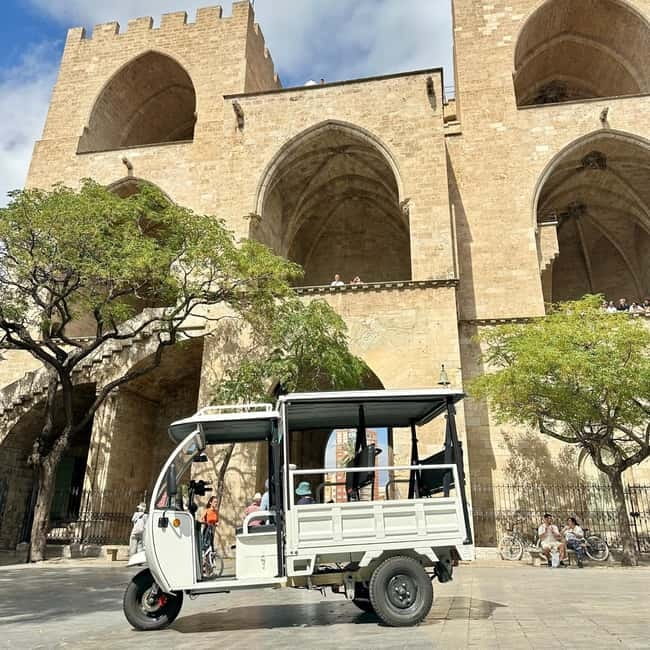
Starting beside the Torres de Serranos
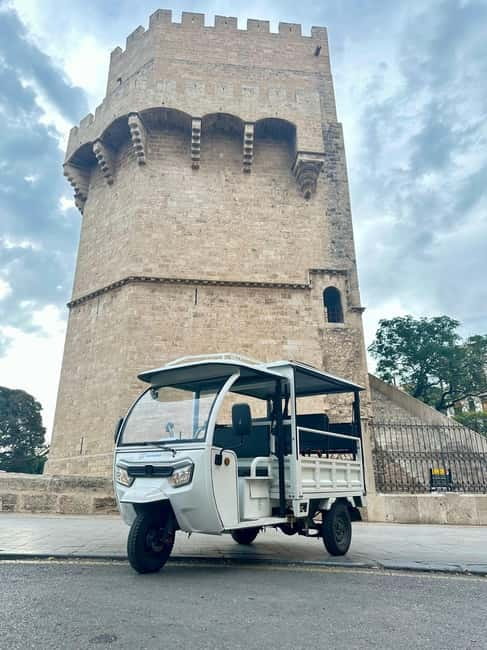
The tour begins beside the Torres de Serranos, one of Valencia’s most striking medieval gateways. Built in the late 14th century, these Gothic towers once formed part of the city walls and served as a major entrance to Valencia.
The tuk-tuk waits near the tower at the meeting point on C. de la Blanqueria. Look for the WALKTUK vehicle rather than relying only on a meeting-point photograph. The directions identify the area beside the Torres de Serranos, and a note about the exact street location has caused some confusion, so check the map pin and allow time to find the vehicle.
Traffic delays of five to ten minutes can happen. This matters if you are arriving from the port or connecting with another booking. From the port, a taxi takes roughly 15 to 25 minutes and costs about €20. The bus takes around 50 to 60 minutes and costs €2 per person. If you drive, the recommended Interparking Glorieta Paz garage is a short walk away.
Starting here puts you near the historic center and gives the guide an easy way to explain Valencia’s old walls, gates, and street plan. You may see the towers from the ground rather than make a full climb, so treat this as a strong opening point, not a tower admission visit.
From Puerta de la Mar to the flower-covered bridge
The first central stops include Puerta de la Mar and the Puente de las Flores, also known as the Mayor Rita Barberá Bridge. Puerta de la Mar is a reconstructed gate from 1946 dedicated to those who died in the Spanish Civil War. It is a quick stop, but the guide can give it meaning beyond its formal appearance.
The Puente de las Flores is one of Valencia’s more cheerful urban details. Built in 2002, it is decorated with flowers and creates a colorful crossing over the former Turia riverbed. The bridge is less about entering a monument and more about seeing how Valencia uses public spaces for decoration and daily life.
You then pass Mestalla Stadium, home of Valencia CF since 1923. The stadium is viewed from outside, with about ten minutes listed for the stop. Football fans will appreciate the context, while everyone else gets a useful look at one of the city’s best-known modern landmarks.
The guide may point out how the city’s central areas connect around the former riverbed. That kind of orientation is one reason I would take this ride early in a stay. You begin to understand which areas belong together and which require a separate outing.
The Marina, beaches, and Cabanyal
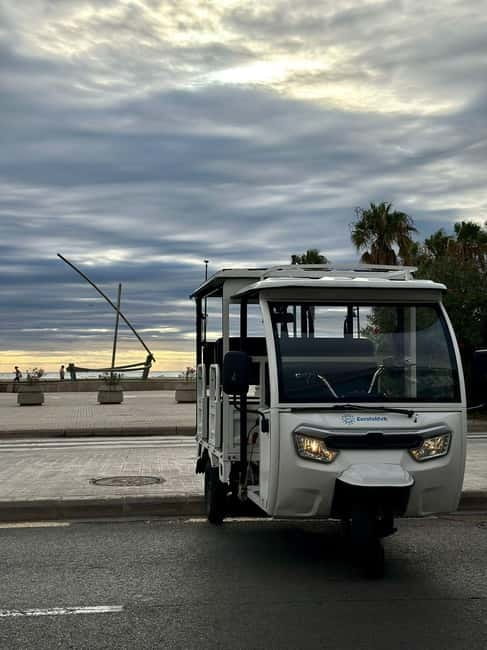
The route then heads toward La Marina de València, where the city’s old port has been adapted for food, culture, sport, and public events. The Veles e Vents building is the main architectural and cultural reference here. The tour allows about 20 minutes in the Marina, making this one of the more substantial pauses.
This section gives the tour a welcome change of pace. The old center is all gateways, markets, and historic facades. The Marina feels more open and contemporary, with wide views and waterfront activity. Your guide can also offer suggestions for eating near the beach, a useful benefit if you want a meal away from the central tourist streets.
The itinerary includes Platja de Llevant and Platja del Cabanyal. Depending on traffic and the group’s interests, you may get a short stop, a drive-by view, or time for photographs. Do not book this tour expecting a beach visit with swimming or a long walk. The value here is seeing how Valencia connects its urban center to the coast.
The Cabanyal neighborhood adds more character. This former fishing district is known for colorful modernist facades and a traditional local feel. A panoramic look cannot replace a walk through its streets, but it helps you decide if the area deserves a longer visit later.
Same place, a completely different ride:
- Valencia: Complete Tuk-Tuk Tour Around the City
★ 4.8 · 793 reviews - Valencia Complete Tour by Tuk Tuk
★ 4.5 · 593 reviews - Valencia: 1-hour Historical Tour in a Tuk Tuk
★ 4.8 · 95 reviews - Valencia: Tuk tuk tour
★ 4.0 · 93 reviews
The City of Arts and Sciences photo stop
The City of Arts and Sciences is the tour’s major visual payoff. Its white, futuristic buildings create a sharp contrast with the medieval gates and market halls seen earlier. The tour allows about 20 minutes here, usually enough for photographs and a close look at the main exterior spaces.
The complex includes several separate attractions:
- The Hemisfèric houses an IMAX cinema and planetarium.
- The Science Museum has interactive exhibits.
- The Umbracle is a landscaped garden with views over the complex.
- The Oceanogràfic is Europe’s largest aquarium.
- The Palau de les Arts hosts performing arts.
- The Assut de l’Or Bridge and Ágora add two of the city’s best-known architectural shapes.
The tuk-tuk tour does not include admission to these attractions. That is important because the complex can take half a day or more if you visit the aquarium, museum, or Hemisfèric. Here, you get an outside introduction and time for photographs.
I like this arrangement because it prevents the whole tour from becoming a museum transfer. You see the scale and layout first, then you can return with a ticket if one building interests you. The drawback is that 20 minutes passes quickly, especially if you want photographs from several angles.
The route also includes the Palace of Music Valencia. This building sits in the Turia Gardens and adds another example of Valencia’s modern public architecture. The guide may use the stop to explain the relationship between the former river channel, the gardens, and the city’s newer cultural buildings.
Markets, modernism, and the central city
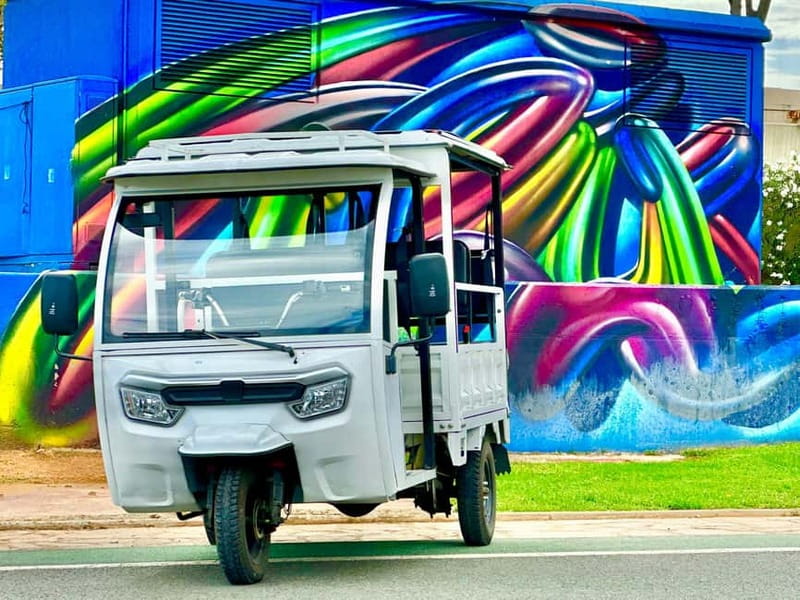
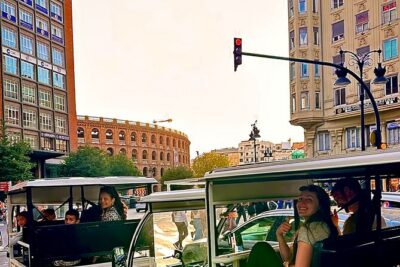
Back in the central districts, the tuk-tuk passes Mercado de Colón, Carrer de Colón, the Plaza de Toros, Estación del Norte, and the Central Market. This group of stops shows Valencia’s daily life and architecture more clearly than a simple monument tour.
Mercado de Colón dates from 1928 and is a modernist market building now filled with restaurants and cafés. It is a recommended stop, not simply a passing view. If you want a drink or a taste of local food, this is one of the most practical places on the route, though the two-hour schedule may limit how long you can sit.
Carrer de Colón is one of the city’s main shopping streets. Seeing it from the tuk-tuk helps you place the commercial center in relation to the historic quarter, but it is not an attraction that requires a formal stop.
The Plaza de Toros, built in 1859, is a large neoclassical landmark near the center. The short stop gives you a chance to photograph its exterior and understand its place in Valencia’s public life. It is a cultural landmark, but the tour does not include an interior visit.
Next comes Estación del Norte, opened in 1917. Its decorated facade is a fine example of Valencian modernism, with details that reward a closer look. The stop is brief, so take photographs quickly and consider returning on foot if architectural decoration is important to you.
The Central Market is another quick stop. This historic market combines elaborate modernist design with stalls selling fresh produce and local foods. The tuk-tuk introduction is useful, but you need extra time if you want to shop, eat, or inspect the interior properly.
Ending at the Quart Towers

The final stop is the Torres de Quart, medieval towers dating from 1441 to 1460. Their walls still show damage from cannon fire during the War of Independence. That physical evidence gives the stop a direct link to Valencia’s military past.
The towers are a fitting finish because they bring you back to the city’s old defenses. From there, the vehicle returns to C. de la Blanqueria 3, near the starting area.
The Quart Towers stop is listed at about five minutes, so expect a quick explanation and photographs rather than a long visit. If the towers, Central Market, or Estación del Norte catch your interest, you can return later under your own power. That is the smart way to use this tour: gather ideas now, then choose your deeper visits afterward.
The guides make the difference
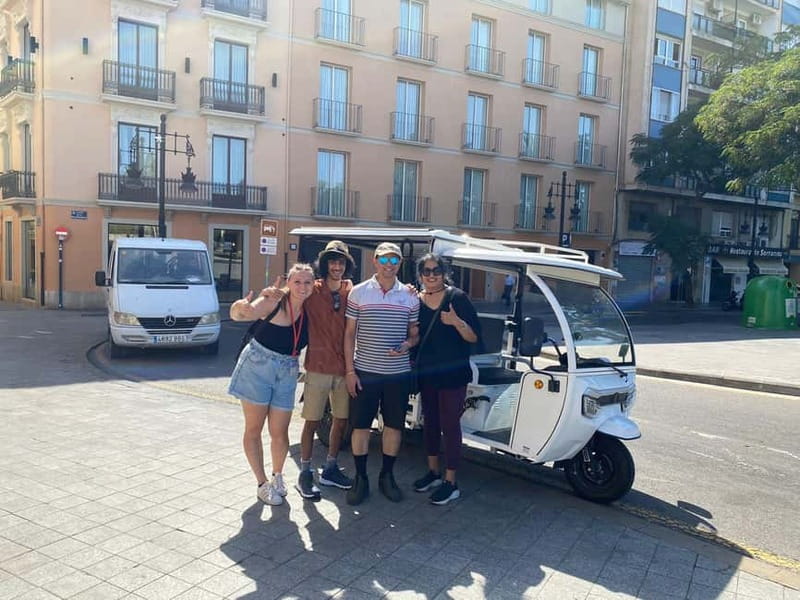
The route is useful, but the guide determines how much you get from it. The strongest comments describe guides who explain clearly, answer questions, drive safely, and take time for photos.
Tony is repeatedly praised for his energy, clear English, local stories, and ability to explain sights in German when needed. Luigi is often described as friendly, careful, and good at tailoring stops. Salvador is noted for an entertaining style and strong explanations, while Silvio receives praise for making the ride lively and informative.
Sebastian and Christian are especially good choices for families who value personal attention. They have helped passengers with mobility needs, taken family photographs, and used visual aids to explain some sights. Vincent is also praised for a clear, informative presentation.
Language options are Spanish, English, Italian, French, and German. Still, confirm your preferred language when booking. One booking intended to be in German had an English-speaking guide, and another passenger found the audio speaker hard to hear. If you have hearing difficulties, sit close to the guide and ask for important points to be repeated.
Comfort, access, and family details
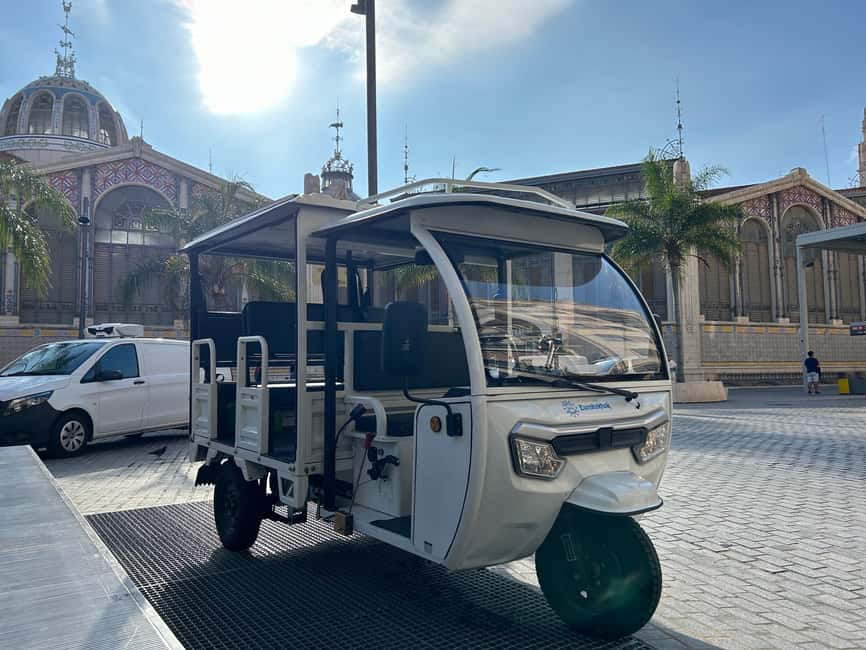
The vehicle is wheelchair accessible in principle, but there are limits. Non-folding wheelchairs and electric wheelchairs are not allowed, and baby carriages and bicycles cannot be taken aboard. If you need assistance, contact the operator before booking and explain the equipment you use.
The tuk-tuk can feel tight for a larger passenger or anyone with a knee replacement. Getting in and out also requires some bending and stepping, although guides have helped passengers who need extra time. The ride itself is generally described as safe and smooth, but Valencia’s road surfaces can make it a little bumpy.
Children under four are not suitable for this activity. Children under 15 must be accompanied by an adult. Families with older children often benefit from the short stops and changing scenery, but a two-hour ride may be less engaging for children who want long visits inside attractions.
Rain does not automatically cancel the experience. Clear waterproof covers are available, and blankets are provided when it is cold. Even so, I would wear layers in winter and bring sun protection in warmer weather. Open-air travel makes the temperature more noticeable than it would be in a coach.
Value, timing, and who should book
No tour price is provided here, so check the current rate before booking. The value depends on how you plan to use the two hours. If you want detailed interior visits, this will not replace entrance tickets or a walking tour. If you want to cover distant parts of Valencia quickly, it can save a great deal of time and help you plan the rest of your stay.
A taxi between the old center and the coast would cover distance, but it would not include explanations or photo stops. A large sightseeing bus may offer a broader route, but the tuk-tuk gives you closer views and a more conversational ride. Compared with walking, you trade depth for reach.
I would book this for:
- A first morning or afternoon in Valencia
- Families with children over four
- Couples who want a relaxed overview
- Visitors with limited time
- Cruise passengers who need a quick city introduction
- Anyone who prefers an open-air ride to a large bus
I would choose a longer walking tour instead if your main goal is the Central Market, old town interiors, or detailed architectural study. I would also skip it if you dislike compact seating, need a non-folding wheelchair, or want a long beach visit.
The tour offers free cancellation up to 24 hours in advance, and you can reserve now and pay later. That flexibility helps if your Valencia plans depend on weather or a cruise schedule.
Should you book the Valencia tuk-tuk tour?
Yes, if you want a lively overview rather than a series of full monument visits. In two hours, you see medieval gates, modernist buildings, football culture, the Marina, two beaches, the City of Arts and Sciences, markets, and the old defensive towers.
Book it early in your stay, ask for the language you need, and wear layers. Keep expectations realistic: most stops introduce a place rather than provide admission or extended exploration. For a first look at Valencia, the mix of distance, local commentary, and personal attention makes this a strong use of two hours.
FAQ
Where does the Valencia tuk-tuk tour start?
The meeting point is beside the Torres de Serranos. Look for the WALKTUK tuk-tuk near C. de la Blanqueria and check the map pin carefully because the exact street number can be confusing.
How long does the tour last?
The tour lasts two hours and returns to C. de la Blanqueria 3 near the Torres de Serranos.
Which languages are available?
The tour is offered in Spanish, English, Italian, French, and German. Some content may be presented in its original language.
Is the tuk-tuk covered if it rains?
The vehicle is open-air, but clear waterproof covers are available in rainy weather. Blankets are provided when temperatures are chilly.
Can children join the tour?
Children under four are not suitable for the activity. Children under 15 may join only when accompanied by an adult.
Is the tour wheelchair accessible?
The tour is described as wheelchair accessible, but non-folding wheelchairs and electric wheelchairs are not permitted. Baby carriages are also not allowed.
Can I take a bicycle or baby carriage?
No. Bicycles and baby carriages are not permitted in the tuk-tuk.
How can I reach the meeting point from the port?
A taxi takes about 15 to 25 minutes and costs around €20. The bus takes about 50 to 60 minutes and costs €2 per person. There are also many nearby city bus stops.
Just added around Valencia
- Valencia: Visit the Historic Center of Valencia by Tuk Tuk★ 5.0 · 2 reviews
- Valencia: Tuk Tuk Modern Tour★ 5.0 · 6 reviews
- Valencia: TukTuk Tours★ 4.9 · 39 reviews
- Valencia 1 hour by TukTuki: Essential and Private Tour★ 4.5 · 22 reviews
- Valencia: Visit the Historic Center of Valencia in Tuk Tuk★ 4.0 · 11 reviews
- Private Tour with Tuktuk in Valencia★ 5.0 · 14 reviews
- Valencia by Tuk Tuk i: Private tour 1 or 2 hours explore the city★ 5.0 · 14 reviews
- Valencia: Tuk Tuk Modern Tour★ 5.0 · 12 reviews
Valencia Tuk Tuk Tours, compared.



Browse the lists this tour appears in