Review · SPAIN
Madrid Expert Plus Tour with Local Guide in Eco Tuk Tuk Private
Madrid opens up quickly from a tuk-tuk. This private electric tour links the Royal Palace, Prado area, Retiro sights, Salamanca, and Bernabéu without asking you to walk the whole city. I like the small scale, with no more than four passengers per vehicle, and I like the guides’ mix of history, local advice, and easy conversation. The price, about $28.67 per person, is especially fair for a private group.
The main trade-off is that this is primarily a moving sightseeing tour, not a series of long museum or monument visits. You get prearranged photo stops, but the route cannot be changed freely, and some people may want more time outside the tuk-tuk. Cold or wet weather can also affect visibility, even with blankets and protective covers.
Key points to know before you book
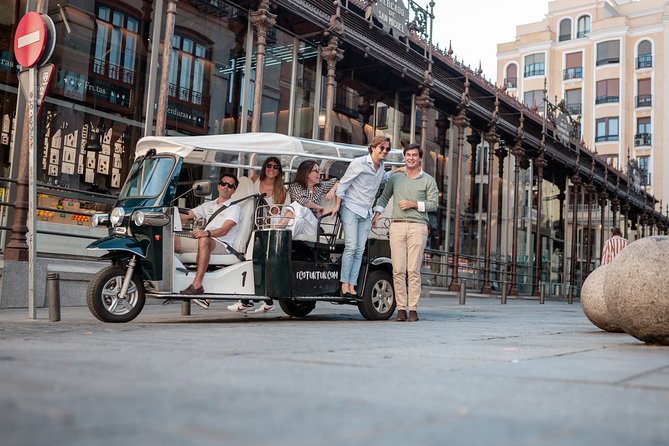
- A private electric tuk-tuk carries up to four people, making this a more personal option than a large bus tour.
- The route crosses much of Madrid, from Atocha and the Prado to Salamanca, the Bernabéu, the Royal Palace, and Templo de Debod.
- The two-hour tour gives you a quick city orientation, while three or four hours allow a slower pace and more stops.
- The guides are a major strength, with Christian, Lucia, Juan, Enrique, Laura, Clara, David, Ivan, and others praised for clear explanations and friendly service.
- Winter equipment is provided, including blankets and layers against rain and wind, though you should still dress warmly.
- The $28.67 price is good value for a private overview, especially for a couple or small family that wants to cover ground without a long walk.
Why a Madrid tuk-tuk tour works so well
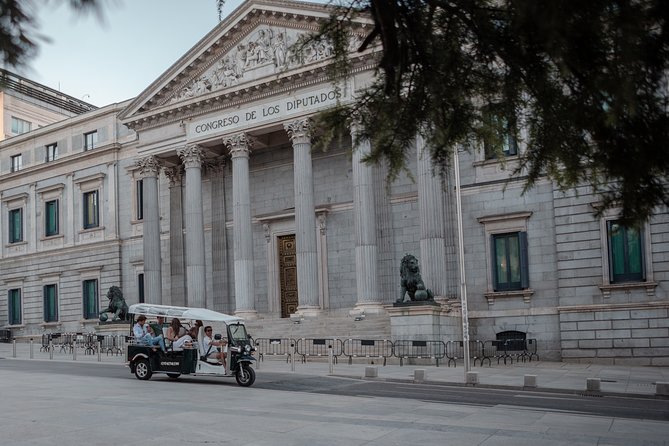
Madrid is broad, handsome, and full of major sights spread across different districts. Walking is rewarding in the old center, but it takes time to connect the Royal Palace with the Prado, Salamanca, the Santiago Bernabéu stadium, and the western edge of the city.
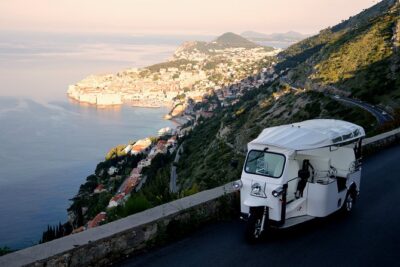
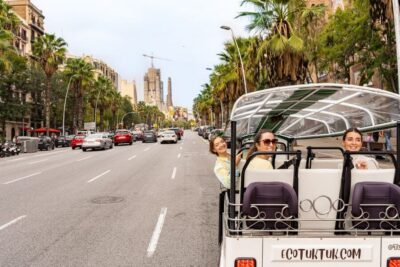
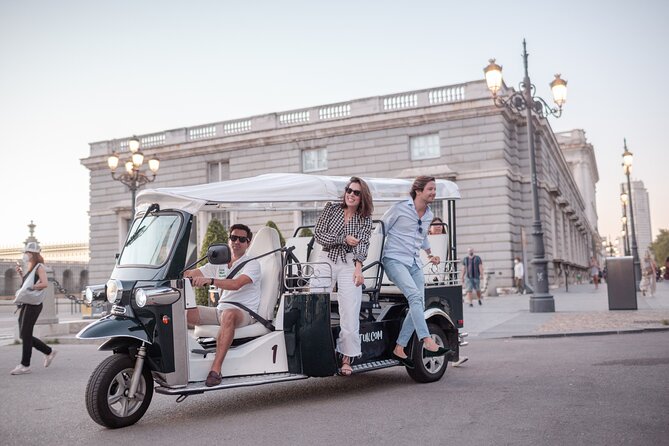
That is where this tour earns its place. You sit above street level, hear the guide while moving through town, and get a quick sense of how Madrid’s districts fit together. The vehicle is fully electric, private to your group, and small enough to use streets that a standard sightseeing bus cannot reach.
I would take this tour early in a Madrid stay. It helps you get your bearings before choosing which places deserve a longer visit. A two-hour ride gives you the broad outline. Three hours feels like the best compromise for most people. Four hours suits anyone with limited mobility, a short stay, or a strong wish to see nearly every major landmark from the outside.
The guides are central to the experience. Christian is described as lively and helpful, while Lucia, Juan, Enrique, Laura, Clara, David, Ivan, and others have been praised for their city knowledge, warm manner, and useful restaurant and shopping suggestions. Guides have also taken photos for passengers and adjusted explanations to suit the group.
Do not expect a completely free-form private driver. The route and photo stops are arranged ahead of time. Closed streets, demonstrations, traffic, and local restrictions can change the order or shorten part of the route.
More Electric Tuk Tuk Tours in Madrid
- Madrid: Private City Tour by Eco Tuk Tuk
★ 4.9 · 3,465 reviews - Madrid Welcome Tour with Local Guide in Eco Tuk Tuk Private
★ 5.0 · 2,936 reviews - Madrid Historical Tour with Local Guide in Eco Tuk Tuk Private
★ 5.0 · 876 reviews
From San Miguel Market to Atocha Station
The meeting point is at Calle de Bailén 4, beside the Royal Palace in the Plaza de Oriente area. The address can be confusing because there is no obvious number 4 on the street. Search for Calle Bailén 4 or Puerta del Príncipe on a map, then look for the stairs opposite the Prince’s Gate leading to the underground bus station.
That detail matters. Give yourself extra time, especially if you are carrying luggage or meeting the tuk-tuk before a museum reservation. The operator provides a phone and WhatsApp contact for help, including elevator access if stairs are difficult.
The route may pass the San Miguel Market, a handsome covered food market dating from around 1916. It is a useful first glimpse of Madrid’s food culture, with delicatessen counters, local products, and occasional events in a polished iron-and-glass setting. The tuk-tuk may not provide enough time for a proper meal, so treat this as a landmark and possible return stop.
Atocha Station offers a different side of Madrid. This is the country’s busiest railway complex and one of Europe’s main rail hubs, near Plaza del Emperador Carlos V. It is an important transport building rather than a classic monument, but seeing it helps explain Madrid’s role as Spain’s central rail crossroads.
These early stops work well because they connect everyday Madrid with its grander sights. You are not only looking at palaces and statues. You are also seeing how people eat, commute, and move through the capital.
The Cortes, Neptune, and Madrid’s great art district
The Spanish Courts building is one of the tour’s strongest architectural stops. Its neoclassical front has six fluted Corinthian columns, a triangular pediment, and the familiar bronze lions at the entrance. The lions were cast from iron taken from cannons captured during the war in Africa, an unusual detail that gives the formal building a more tangible story.
The interior includes the Session Room, library, and Conference Room, also known as the Lost Steps Room. You should understand that this tuk-tuk tour offers an outside view and commentary, not an interior visit.
Nearby, the Fountain of Neptune occupies the center of the roundabout at Plaza de Cánovas del Castillo. Designed in the late eighteenth century, it shows the Roman god Neptune in a chariot. Together with nearby Cibeles, it forms part of Madrid’s grand ceremonial axis.
The Prado Museum follows, at least from the street. Its collection covers European painting from the sixteenth through nineteenth centuries, with major works by Velázquez, El Greco, Goya, Titian, Rubens, and Bosch. Madrid’s art district deserves several hours on its own, so the tuk-tuk cannot replace a museum visit. What it can do is show you where the museum sits in relation to the rest of central Madrid.
This is one reason I would schedule the tuk-tuk before your Prado visit. The guide’s comments give you names and context, then you can return with a timed ticket and spend your attention inside. The same applies to the nearby church of San Jerónimo el Real, usually called Los Jerónimos.
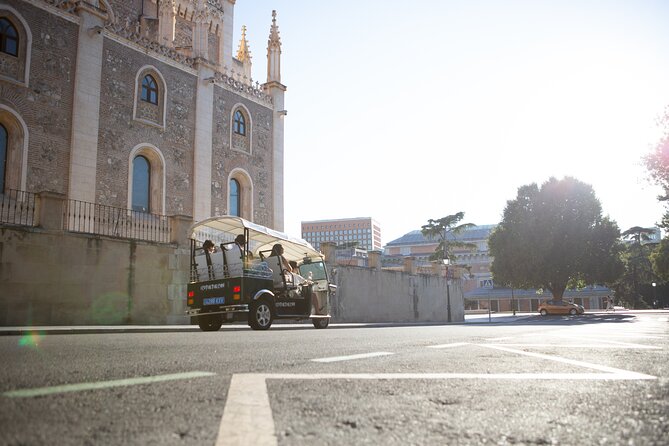
Los Jerónimos is a late Gothic church with Renaissance touches. Its long connection with Spain’s monarchs explains its location beside the Prado and its ceremonial importance. The church was linked to the Catholic Monarchs, served as a royal retreat, and hosted royal events, including the wedding of Alfonso XIII. The grand staircase was built for that wedding in 1906.
Puerta de Alcalá and the Salamanca district
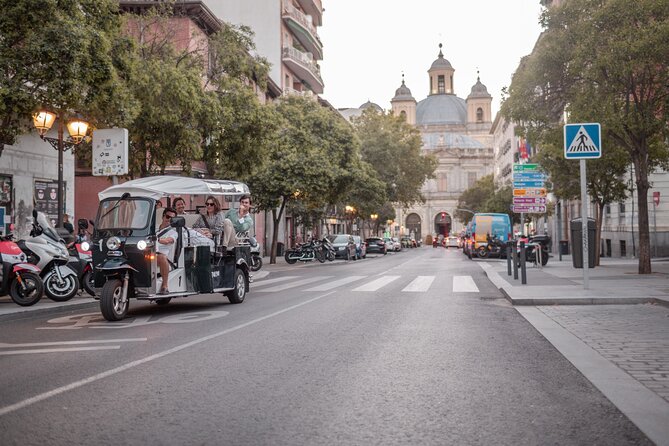
Puerta de Alcalá is one of Madrid’s most recognizable gateways. Carlos III ordered it to replace an older sixteenth-century gate, and architect Francesco Sabatini completed the present granite monument in 1778.
Its five openings are unusual. Most triumphal gateways use three. The two sides also differ: the city-facing side is simpler, while the outer face has a fuller royal decoration. The gate took its name from the road leading toward Alcalá de Henares.
The tuk-tuk continues through Barrio Salamanca along Velázquez, Ortega y Gasset, and Serrano. This district presents a more polished Madrid, with wide avenues, formal buildings, upscale shops, and a very different feel from the older center.
I like this section because it prevents the tour from becoming a palace-only circuit. You see how Madrid changes from historic core to elegant nineteenth-century expansion. If shopping is part of your plan, pay attention to the guide’s comments here, but remember that the tour does not stop for an extended shopping session.
More Electric Tuk Tuk Tours in Spain
- Madrid Express Tour with Local Guide in Eco Tuk Tuk Private
★ 5.0 · 413 reviews - Madrid: Highlights City Tour by Electric Tuk Tuk
★ 4.7 · 346 reviews - Madrid Expert Tour with Local Guide in Eco Tuk Tuk Private
★ 5.0 · 220 reviews - Tour Madrid: Secrets in a Electric Tuk Tuk
★ 4.6 · 155 reviews
Las Ventas, the Bernabéu, and Paseo de la Castellana
Las Ventas bullring is another major outside sight. With space for 23,798 spectators, it is Spain’s largest bullring and among the largest in the world. Even if bullfighting is not your interest, the building is an important part of Madrid’s public architecture and cultural story.
The route then moves from Salamanca toward the Santiago Bernabéu stadium along Paseo de la Castellana. The stadium has a current capacity of 81,044. Football fans will recognize the scale immediately, while others may simply appreciate seeing one of Madrid’s defining modern landmarks.
Here, expectations matter. The itinerary includes the stadium route, but one passenger reported that the tuk-tuk did not reach it on that particular three-hour outing. Traffic, street closures, and the chosen route can affect what is possible. If the Bernabéu is a priority, confirm the intended route with your guide at the start, but understand that the tour cannot guarantee every stop under changing road conditions.
The Castellana ride also shows the city’s north-south structure. It is a useful contrast with the narrow streets around the Royal Palace and old center. You get a broad look at modern Madrid without giving up the historic districts.
Columbus, the National Library, and Cibeles
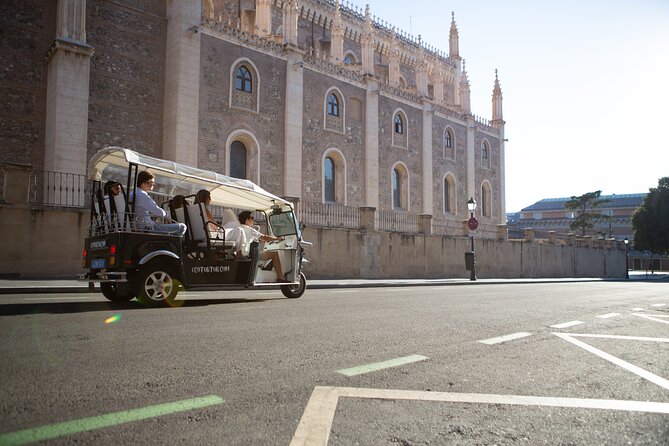
The Christopher Columbus monument occupies the center of Plaza de Colón. The white marble statue, completed in 1885 by Jerónimo Suñol, rises above a carved stone pedestal and reaches 17 meters. The square also includes the Gardens of Discovery and the Fernán Gómez Cultural Center below ground.
The nearby National Library of Spain holds about thirty million publications produced in Spain since the early eighteenth century. Its collections include books, magazines, maps, prints, drawings, music, and pamphlets. The library’s museum and exhibition rooms explain this national collection, though the tuk-tuk tour does not include a general interior visit.
Cibeles is one of Madrid’s most photographed fountains. The Roman goddess sits in a chariot pulled by two lions, with the surrounding buildings including the Buenavista Palace, Linares Palace, Communications Palace, and Bank of Spain. The fountain is also closely linked to Real Madrid, whose supporters celebrate major football victories here.
The Bank of Spain adds another grand façade to the same area. Its ornate exterior was created to give Spain’s national bank a building suited to its role issuing currency. Interior visits are restricted to educational groups, universities, and certain nonprofit cultural organizations, so you will normally see it from the street.
These stops are excellent for photographs because several major buildings gather around a compact area. They also give your guide room to explain how royal power, finance, culture, and football all use the same public spaces.
Santa Ana, San Francisco, and the Almudena Cathedral
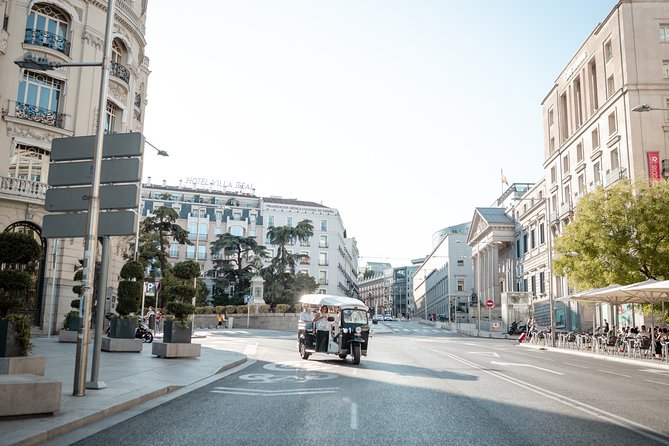
Plaza de Santa Ana brings the tour back into the Centro district. It is an open square in the Cortes neighborhood, created in 1810 and reshaped several times. Its changing form reflects Madrid’s constant balance between historic buildings, public space, restaurants, and city traffic.
The Royal Basilica of San Francisco el Grande is another imposing religious landmark in the historic center. Its formal name is the Basilica of Our Lady of the Angels, and it sits in the Palacio neighborhood. The tuk-tuk provides an exterior introduction rather than an extended church visit.
The Almudena Cathedral is Madrid’s leading religious building. Pope John Paul II consecrated it in 1993, making it the first cathedral consecrated by him outside Rome. Its museum contains objects connected with the Madrid diocese, including mosaics, episcopal shields, and religious furnishings.
Again, you should see the tuk-tuk portion as orientation. If religious art or architecture matters to you, return later with time to enter. The short visit cannot do justice to the cathedral museum or the basilica’s interior.
The Royal Palace, Campo del Moro, and Templo de Debod
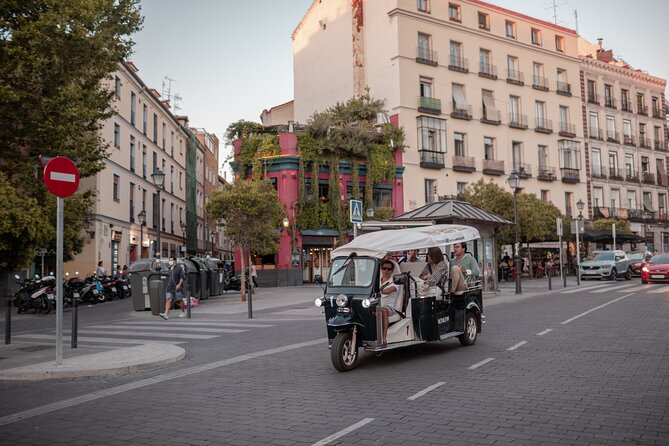
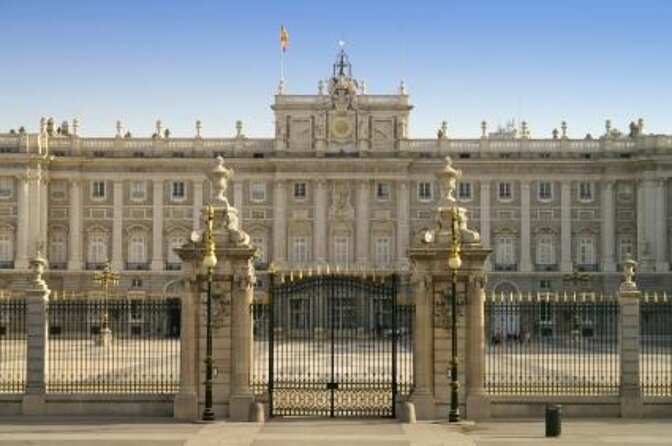
The Royal Palace, also called the Palacio de Oriente, is the grand finale for many passengers. Construction began in 1738 after the former Habsburg palace burned on Christmas Eve in 1734. The new palace took seventeen years to complete, and Carlos III made it his regular residence in 1764.
Spain’s royal family now lives at the Palacio de la Zarzuela, so the Royal Palace is used mainly for receptions, ceremonies, and official events. Its position beside the Sabatini Gardens and Campo del Moro makes this one of Madrid’s most impressive urban settings.
Campo del Moro stretches west from the palace toward the Paseo de la Virgen del Puerto. The garden covers about twenty hectares and has been protected as a historic-artistic site since 1931. It is open during the day, giving you a good option for a separate quiet walk after the tour.
The final stop is Templo de Debod, an ancient Egyptian temple relocated to Madrid. It sits west of Plaza de España beside the Paseo del Pintor Rosales, on the former site of the Mountain Barracks. The stop lasts about 15 minutes and admission is free.
The temple is especially useful as a final viewpoint because it is away from the tightest old-center streets. You can step out, take photographs, and see a surprising piece of ancient Egypt in a Spanish capital. It is also a good reminder that Madrid’s story reaches beyond its royal and nineteenth-century buildings.
How the timing, weather, and vehicle affect the ride
The tour lasts approximately two to four hours. A two-hour booking moves quickly and works best if you want a broad introduction. Three hours gives the guide more room to explain the route and pause at key points. Four hours can be worthwhile after an overnight flight or for anyone who wants sightseeing without a demanding walk.
The vehicle is covered but open enough for views. In winter, blankets are available, along with protective layers against rain and wind. Still, one family found a cold day uncomfortable, and another said plastic side panels reduced visibility in bad weather. Dress for the conditions rather than relying entirely on the equipment.
The tour runs in rain or heat and is canceled only in extreme conditions. Crowded streets can also force the driver to adapt. On a busy Saturday evening, a guide had to change the route to avoid traffic standing still. That flexibility is useful, but it may mean fewer stops.
The tuk-tuk is suitable for older people, and drivers can assist with boarding. The minimum age is two years, babies are not permitted, and the minimum weight is 9 kilograms. Pets are not allowed for safety reasons.
Arrive early. A delay of more than 15 minutes can cancel the activity without a refund, and shorter delays reduce your sightseeing time. Free cancellation is available up to 24 hours before the start, but changes or cancellations inside that window are not accepted.
Is $28.67 per person good value?
For a private vehicle, the price is strong. A couple pays for a personal guide and direct transport between distant districts, while a group of four gets especially good value per person. Group discounts may also be available.
The price does not include hotel pickup, drop-off, tips, or transfers outside the route. It also does not include entry to the Prado, Royal Palace, cathedral museum, or other attractions. Think of the fare as payment for city orientation, transport, guiding, and photo opportunities.
A large bus tour may cost less in some cases, but it will not offer the same small-group feel or access to narrower streets. A walking tour may provide more detail at each site, but it will cover less ground and demand more energy. This tuk-tuk sits between those options.
Should you book this Madrid tuk-tuk tour?
Book it if you are visiting Madrid for the first time, have only a day or two, or want a gentle introduction before tackling the museums on foot. It is also a good fit for families, small groups, older visitors, and anyone arriving tired from an overnight flight.
Choose the three-hour option if you want the best balance. Pick four hours if covering the city matters more than stopping often. If you want long interior visits, deep museum time, or complete control over the route, book separate museum and walking experiences instead.
I would use this tuk-tuk tour as a first-day city sampler. The friendly guides, private setting, electric vehicle, and wide route make Madrid easier to understand quickly. Just arrive on time, dress for the weather, and remember that the best parts of the city may deserve a return visit on foot.
FAQ
Where does the Madrid tuk-tuk tour start?
It starts at Calle de Bailén 4 near the Royal Palace in Plaza de Oriente. The meeting point is in the underground bus station beside the palace, near the Puerta del Príncipe.
How many people can ride in one tuk-tuk?
The legal maximum is four passengers per tuk-tuk. The vehicle is reserved privately for your group.
How long does the experience last?
The available tour length is approximately two to four hours. The exact pace and number of photo stops depend on the time selected and conditions on the route.
Is the tour available in bad weather?
Tours operate in rain and heat and are canceled only in extreme conditions. Blankets and protective layers against rain and wind are provided, although you should still dress warmly in winter.
Does the tour include admission to the Royal Palace or Prado Museum?
No. The tour provides exterior sightseeing and commentary. Entry tickets to museums, palaces, churches, and other attractions are not included.
Can I cancel for a refund?
You can cancel up to 24 hours before the experience begins for a full refund. Cancellations or changes made less than 24 hours before the start are not accepted.
More Electric Tuk Tuk Tours around Madrid
- Christmas Lights Tour of Madrid in Eco Tuk Tuk Private
★ 5.0 · 125 reviews - Madrid: Private Christmas Lights Tour by Eco Tuk-Tuk
★ 4.8 · 63 reviews - Madrid: Discover the City by Private Electric Tuk Tuk
★ 4.6 · 62 reviews - Madrid: Explore the City in an Electric Tuk Tuk
★ 4.6 · 49 reviews
More Guided Tuk Tuk Tours in Spain
- Madrid in Tuk Tuk with Local Guide Included
★ 5.0 · 5 reviews - Tour Welcome Barcelona with Local Guide in Eco Tuk Tuk Private
★ 5.0 · 1,882 reviews - Tour Welcome Seville with Local Guide in Eco Tuk Tuk Private
★ 5.0 · 786 reviews - Malaga Expert Tour with Local Guide in Eco Tuk Tuk Private
★ 5.0 · 533 reviews
Just added around Madrid
- Tuk Tuk Tour with Wine Test in Madrid★ 3.8 · 6 reviews
- Tuktuk historical tour of Madrid 1 Hr in a fun and original way★ 4.1 · 4 reviews
- Tuk-tuk Tour: Private tour of downtown Madrid★ 4.0 · 2 reviews
- Tuk-tuk tour of downtown Madrid★ 5.0 · 2 reviews
- Discover Madrid in a Fun & Eco-Friendly Tuk-Tuk – Private Tour★ 4.0 · 4 reviews
- Eco Friendly Tuk Tuk Experience with the Local in Madrid★ 5.0 · 4 reviews
- Tour of Castizo Madrid with a private guide in a yellow Tuk-Tuk★ 5.0 · 26 reviews
- Tuk Tuk Tour of the Best of Madrid (booking only)★ 5.0 · 2 reviews
Electric and Eco Tuk Tuk Tours, compared.
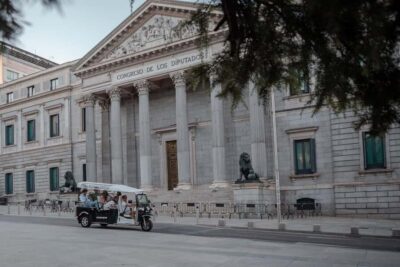
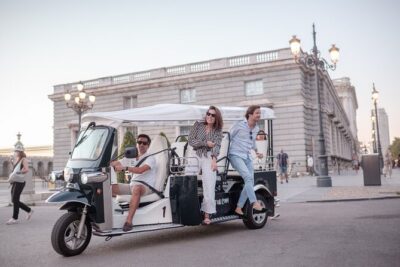
Madrid Welcome Tour with Local Guide in Eco Tuk Tuk Private
Read our review →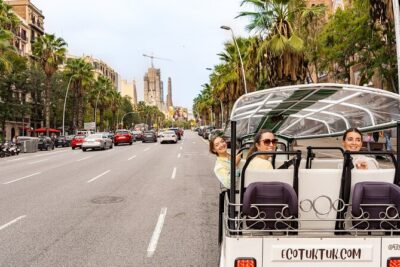
Tour Welcome Barcelona with Local Guide in Eco Tuk Tuk Private
Read our review →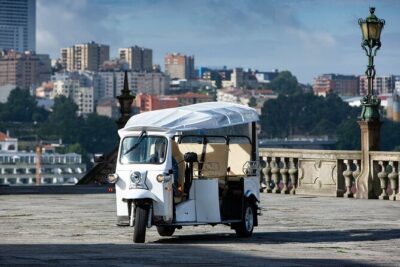
Discover Porto’s Highlights on a 2-Hour Private Electric Tuk Tuk
Read our review →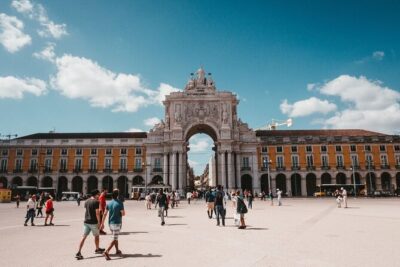
Welcome Lisbon Tour with Local Guide in Private Eco Tuk Tuk
Read our review →