

Review · SOUTH AFRICA
Johannesburg: Soweto Tour by Tuk Tuk
Soweto rewards a closer look. This 150-minute tuk-tuk tour covers far more ground than a walking outing, while a local guide explains the township’s past and present in plain, personal terms. I especially like the small group size, limited to five people, and the chance to reach areas beyond the usual Vilakazi Street circuit. The Kota sandwich at the end is another welcome touch. The main consideration is that the tour moves quickly, so some stops feel like short introductions rather than long visits.
I also like the easygoing format. You ride between neighborhoods, pause for photos, and have room to ask questions as you go. Guides such as Mulalo and Thabo have earned strong praise for their local insight, friendly manner, and care with guests. Just remember that an informal-settlement visit may include a customary gratuity of R20 to R50, or more if you wish.
Key points at a glance

- A small tuk-tuk group reaches more of Soweto: With space for only five participants, the ride feels personal and can cover areas a walking or bicycle tour may not reach.
- The history comes through local voices: Your English-speaking guide connects Mandela House, the Soweto uprising, Regina Mundi, and daily life in the township.
- Vilakazi Street gives you two major names in one place: Nelson Mandela and Archbishop Desmond Tutu both lived on this famous street.
- You go beyond the tourist core: Orlando East, an informal settlement, a former women’s hostel, and local residential areas add context to the better-known sights.
- A Kota closes the outing: This famous local sandwich gives you a simple taste of Soweto after the sightseeing.
- The price includes more than transport: At $59 per person, you get the tuk-tuk, guide, driver, food, drinks, and a small-group format.
Why a tuk-tuk makes sense in Soweto
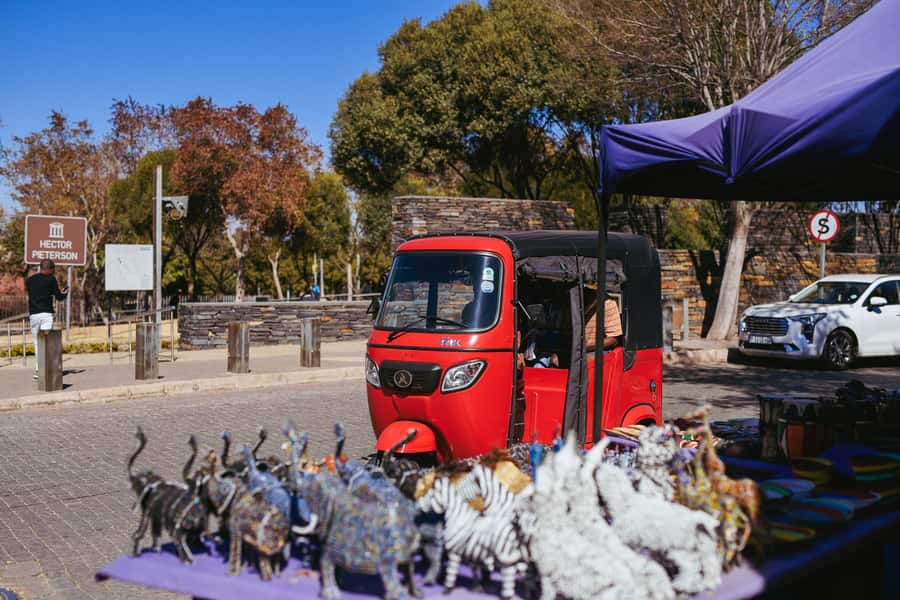
Soweto is not one compact attraction. It is a large township made up of many neighborhoods, each with its own character and story. Walking between the main sights would take too long, and a bicycle may not suit every visitor, especially in the heat or with children.
The tuk-tuk solves that problem neatly. You sit above the road, see more as you move, and avoid spending your limited Johannesburg time simply getting from one part of Soweto to another. The open style also makes the ride feel more connected to the streets than a sealed vehicle.
The group limit matters. With no more than five participants, you should be able to hear the guide and ask questions without competing with a large crowd. Several guides, including Mulalo, Thabo, and Teboho, are praised for being personable, careful, and willing to pause when someone wants a photo or needs a moment.
Do not expect a luxury vehicle or a quiet museum-style tour. This is a street-level outing. You will hear traffic, see ordinary homes and businesses, and pass through areas where daily life continues around you. That is part of the appeal, but it also means you should come ready for a lively, changing ride.
A few more tuk tuk tours around the world worth a look
- True 4Hour Private Tuk Tuk Tour: Discover Lisbon with a Local!
★ 5.0 · 8,008 reviews - Porto: Guided Tour by Tuk-Tuk & Optional Douro River Cruise
★ 4.5 · 5,980 reviews - Lisbon: Private Guided Tuk-Tuk Tour with Hotel Pickup
★ 4.9 · 4,552 reviews
Starting in Orlando West
The meeting point is One Day Africa at the corner of Rampa and Moema Street in Orlando West. This puts you in the heart of Soweto rather than at a distant Johannesburg pickup point.
The tour begins with the story of Soweto’s formation, going back to 1886, along with the wider story of Johannesburg and South Africa. Your guide sets up the basic timeline before the landmarks arrive. That opening helps you understand that Soweto is not simply a collection of apartheid-era sites. It is also a living community shaped by migration, political struggle, family life, work, and change.
This is a good point to ask questions. If you want more focus on the Soweto uprising, Mandela’s years in the township, local architecture, or present-day neighborhoods, say so early. Guides have shown a willingness to adjust the pace and tailor the route when time allows.
Hector Pieterson Museum and the 1976 uprising
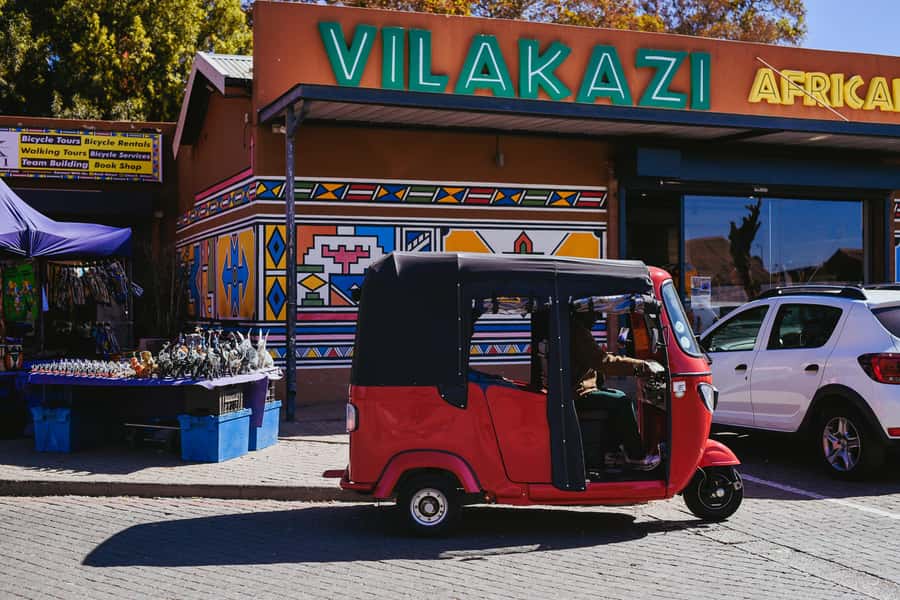
The first major stop is the Hector Pieterson Museum, with about 30 minutes for a guided visit. The museum marks the 1976 Soweto uprising, one of the key turning points in the fight against apartheid.
The visit gives the tour its political center. You are not simply looking at a famous name or taking a quick photograph. You are learning how student protests grew into a national and international symbol of resistance. The museum also helps explain why Soweto carries such weight in South Africa’s modern story.
Thirty minutes is enough for an introduction, but it is not a long museum session. If you like to read every display carefully, you may feel pressed for time. The benefit is that the tour keeps moving and connects what you see inside with the streets outside.
Vilakazi Street and the Mandela connection
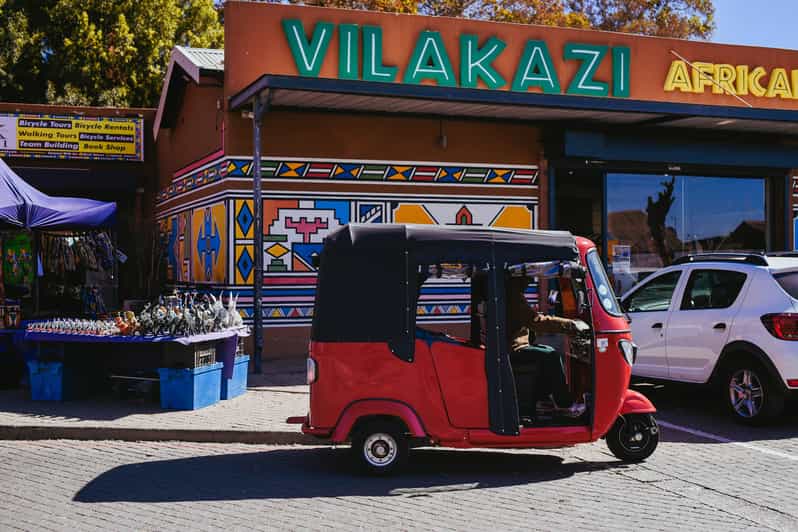
Next comes Vilakazi Street in Orlando West, scheduled for around 30 minutes. This is one of Soweto’s best-known streets because both Nelson Mandela and Archbishop Desmond Tutu lived here.
The street offers a useful way to connect personal homes with national events. Your guide explains the contribution of these figures to the struggle against apartheid and the political changes that followed. The setting also shows how a residential street became a major place of public memory.
Mandela’s House is visited for roughly 30 minutes, with time for a guided look and photographs. The house gives the story a domestic scale. Instead of thinking only about Mandela as a statesman, you get a sense of the home connected with his early political life and Soweto years.
The practical trade-off is that this is a highlight for many people, so it can feel more visitor-focused than the less famous neighborhoods later in the tour. If you want the best photographs, keep your camera ready, but listen closely too. The guide’s explanation is what turns a house visit into something meaningful.
Same place, a completely different ride:
- Private Lisbon Sightseeing Tuk-Tuk Tour: Alfama, Belém & More
★ 5.0 · 4,277 reviews - Bangkok by Night: Temples, Markets and Food Tuk-Tuk Tour
★ 5.0 · 3,752 reviews - Madrid: Private City Tour by Eco Tuk Tuk
★ 4.9 · 3,465 reviews - Lisbon Highlights: Private Tuk Tuk Tour Adventure Sightseeing
★ 5.0 · 3,284 reviews
Orlando East and the first formal houses

The tuk-tuk then reaches Orlando East, where you spend about 10 minutes on a photo stop, short visit, and guided explanation. This area is associated with the first formal houses of Soweto.
Ten minutes does not allow a detailed neighborhood walk. Instead, the stop works as a quick visual lesson. You see a different part of the township and hear about its early development, housing, and challenges.
This is one reason the tuk-tuk format earns its keep. You can visit several sections of Soweto without turning the whole outing into a long hike. The guide also helps you notice the difference between a famous sight and an ordinary residential area, which is often where the broader story becomes clearer.
Orlando Towers and Soweto’s changing image
The tour continues to the Soweto Towers, with about 20 minutes for sightseeing, photos, and commentary. The towers are among the township’s most recognizable modern landmarks.
They offer a striking contrast to the museums and political sites. Here, the story is less about one historic event and more about how Soweto is presented today, with recreation, color, and a strong visual identity. The stop is especially useful for photographs.
Do not expect a long activity session at the towers. This tour uses them as a viewpoint and landmark rather than as a dedicated adventure outing. You get time to see them, hear the local explanation, and continue on.
Regina Mundi and the role of faith
Regina Mundi Catholic Church receives about 30 minutes. The church is tied to Soweto’s political and social history, and your guide explains its role during the apartheid years.
This stop adds an important layer to the tour. The story of resistance was not limited to politicians or student activists. Churches and other community institutions could offer shelter, meeting space, and moral support during tense periods.
The church also slows the route down after several outdoor stops. You can take in the building and ask questions without the constant movement of the tuk-tuk. As with the other visits, the guide’s local explanation is central. The site means more when you understand how it relates to the people of Soweto.
Seeing beyond Vilakazi Street
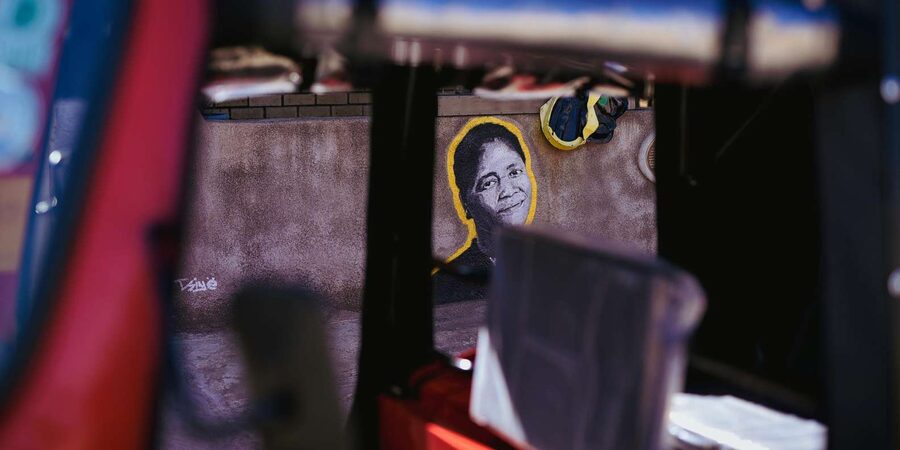
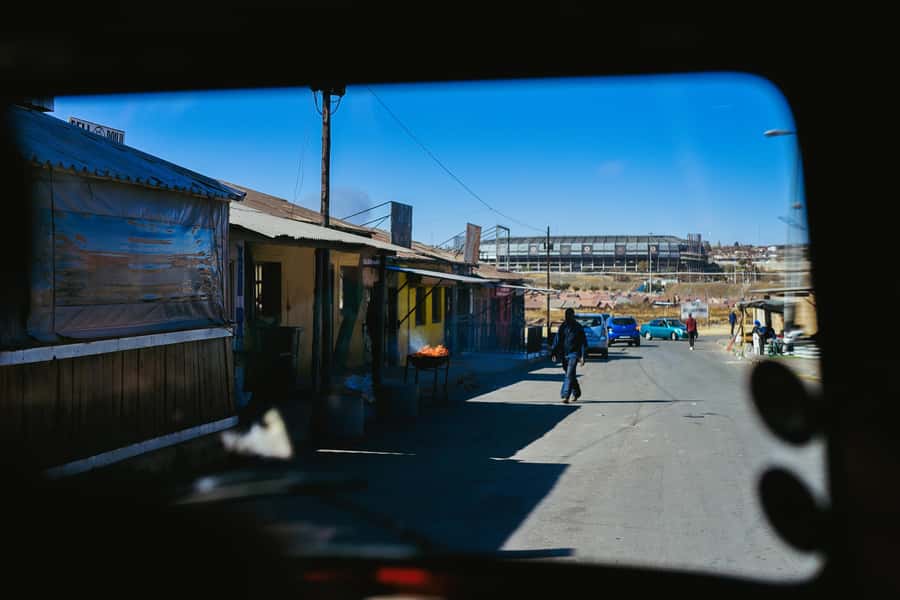
A major strength of the route is its effort to move outside the familiar tourist zone. You may visit an informal settlement with a local guide, see a former women’s hostel, and pass through areas connected with Mama Lilian Ngoyi, an anti-apartheid activist.
These places require respect. An informal settlement is not a theme park, and the people who live there are not scenery. Listen to the local guide, ask before taking photographs, and follow the tone set by your host.
A gratuity of R20 to R50, or more at your discretion, is welcome during or after the informal-settlement visit. Carrying some South African cash is sensible if you want to offer it.
This part of the tour can be the most eye-opening, but it may also feel more confronting than the polished landmarks. You see the gap between Soweto’s famous political identity and the practical challenges faced by communities today. The guide’s approach matters greatly here. Mulalo has been praised for taking visitors beyond the standard route while helping them feel safe and welcome.
Local voices make the difference
The strongest part of this experience is not the vehicle. It is the guide.
Mulalo is repeatedly praised for his friendly style, broad knowledge of Soweto, and ability to answer questions without making the tour feel like a lecture. Thabo is also noted for his clear explanations, good humor, and attention to guest comfort. Teboho has been described as punctual, professional, and helpful with practical details.
Guide assignments can change, so you should not book solely for one particular person. Still, the pattern is clear: the company relies on local guides who can explain the neighborhood from personal experience rather than repeating a generic script.
That local point of view is especially useful when the tour reaches residential areas. A guide can explain what you are seeing, why a site matters, and how the township has changed. You also get the chance to ask direct questions about modern Soweto, not only apartheid-era events.
The Kota sandwich finish
Food and drinks are included, with the outing ending on a local Kota sandwich. A Kota is a substantial South African street-food sandwich, and it makes a fitting end to a tour that focuses on everyday life as well as history.
The food is more than a bonus. It gives you a small, direct connection to local eating habits and adds value to the $59 price. Several guests particularly enjoyed the meal, and one described it as a fulfilling finish after seeing much of the township.
If you have dietary restrictions, ask the operator in advance. The supplied information does not specify alternatives or ingredients, so you should not assume a substitute is available.
Is $59 a fair price?
At $59 per person, this is not the cheapest way to see a few Soweto landmarks. The value becomes clearer when you count what is included: a 150-minute guided tour, tuk-tuk transport, a driver, food, drinks, and a group limited to five.
You are also paying for coverage. A walking tour may offer more time at one or two sites, but it will not cover the same range of neighborhoods as easily. A larger vehicle may give you more seats, but it can feel less personal and may not reach the smaller streets in the same way.
For a first visit to Johannesburg, I consider the price reasonable if you want an overview with local context and minimal transport fuss. It is less suitable if your main goal is a long, detailed museum visit or a slow photography tour. The schedule is active, and each stop has a planned time.
Free cancellation up to 24 hours before the start and reserve-now, pay-later booking add useful flexibility. Starting times vary, so check availability when you book.
Who should book this Soweto tour?
I would recommend it to first-time Johannesburg visitors who want to understand Soweto beyond a single famous address. It also suits families, older visitors, and anyone who would struggle with several hours of walking. One family specifically found the tuk-tuk a good way to bring children along while still seeing a large part of the township.
The tour works well for curious visitors who enjoy asking questions and seeing ordinary neighborhoods. It is also a practical choice if you have only a few hours and want history, landmarks, local perspective, and food in one outing.
You may want another format if you prefer to set your own schedule, spend a full morning inside museums, or avoid visits to informal settlements. The route includes serious subjects and real community settings. Go with an open mind, listen carefully, and treat every stop with respect.
Final call: a smart first look at Soweto
Book this tour if you want more than Mandela House and a quick photograph on Vilakazi Street. The tuk-tuk lets you cover a broad slice of Soweto, while the small group and local guide keep the experience personal.
I especially value the mix of major landmarks, residential neighborhoods, political history, and a simple local meal. Just keep your expectations realistic: this is a fast-moving introduction, not a full museum day. For $59, it is a strong choice for seeing more of Soweto in a short time and beginning to understand the community behind the headlines.
FAQ
Where does the Soweto tuk-tuk tour start?
The tour starts at One Day Africa, located at the corner of Rampa and Moema Street in Orlando West, Soweto.
How long does the tour last?
The experience lasts 150 minutes, or two and a half hours. Starting times depend on availability.
What language is the tour in?
The live tour is conducted in English by a local guide and driver.
How many people can join the tour?
The tour is a small-group experience limited to five participants.
Is food included?
Yes. Food and drinks are included, with a local Kota sandwich served during or at the end of the tour.
Is there an extra gratuity for the informal-settlement visit?
An informal-settlement visit is typically included with a local guide. You are welcome to offer a gratuity of R20 to R50, or more, at your discretion.
Just added around the world
- Winter Champagne Tour by Rickshaw★ 4.3 · 10 reviews
- Village Expedition in Yala By Tuk-Tuk from Hambantota Harbor★ 5.0 · 2 reviews
- Valencia: Visit the Historic Center of Valencia by Tuk Tuk★ 5.0 · 2 reviews
- Valencia: Tuk Tuk Modern Tour★ 5.0 · 6 reviews
- Valencia: TukTuk Tours★ 4.9 · 39 reviews
- Valencia 1 hour by TukTuki: Essential and Private Tour★ 4.5 · 22 reviews
- Udaipur Local Sightseeing Tour by Tuk-tuk (Rikshaw)★ 4.5 · 3 reviews
- Unique Jaipur Full Day Tour of Pink City Jaipur by TukTuk★ 5.0 · 18 reviews
South Africa Tuk Tuk Tours, compared.

Port Elizabeth tuk-tuk tour, experience the natural beauty.
Read our review →

Downtown Johannesburg Tuk tuk Tour with a local lunch
Read our review →
Port Elizabeth Adventure: Tuk-Tuk, Penguins, & Cape Recife
Read our review →
Browse the lists this tour appears in