
Review · SRI LANKA
From Colombo: Negombo Fishing Village Tour by Tuk-Tuk
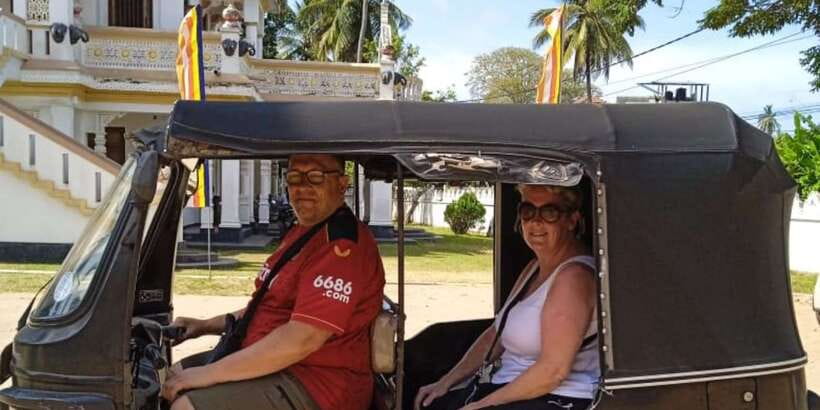
Fish, faith, and old canals shape Negombo. This private tuk-tuk tour gives you a compact look at the coastal city through its working seafood market, colonial remains, churches, Hindu and Buddhist temples, and local streets. I like the way the outing connects daily fishing life with Negombo’s Portuguese, Dutch, British, Christian, Hindu, and Buddhist past. I also like that transportation, entrance fees, parking, fuel, water, refreshments, and taxes are covered in the $55 price.
The main thing to consider is the early start and the brisk schedule. The stated day runs from 7:00 to 11:30, while the experience is advertised as 5.5 hours, so pickup and road time may account for the difference. You will see several places in one morning, but this is a sightseeing sampler rather than a slow, museum-style tour.
Five details worth knowing before you book
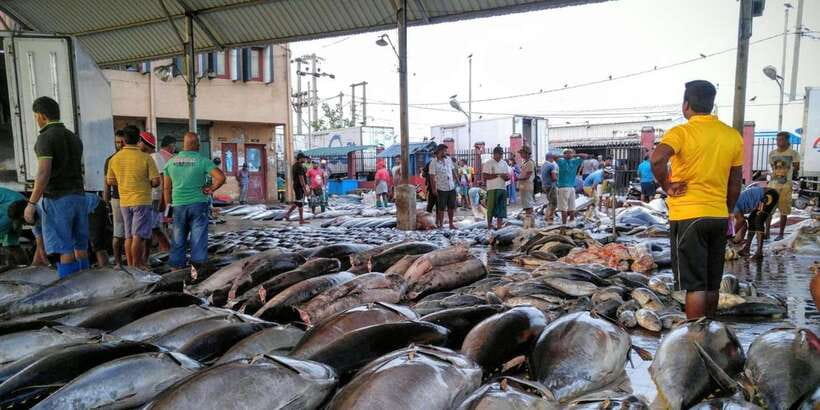
- Lellama seafood market comes first, when fishermen are bringing in the day’s catch and Negombo’s working waterfront is at its most active.
- A tuk-tuk keeps the tour personal, with hotel pickup and return from Colombo, Colombo Harbor, or Mount Lavinia.
- Five major cultural stops fit into one morning, including St. Mary’s Church, Sri Singama Kali Amman Kovil, Dutch Fort, Hamilton Canal, and Angurukaramulla Temple.
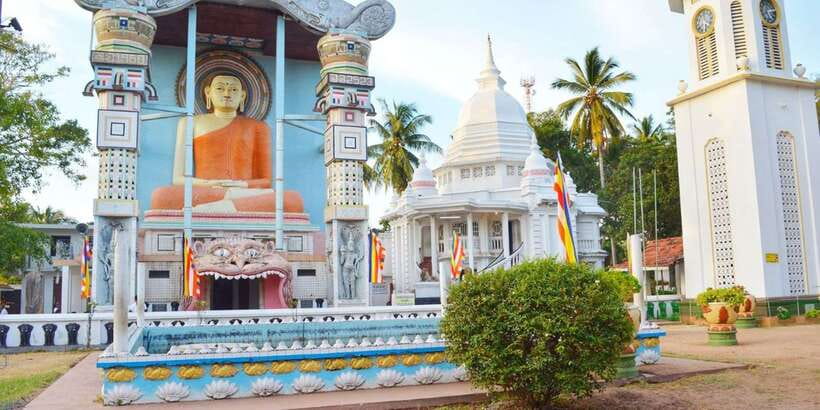
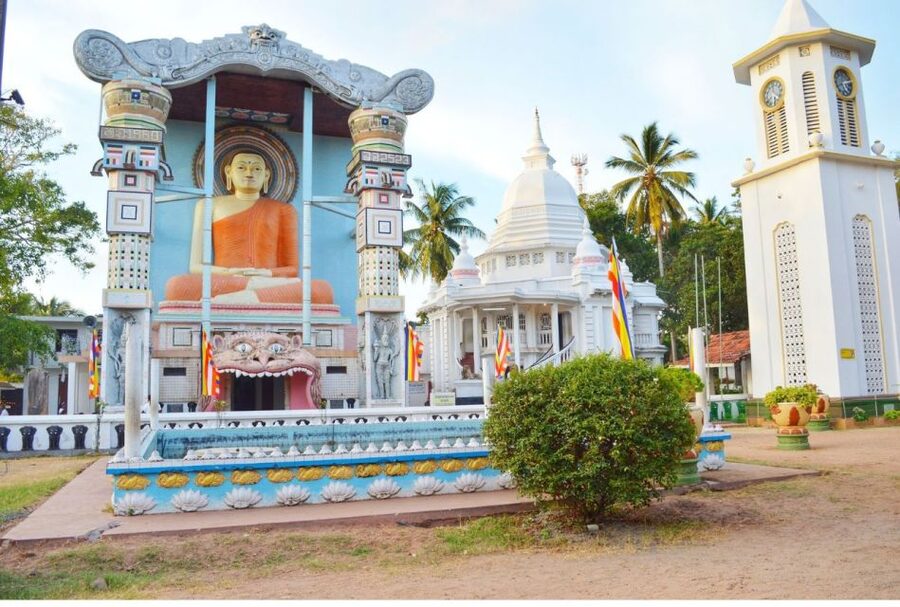
- Angurukaramulla Temple has unusual details, including a dragon’s mouth entrance and a roughly 300-year-old moss-covered library ruin.
- The $55 fee is fairly clear, since entrance fees, fuel, driver charges, parking, refreshments, water, and government taxes are included.
- The tour is private and English-speaking, making it a useful choice if you want a guide and vehicle without joining a large group.
Why Negombo makes a good half-day outing
Negombo is often treated as the place near the airport, but that undersells it. It is one of Sri Lanka’s major urban centers and has long depended on fishing, trade, transport, and religious communities. This tour gives you a quick way to see those parts together.
The timing is sensible in one important respect: you reach Lellama at 7:45, soon after the 7:00 hotel pickup. A seafood market is best understood when it is working, not after everything has been cleaned and packed away. You should expect movement, strong smells, boats, fish, and people focused on business rather than on posing for photographs.
The tour then shifts from working waterfront to places of worship and colonial-era remains. That mix is the point. Negombo is not presented as a single monument with a few side attractions. You get a short look at how the city’s communities and past overlap.
Your transport is a tuk-tuk, which suits a city tour of this sort. It is more open and informal than a car, and it helps keep the outing private. The tradeoff is space and exposure to traffic. If you prefer a quiet, enclosed vehicle, ask about that before booking. The supplied information confirms a private tuk-tuk, but it does not state the vehicle’s seating capacity.
More Countryside Tuk Tuk Tours in Sri Lanka
- Explore Bentota Village: Guided Tuk Tuk Safari
★ 5.0 · 21 reviews - Unseen Sigiriya: Village & Rock Viewpoints by Tuk Tuk
★ 4.7 · 14 reviews - Village Expedition in Yala By Tuk-Tuk from Hambantota Harbor
★ 4.5 · 9 reviews
7:00 pickup from Colombo, Mount Lavinia, or the harbor
The day begins with pickup from your hotel. Pickup is available in Colombo, at Colombo Harbor, and in Mount Lavinia, with the same areas offered for the return journey. That makes the tour useful for people staying in the capital or fitting in a short visit before moving elsewhere.
The early hour matters. A 7:00 start gets you to the seafood market at a useful time, but it also means you should be ready before breakfast in some hotels. The tour provides refreshments and water, so you are not left entirely to fend for yourself, but no full meal is included.
Bring a charged smartphone and your passport or ID card. Your phone will be useful for photographs and possibly for staying in contact with the driver. Your identification is listed as a required item, so do not leave it in your hotel room.
The route is private, which gives you a little more control than a group excursion. Still, the published schedule is tightly arranged. You should think of this as a guided overview, with short visits and photo opportunities, rather than a day for lingering at one site.
Lellama market and the catamarans at 7:45
Lellama is the strongest reason to choose this tour. The visit focuses on Negombo’s fishing economy, with local fishermen bringing in the day’s catch and the city’s traditional catamarans nearby.
This is not a polished attraction built for sightseeing. It is a place connected to work. You see the fishing side of Negombo before turning to its churches, temples, and fort. That gives the rest of the morning more meaning, because you have already seen one of the industries that shaped the city.
The market is also likely to be one of the more sensory stops. You may find wet surfaces, fish odors, crowds around the catch, and quick activity. Wear practical shoes and keep your phone secure. The tour information does not promise a specific boat ride or a chance to handle fishing gear, so expect observation and a guided visit rather than an activity on the water.
I would give this stop your full attention. The later monuments are easier to photograph, but the market offers a better sense of present-day Negombo. The listed schedule allows only a short period before the 8:30 church visit, so listen carefully to the guide’s meeting instructions.
St. Mary’s Church and Negombo’s Christian past
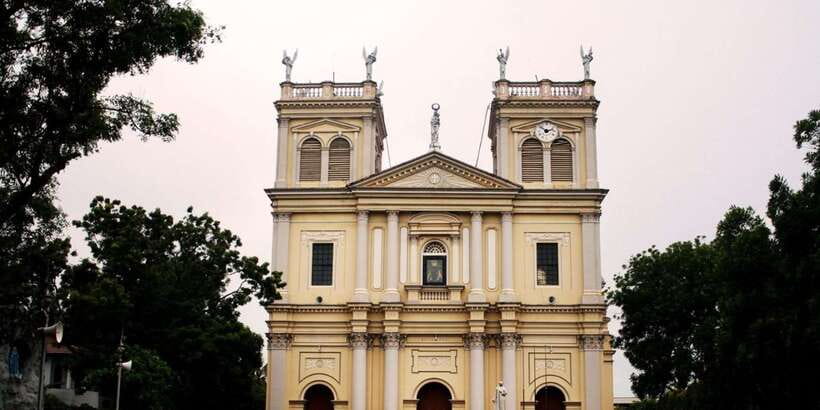
At 8:30, the tour moves to St. Mary’s Church. The church reflects Negombo’s Christian connection to the Portuguese colonial period, though the building itself took many years to complete. Construction resumed in 1874 and finished in 1922.
That date range helps explain why this is more than a quick photo stop. The church represents a later phase of Negombo’s religious and architectural development, shaped by the city’s long contact with European powers. It also shows why a short tour needs several different types of site: the market tells you about work, while St. Mary’s tells you about faith and colonial influence.
The visit includes a guided tour, free time, and photography. Dress respectfully, as you should at every religious site on this route. The information provided does not state any special clothing rules, opening restrictions, or photography limits, so follow the guide’s instructions once inside.
You should not expect a long service visit or extended architectural study. The schedule allows about thirty minutes before the Hindu temple. That is enough for an introduction and a look around, but not for a slow examination of every feature.
More countryside tuk tuk tours around Sri Lanka:
- Tuk Tuk safari and Picnic in The Tea Plantation from Ella,Haputale & Bandarawela
★ 5.0 · 7 reviews - Negombo: Fishing Village Highlights Private Tour by Tuk Tuk
★ 4.6 · 5 reviews - From Negombo: City Tour & Fishing Village Tour by Tuk-Tuk
★ 5.0 · 4 reviews - Private Tuk-Tuk Village Tour – From Bentota Hotels
★ 3.0 · 3 reviews
Sri Singama Kali Amman Kovil at 9:00
The next stop changes the tone again. Sri Singama Kali Amman Kovil is a Hindu temple known for its murals and sculptures. The colorful visual details make it one of the more distinctive places on the route.
I like this pairing with St. Mary’s Church. The two sites sit within the same city but represent different religious traditions and artistic styles. A good guide can help you notice how the buildings, images, and forms of worship differ without reducing either place to a quick checklist item.
The visit includes a guided tour, free time, photographs, and a walk. You may find that the temple rewards close attention more than a rushed glance. Look for the murals and sculptural work, and give yourself time to understand the space before taking pictures.
Again, treat it as a functioning religious place rather than a stage set. Keep your voice low, follow instructions about where to walk, and ask before photographing people or ceremonies. The tour includes entrance fees to the listed sights, so you do not need to budget separately for admission.
Hamilton Canal and the British water route
At 9:30, you reach Hamilton Canal, a 14.5-kilometer waterway linking Puttalam with Colombo. The British built it in 1802, and it once played a practical role in transport and trade.
This stop works best when you connect it to the rest of the morning. Lellama shows the fishing economy at street level. Hamilton Canal shows how goods and people moved through the wider region. It is not simply a pretty strip of water. Its value is in understanding the route as part of the area’s commercial past.
The schedule describes a break, a photo stop, a visit, guided sightseeing, and a walk. The details do not specify a boat trip, so do not book this expecting to cruise the canal. You will see and learn about the waterway from the route of the city tour.
Canal stops can be less immediately dramatic than churches or temples, especially if you prefer grand buildings. For me, the canal is worthwhile because it adds context. Without it, the colonial story would be reduced to a fort wall and a church facade.
Negombo Dutch Fort and the city’s colonial layers
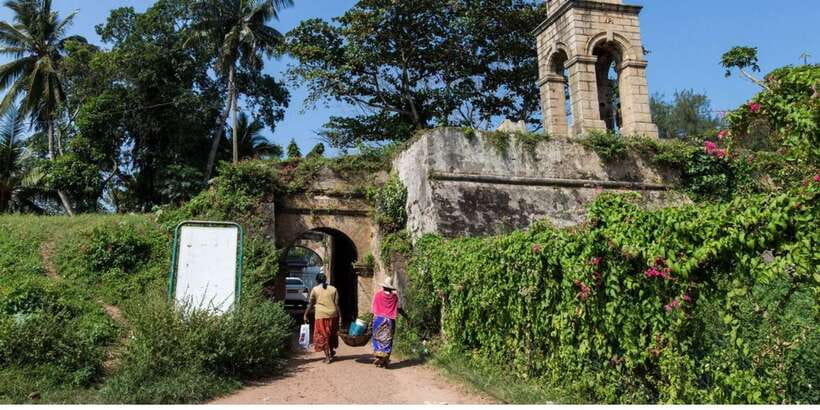
At 10:00, the tour reaches Negombo Dutch Fort. The Portuguese first built the fort, and the Dutch later rebuilt it in a pentagonal form during the 1640s.
The fort is a useful lesson in how control of Negombo changed hands. Portuguese construction came first, followed by Dutch rebuilding, while the British later shaped other parts of the city, including Hamilton Canal. In a short space of time, you get three colonial chapters linked to one coastal center.
The fort visit includes a guided tour, free time, walking, and photographs. Do not expect a vast fortress complex. The attraction is its historical setting and remaining architectural character, not hours of rooms and galleries.
This is another place where a guide adds value. A bare wall can be easy to dismiss if you do not know why it exists. With the Portuguese and Dutch sequence in mind, the site becomes easier to read. The tour schedule gives you about thirty minutes before the final temple, so keep an eye on the time if you stop for photographs.
Angurukaramulla Temple and the dragon’s mouth

The final main stop, at 10:30, is Angurukaramulla Temple. Its entrance features a dragon’s mouth, believed to keep evil spirits away. Inside the temple grounds, you can also see the moss-covered remains of an ancient library said to be about 300 years old.
This is probably the most unusual stop on the route. The dragon entrance gives the visit an immediate visual hook, while the old library ruin adds a quieter historical detail. The combination makes the temple more than a standard religious-site visit.
The tour includes a guided visit, sightseeing, photography, a break, and free time. You should use that time to look beyond the entrance. The library ruin is easy to miss if you focus only on the more striking facade.
The information does not specify whether all interior areas are open or whether photography is permitted everywhere. Follow the guide’s advice, and dress and behave respectfully. As with the church and kovil, this is a religious place, not only a sightseeing stop.
Is $55 a fair price?
At $55 per person, the price is reasonable if you value a private vehicle and a guide. You are not paying only for transport between sites. The package includes hotel pickup and return, entrance fees, fuel, driver charges, parking, refreshments, water, and government taxes.
That list matters. A cheaper-looking tour can become less attractive after adding admissions, fuel surcharges, parking, and transfers. Here, the main costs are stated in advance, which makes the price easier to judge.
The value depends on your starting point and priorities. If you are already in Negombo and only want to walk around the fort, this tour may cover more ground than you need. If you are based in Colombo or Mount Lavinia and want to see Negombo without arranging transport, the private pickup and return are much more useful.
The tour does not include expenses not specifically listed. Plan to pay separately for anything outside the package, including personal purchases or food beyond the provided refreshments. The tour is five and a half hours by its stated duration, but the visible schedule runs from 7:00 to 11:30. Allow extra flexibility for pickup and road conditions.
Who should book this Negombo tour?
I would recommend it to you if you want:
- A private half-day introduction to Negombo
- A working fish market rather than only formal monuments
- Several religious and colonial sites in one outing
- Hotel pickup from Colombo, Colombo Harbor, or Mount Lavinia
- An English-speaking guide and a tuk-tuk experience
- A package with the main admission and transport costs included
It may not suit you if you want a slow visit at each location, a beach-focused outing, a seafood meal, or a boat ride on Hamilton Canal. None of those are listed as part of the experience.
The tour is also a better fit for people who enjoy variety. You move from market to church, Hindu temple, canal, fort, and Buddhist temple in a few hours. That pace keeps the morning interesting, but it leaves little room for unplanned stops.
You can cancel up to 24 hours before the experience for a full refund, and you can reserve now and pay later. Those terms are useful if your Sri Lanka schedule is still shifting.
Should you book it?
Book this tour if you want Negombo explained through its people, faiths, waterways, and old fortifications rather than reduced to an airport stop. The Lellama market and Angurukaramulla Temple give the morning its most distinctive moments, while the church, kovil, canal, and fort fill in the city’s broader story.
Skip it if your priority is a leisurely pace or a single activity. For a compact private introduction from Colombo or Mount Lavinia, though, $55 is a fair package price, especially with transport, entrance fees, water, refreshments, parking, and taxes included.
FAQ
Where does the tour pick me up?
Pickup is available from hotels in Colombo, Colombo Harbor, and Mount Lavinia.
Where does the tour finish?
Drop-off is available in Colombo and Mount Lavinia.
Is the tour private?
Yes. The experience is operated as a private group tour.
What language does the guide speak?
The live tour guide speaks English.
Are entrance fees included?
Yes. Entrance fees for the sightseeing places listed in the program are included.
Can I cancel for a full refund?
Yes. You can cancel up to 24 hours in advance for a full refund. You can also reserve now and pay later.
More Fishing in Sri Lanka
- Tuk tuk Tour Tavira Total – 2h00 – Includes Tuna Museum and Fishing Village
★ 5.0 · 71 reviews - Private Tuk Tuk Tour on Câmara de Lobos, Fishing Village
★ 5.0 · 3 reviews
Just added around Sri Lanka
- Village Expedition in Yala By Tuk-Tuk from Hambantota Harbor★ 5.0 · 2 reviews
- Tuk Tuk Tales of Colombo From Cruies★ 4.6 · 4 reviews
- Tuk Tuk Kandy City Tour By Local Guide★ 5.0 · 3 reviews
- Trincomalee: Tuk-Tuk city tour with a guide★ 5.0 · 4 reviews
- Rent a Tuk Tuk & Explore★ 5.0 · 2 reviews
- Tuk Tuk Rentals★ 5.0 · 15 reviews
- Sigiriya and Dambulla Private Day Tour by Tuk-Tuk or Car★ 5.0 · 28 reviews
- Tuk Tuk Nuwara Eliya Tea Falls Adventure★ 5.0 · 44 reviews
Countryside and Village Tuk Tuk Tours, compared.
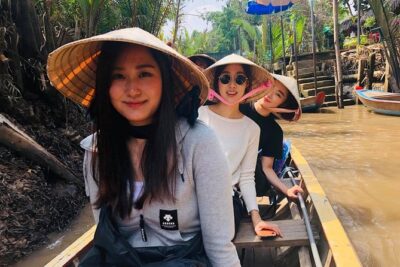
CuChi Tunnels&Mekong Delta-Boat,TukTuk,Coconut Village SmallGroup
Read our review →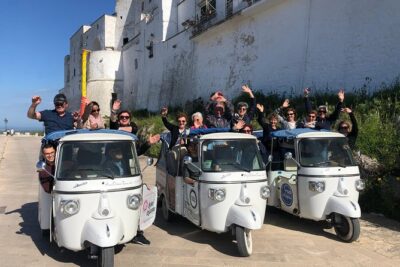
Private Tour of the Medieval Village of Ostuni by Tuk Tuk
Read our review →
Tuk tuk Tour Tavira Total – 2h00 – Includes Tuna Museum and Fishing Village
Read our review →
Silk Island & countryside of Phnom Penh by Tuk Tuk
Read our review →
Crete: Private Tuk Tuk Tour of 7 Villages with Tastings
Read our review →
4 hours taking tuk tuk to see Mekong dolphins and countryside
Read our review →
Full day tour by bicycle & tuk tuk,bamboo train,bat cave,villages
Read our review →Browse the lists this tour appears in