
Review · CAMBODIA
Silk Island & countryside of Phnom Penh by Tuk Tuk
Leave the city behind for a few hours. This half-day outing crosses the Mekong by local ferry and carries you through farms, small villages, silk workshops, temples, and riverside restaurants. I like the way it connects several ordinary parts of Cambodian life instead of treating Silk Island as a single photo stop. I also like that hotel pickup, ferry fares, fruit, drinking water, and a Khmer meal are included in the $45 price.
The main consideration is comfort. You may spend three to five hours in a tuk tuk, on small ferries, and outdoors in the heat. The food stop is deliberately local rather than polished, and one serious complaint described insects and poor table service at dinner. Most feedback is strongly positive, but this is best for you if you prefer local atmosphere over air-conditioning and restaurant formality.
The best parts of this half-day outing
- A real Mekong crossing: You ride a local ferry at the meeting point of the Mekong, Tonle Sap, and Bassac rivers.
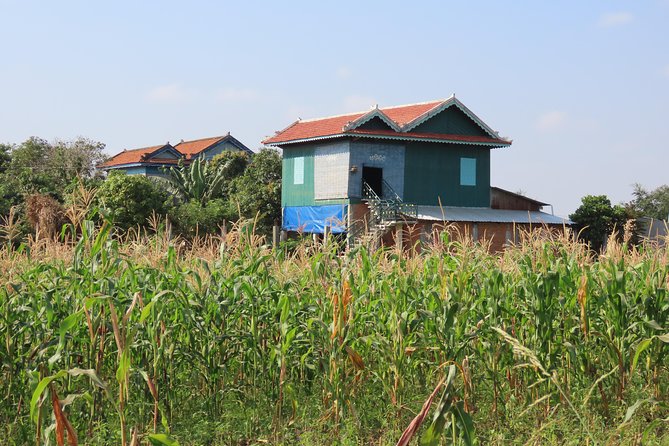
- Farming in plain view: Mango, banana, corn, lemongrass, ginger, rice, taro, and water-lily fields appear along the island roads.
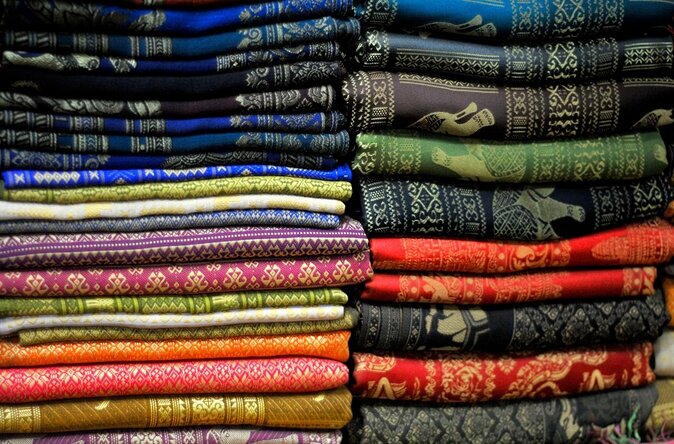
- Family silk production: You can watch silk being spun and woven in a small home-based workshop, with no stated pressure to buy.
- More than silk: The route can include a wet market, sedge mat weaving, tofu skin or bean curd production, and a Buddhist monastery.
- A peaceful meal by the river: Lunch or dinner is served at a local Khmer restaurant, sometimes on a floating riverside dining area.
- Small-group transport: The maximum group size is 12, with hotel transfer by tuk tuk or minivan depending on the group.
Why Silk Island makes a good escape from Phnom Penh
Phnom Penh can feel loud, crowded, and demanding. Silk Island, also called Koh Dach, offers a quick change of pace without requiring a long journey. The ferry crossing does much of the work. Once you leave the city behind, the road becomes a sequence of villages, farms, workshops, and river views.
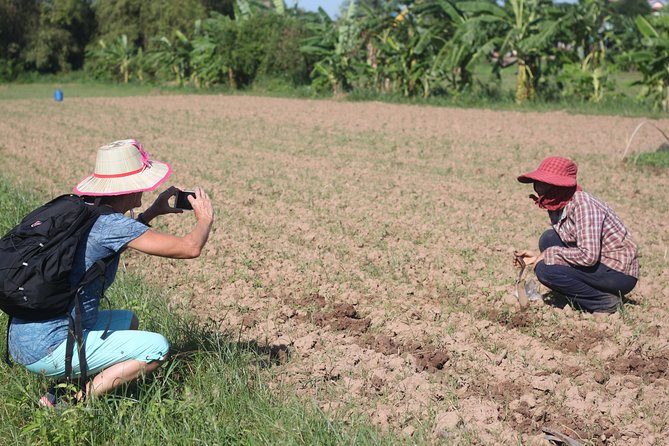
I like this outing because it treats the countryside as a living place, not as a staged attraction. You pass through working communities and stop at family businesses. The aim is not to see a grand monument. It is to understand how people grow food, make household goods, produce ingredients, and earn a living.
That makes the tour a useful choice for a first visit to Phnom Penh. You get a look at rural Cambodia while still returning to your hotel the same day. The route also gives you several ways to see local life: from a market and farms to a temple and a meal.
More Countryside Tuk Tuk Tours in Cambodia
- Afternoon tour by tuk tuk to bamboo train,bat cave,killing cave,countryside.
★ 5.0 · 344 reviews - 4 hours taking tuk tuk to see Mekong dolphins and countryside
★ 4.5 · 36 reviews - Full day tour by bicycle & tuk tuk,bamboo train,bat cave,villages
★ 5.0 · 27 reviews
Crossing the Mekong by local ferry
The trip begins with hotel pickup in a tuk tuk or, for a larger group, a minivan. You then make your way toward Phsar Areyksat and the ferry crossing. The boat ride is one of the most enjoyable parts of the experience because it feels like transport used for daily life, not a sightseeing cruise designed only for visitors.
The crossing takes place near the confluence of the Mekong, Tonle Sap, and Bassac rivers. You can feel the air change as the tuk tuk leaves the city and moves toward the islands. Depending on the day’s route, you may cross on more than one small ferry, including with the tuk tuk aboard. That can be a memorable bit of Cambodian travel in itself.
The ferry fee is included, along with a contribution to the local villagers. That matters because small costs can otherwise add up during a half-day trip. It also keeps the day simple: you are not stopping to negotiate every crossing.
Phsar Areyksat, village roads, and the wet market
After the first crossing, the tour moves into villages and local roads. A walk through a wet market gives you a chance to see the ingredients and daily commerce that support Khmer cooking. The market is not presented as a grand attraction, so you should expect a practical local setting rather than a carefully arranged food hall.
Your guide helps explain what you are seeing and how the market fits into village life. Several guides have been praised for their warmth and willingness to answer questions, including Sok Mon, Thong Chea, Tida, Narith, Mr. Pi, and other guides named in guest feedback. The exact guide depends on the departure date, but the tour’s strongest feature is the personal explanation along the way.
The walking sections are fairly gentle, but you should expect uneven village roads, heat, and outdoor conditions. Wear shoes that can handle dirt or packed paths. The supplied information describes a formal dress code, but for practical purposes you should also choose clothing suitable for a temple visit and modest enough for rural communities.
Farms that explain everyday Cambodian food
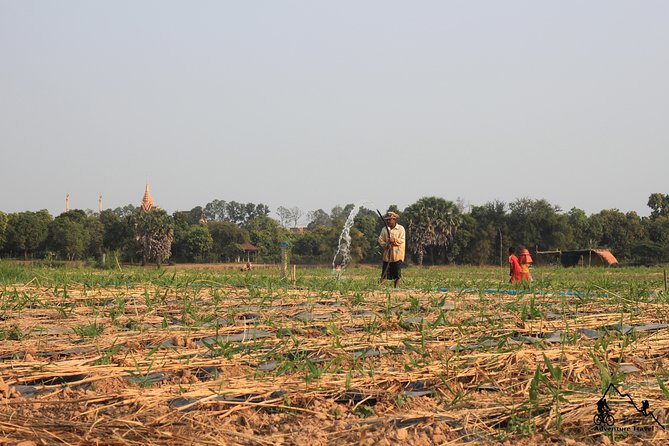
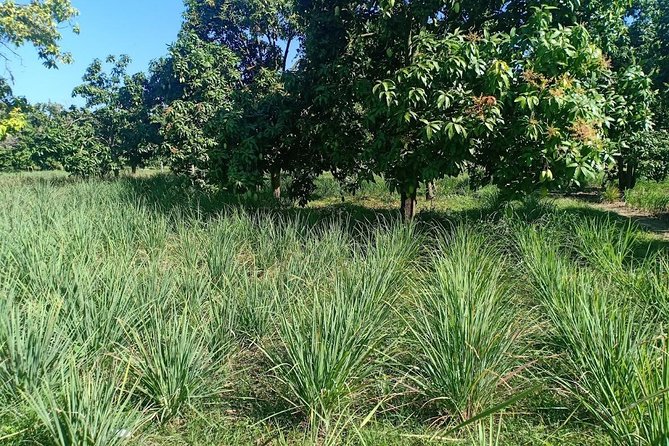
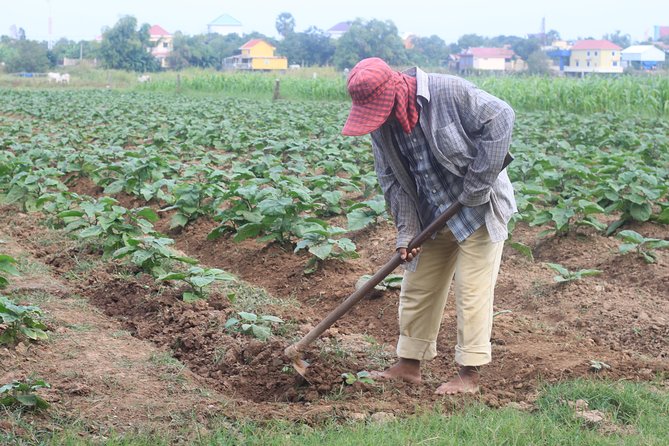
The route passes through plantations and small fields growing mangoes, bananas, corn, lemongrass, ginger, rice, taro, and water lilies. Sometimes you stop at a farm or village for a closer look. At other points, you simply pass through the growing areas by tuk tuk.
That distinction is worth knowing. This is not a hands-on agricultural course, and the itinerary does not promise a long farm activity at every field. The value comes from seeing how close food production is to homes and roads. Your guide can explain how families own fields, rotate crops, and work with seasonal produce.
Some outings include fresh tropical fruit, such as mango, as a snack or gift from a local family. Fruit and drinking water are included, which is helpful in Cambodia’s heat. Still, carry extra water if you need frequent drinks, since the trip is outdoors and the duration can reach five hours.
More countryside tuk tuk tours around Phnom Penh:
- CuChi Tunnels&Mekong Delta-Boat,TukTuk,Coconut Village SmallGroup
★ 5.0 · 3,113 reviews - Private Tour of the Medieval Village of Ostuni by Tuk Tuk
★ 4.5 · 278 reviews - Tuk tuk Tour Tavira Total – 2h00 – Includes Tuna Museum and Fishing Village
★ 5.0 · 71 reviews - Crete: Private Tuk Tuk Tour of 7 Villages with Tastings
★ 5.0 · 52 reviews
Silk weaving in a small family workshop
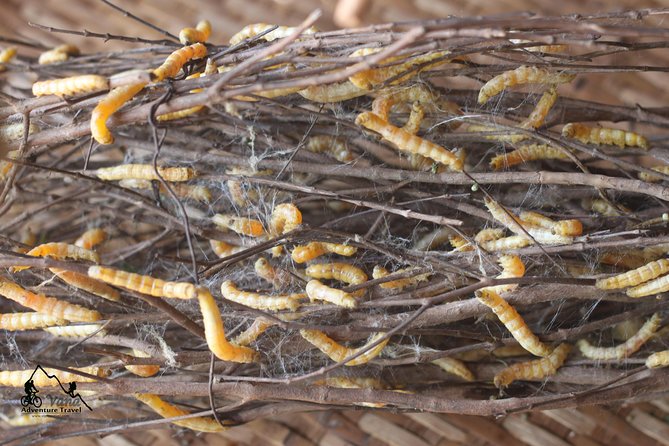
Silk Island is associated with silk production, but you should set the right expectation. The workshop is a small family business, not a large commercial silk farm. You may see silkworm-related work, spinning, weaving, and finished scarves or runners. Some visitors have even tried weaving under instruction.
This stop is especially useful because it shows the labor behind a silk scarf or sarong. The process requires patience and several stages before the final cloth appears. Seeing the looms and handwork makes the finished product easier to appreciate.
The workshop also seems to be low pressure. You may see scarves, table runners, or other items for sale, but the supplied feedback repeatedly describes the visit as observational rather than aggressive. You should still expect a family business to display its products. If you want a large showroom with a wide selection, a Phnom Penh market would be more suitable.
The phrase silk farm can also cause confusion. Do not expect a large farm complex with rows of equipment and a formal exhibition. Think of a home-based production space where you can meet artisans and watch traditional work in a direct, personal setting.
Sedge mats, tofu skin, and bean curd
The tour adds useful stops beyond silk. In one village, you may watch sedge mat weaving, a traditional craft practiced near the Mekong. The work shows another side of Cambodian household production and gives you a better sense of how local crafts are made by hand.
Another stop focuses on tofu skin, bean curd, or soy products. Bean curd is used in Cambodian soups and stir-fried noodles, and you may see how a small family business produces it. Some outings include a taste of the product.
These stops are short, but that is part of the appeal. You are not spending the entire afternoon at one attraction. Instead, you collect small glimpses of local work. The trade-off is that the schedule may feel somewhat fluid. If you want long, detailed demonstrations at every stop, this tour may move too quickly.
The monastery and Cambodia’s spiritual life
A stop at a Buddhist monastery adds a quiet pause to the route. Some visitors specifically praise a beautifully painted temple or a nun’s temple. The visit offers a chance to ask about religion and Cambodian daily life, rather than simply taking photographs of a building.
Dress respectfully and follow your guide’s advice about where to walk and when to remove shoes. The tour information asks for formal dress, so avoid beachwear and bring clothing that covers shoulders and knees if possible.
The monastery is also a welcome change from the open roads. After the noise of the tuk tuk and ferry, the temple grounds can feel calm. You will not get a long formal temple tour described in the details, but the stop gives useful context to the villages around it.
The tuk tuk ride is part of the experience
The tuk tuk, locally described as a romork, is not just a transfer between attractions. It is how you experience the countryside. You sit close to the road, feel the breeze, and watch houses, fields, and village traffic pass at a slow enough pace to notice.
The driver is separate from the English-speaking guide. Several names receive praise, including Chelsea, Chhel, and Yat, with particular appreciation for careful driving. The guide explains the places and the driver handles the roads and ferry ramps.
Comfort depends on your tolerance for heat, dust, and road movement. A tuk tuk is more open than a minivan and offers better views, but it also gives you less protection from the weather. Hotel transfers may use a minivan if your group is larger, while the tour itself is limited to a maximum of 12 people.
A Khmer meal beside the river
The included lunch or dinner is one of the tour’s most praised elements. Depending on the departure time, you may eat during the day or in the early evening. The setting is generally simple and peaceful, with some meals served at a riverside or floating restaurant.
I like the value here. You are not merely paying for transport and sightseeing, then buying food separately. The meal, tropical fruit, and water are included, and vegetarian food is available if you request it when booking.
The setting is rustic. One account describes ants and flying insects at an evening meal, along with dirty crockery and disappointing food. The operator acknowledged that insects can appear near the river, fields, and evening lights, and processed a full refund for that unhappy customer. Most of the available feedback praises the food and calm location, but you should not expect a polished city restaurant.
The guide and driver may eat with you. Some people appreciate this as a friendly local experience, while others may prefer a private meal. It is worth knowing before you book.
Is $45 good value?
At $45 per person, the tour is fairly priced if you want an organized rural outing. The fee covers hotel pickup and drop-off, the English-speaking guide, tuk tuk transport, ferry crossings, a contribution to villagers, fruit, water, and a meal. Arranging all of that independently would take time and would not guarantee the same explanations or route.
The best value comes from the range of experiences packed into a short trip. You get river transport, villages, farms, crafts, food production, a temple, and a Khmer meal. If you only want to visit a silk workshop, the price may feel high. If you want a guided look at rural life outside Phnom Penh, it makes more sense.
The experience is recommended by 96 percent of customers and carries a 4.8 rating from 68 reviews. Those numbers suggest strong consistency, but they do not erase the practical limitations: heat, basic facilities, changing food quality, and a route that may adjust to local conditions.
Who should book this Silk Island tour?
I would choose this trip if you want to see more than Phnom Penh’s central sights. It suits couples, families, and curious solo visitors who enjoy asking questions and observing everyday work. A family with children may also find the ferry, tuk tuk, farms, and weaving more varied than a single museum visit.
The experience is less suitable if you need air-conditioning, a fixed minute-by-minute schedule, or high-end dining. It is also not the best match for someone who dislikes open vehicles, ferry crossings, or rural food settings.
Most people can participate, and the tour is near public transportation, but the details do not provide specific wheelchair information. Contact the operator before booking if you have mobility needs. The child rate applies only when a child shares with two paying adults.
You can cancel for a full refund up to 24 hours before the start time. Changes or cancellations inside 24 hours are not accepted for a refund.
Should you book it?
Book this tour if your idea of a good afternoon includes a ferry ride, a family silk workshop, farm roads, local food, and a little dust on your shoes. The strongest part is the human scale. You see how food and crafts are produced, meet local families, and hear explanations from guides such as Sok Mon or Thong Chea rather than simply passing through.
Skip it if you want a polished attraction or a guaranteed restaurant standard. For most visitors, though, this is a good-value way to trade Phnom Penh’s traffic for river air and a more grounded view of Cambodia.
FAQ
How long does the Silk Island tour last?
The experience takes approximately three to five hours. The route includes ferry crossings, village walks, countryside stops, a workshop, a temple, and a meal.
What is included in the $45 price?
The price includes hotel pickup and drop-off, an English-speaking guide, tuk tuk transport, ferry fees, a contribution to villagers, tropical fruit, drinking water, and lunch or dinner with local people.
Is hotel pickup available?
Yes. Hotel pickup and drop-off are included. Transport is by tuk tuk or minivan depending on group size.
Is a vegetarian meal available?
Yes. A vegetarian option is available, but you should advise the operator when booking.
How many people can join the tour?
The activity has a maximum of 12 participants.
Does the tour include a ferry ride?
Yes. The trip includes a ferry crossing over the Mekong, and the route may include additional local ferry crossings between the islands.
Is the tour suitable for children?
Most travelers can participate, and a child rate is available when the child shares with two paying adults.
What is the cancellation policy?
You can cancel at least 24 hours before the start time for a full refund. Cancellations or changes made less than 24 hours before the start time are not refunded or accepted.
Just added around Phnom Penh
- Tuk-Tuk Tour to Silk Island & Udong Mountain★ 5.0 · 15 reviews
- Killing Fields & Toul Sleng Genocide Museum Tickets With Tuk Tuk★ 5.0 · 6 reviews
- Full-Day Phnom Penh City & Silk Island with a local Tuk Tuk Tours★ 5.0 · 4 reviews
- Phnom Penh: Silk Island Sunset Tour by Tuk Tuk★ 5.0 · 21 reviews
- Visit Phnom Udong and Silk Island by Khmer Traditional Tuk-Tuk★ 5.0 · 4 reviews
- Silk Island Tuk Tuk Tour★ 4.5 · 9 reviews
- Phnom Penh Full Day Private Tour By Tuk Tuk or Taxi Car★ 5.0 · 3 reviews
- Phnom Penh Morning Breakfast, Market and Art Tour by Tuktuk★ 5.0 · 4 reviews
Countryside and Village Tuk Tuk Tours, compared.
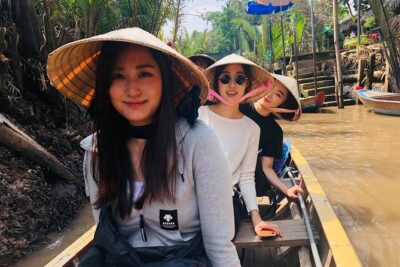
CuChi Tunnels&Mekong Delta-Boat,TukTuk,Coconut Village SmallGroup
Read our review →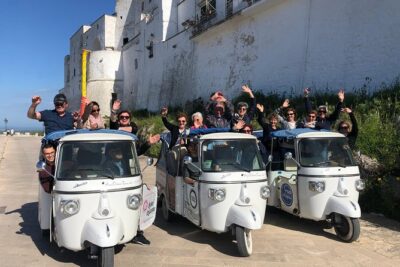
Private Tour of the Medieval Village of Ostuni by Tuk Tuk
Read our review →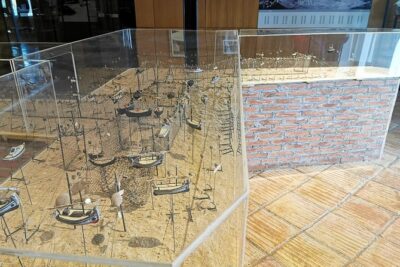
Tuk tuk Tour Tavira Total – 2h00 – Includes Tuna Museum and Fishing Village
Read our review →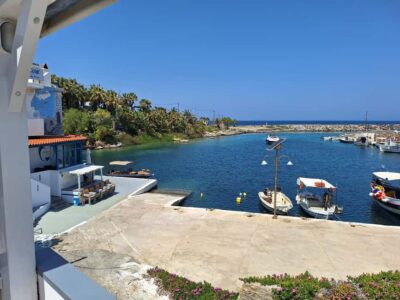
Crete: Private Tuk Tuk Tour of 7 Villages with Tastings
Read our review →

4 hours taking tuk tuk to see Mekong dolphins and countryside
Read our review →
Full day tour by bicycle & tuk tuk,bamboo train,bat cave,villages
Read our review →
SkyWalk – Cape Giron + Fisherman Village by tuk-tuk
Read our review →Browse the lists this tour appears in