

Review · SPAIN
Tour en tuk-tuk electrico por MADRID MODERNO
Madrid opens up quickly from a tuk-tuk. This 90-minute electric ride links royal monuments, grand boulevards, museums, and smart shopping streets in one private outing. I like the efficient route and the chance to hear local stories from guides such as Juan, Jimena, Javier, José, and George. I also like that your group can stop for photos instead of walking between every sight. The main concern is reliability: a few bookings have been spoiled by a driver who did not arrive, so confirming the meeting details is wise.
At $131.54 for up to four people, the price works out to about $32.89 each when the tuk-tuk is full. That is fair for a private ride with a driver-guide, bottled water, and a broad look at Madrid. Just remember that this is mainly a panoramic introduction, not a museum tour or a long stop at each monument.
Key points to know before you book
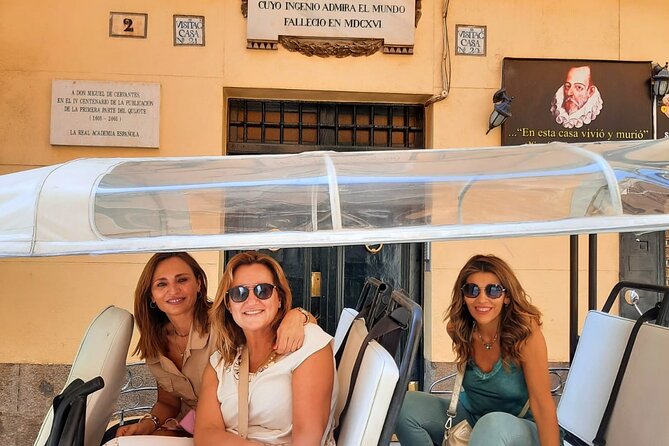
- A private 90-minute overview: Only your group participates, making it easier to ask questions and adjust photo stops.
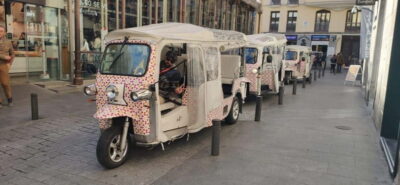
- Electric tuk-tuk transport: You cover far more ground than on foot while keeping an open-air feel.
- Strong first-day choice: The route connects the Royal Palace, Almudena Cathedral, Prado area, Salamanca, Cibeles, and Gran Vía.
- English-speaking service: The experience is offered in English, with several guides praised for clear explanations and friendly service.
- Photo stops, not full visits: Most attractions are seen from outside, with brief history and time for pictures.
- Meeting point matters: Start at C. de Vergara, 1, near the Royal Palace area, at 9:00 a.m., then return there.
Why an electric tuk-tuk works well in Madrid
Madrid is spread across a series of grand plazas, long avenues, royal buildings, museums, and neighborhoods with very different characters. Walking is rewarding, but covering the Royal Palace, Atocha, the Prado area, Salamanca, and Gran Vía in 90 minutes would be impossible on foot.
The tuk-tuk solves that problem. You can sit back while the guide handles the route, traffic, and turns. The electric motor also makes the ride quieter than a traditional gas-powered vehicle, though city traffic can still make conversation difficult at busy points.
I see this as a get your bearings fast experience. You can mark places you want to revisit later, such as the Prado, Reina Sofía, Retiro, Gran Vía, or the Salamanca shopping streets. The trade-off is simple: you see many places, but most receive only a short explanation and a photo stop.
The private format is useful for couples, families, and small groups. You are not sharing the vehicle with strangers, and the guide can respond to your interests. The advertised capacity is four people per group, so a full party gets the best value.
A few more tuk tuk tours around Madrid worth a look
- Madrid: Private City Tour by Eco Tuk Tuk
★ 4.9 · 3,465 reviews - Madrid Welcome Tour with Local Guide in Eco Tuk Tuk Private
★ 5.0 · 2,936 reviews - Madrid Historical Tour with Local Guide in Eco Tuk Tuk Private
★ 5.0 · 876 reviews
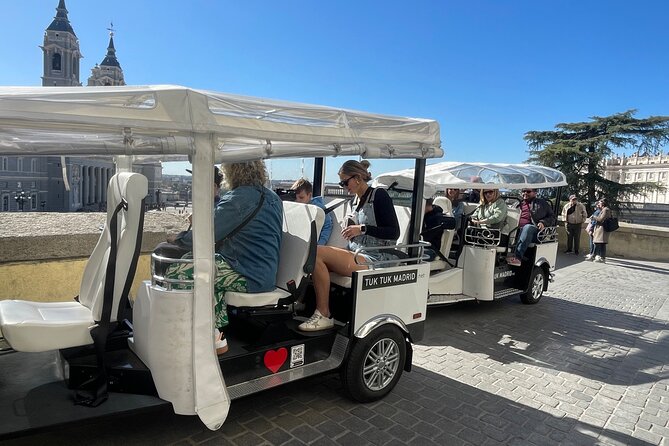
Starting near the Royal Palace and Almudena Cathedral
The meeting point is C. de Vergara, 1, in central Madrid. The tour begins at 9:00 a.m. and ends back at the same place. Arriving a little early is sensible, especially because some past departures have been affected by confusion over pickup arrangements.
The first major sight is the Royal Palace of Madrid, also called the Palace of the East. It is the official residence of the King of Spain and contains 3,418 rooms across about 135,000 square meters. That makes it the largest royal palace in Western Europe by area, larger than Buckingham Palace or Versailles.
You will not tour the palace interiors on this excursion. Instead, the guide gives you a short explanation of its importance and points out details from outside. That is enough to help you decide if you want to return for a full visit. If you do plan to see the rooms, book a separate palace visit because 90 minutes across all of Madrid leaves no time for an indoor tour.
Next comes the Almudena Cathedral, Madrid’s main Catholic cathedral and the seat of the city’s archbishop. It was built on the site of an older mosque, and its name comes from the Arabic al-mudayna, meaning citadel.
The cathedral is unusual because different parts reflect different periods and styles. The exterior is neoclassical, the interior is neo-Gothic, and the crypt is neo-Romanesque. The building stretches about 102 meters long and rises roughly 73 meters high. A short stop gives you the basic story without asking you to absorb every architectural detail at once.
San Francisco el Grande and the Toledo Gate
The route continues to the Royal Basilica of San Francisco el Grande, a large church in Madrid’s historic center. It presides over the western side of the Plaza de San Francisco, close to Calle Bailén and Carrera de San Francisco.
The basilica belongs to the former Franciscan convent of Jesús y María, founded in the early 13th century on the site of an earlier hermitage. This is a good example of how Madrid layers religious buildings and city development across centuries. Again, expect an outside look and a brief explanation rather than a full church visit.
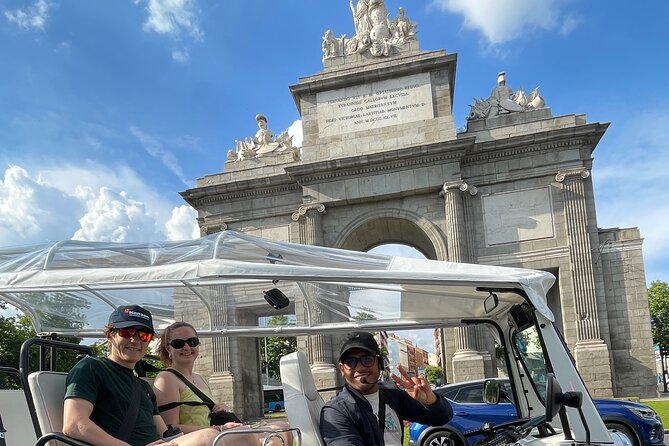
At the Toledo Gate, the guide introduces one of Madrid’s former entrances. The current gate was built in the first third of the 19th century and designed by architect Antonio Aguado. It was erected as a triumphal arch honoring King Ferdinand VII and commemorating Spanish independence after the French occupation.
The gate now sits in the middle of a traffic circle, so this is primarily a viewing and photo stop. The tuk-tuk format helps because you can reach it without making a long detour on foot. The drawback is that traffic noise and the roundabout can limit how long you comfortably linger.
From Neptune Fountain to Atocha and Reina Sofía
The Neptune Fountain is one of Madrid’s major neoclassical monuments. It was proposed in 1777, built between 1782 and 1786, and originally placed along the Carrera de San Jerónimo, facing the Cibeles Fountain. It moved to its current setting in 1898.
The fountain is part of the grand 18th-century reshaping of central Madrid. Along with Cibeles and Apollo, it helped create the area locals came to know as the Salón del Prado. The guide’s explanation is especially useful here because the fountains make more sense when seen as parts of one city-planning project.
The tour then reaches Atocha Station, Madrid’s busiest railway station. It began as a simple stop in 1851 and later grew into the larger Midi station, opened in 1892. Today it is both a transport hub and an important piece of Madrid’s architectural story.
From there, you see the Reina Sofía Museum, housed in the former General Hospital of Madrid. The original building is an 18th-century neoclassical structure designed first by José de Hermosilla and later continued by Francesco Sabatini. The museum opened in 1992, with an additional Nouvel building added in 2005.
The museum is best known for Spanish and international 20th-century art. Pablo Picasso’s Guernica is now displayed here, though it was once associated with the Casón del Buen Retiro. The tuk-tuk stop helps you understand the museum’s place within the Atocha district, but you will need another visit to see the collections.
Same place, a completely different ride:
- Madrid Express Tour with Local Guide in Eco Tuk Tuk Private
★ 5.0 · 413 reviews - Madrid: Highlights City Tour by Electric Tuk Tuk
★ 4.7 · 346 reviews - Madrid: City Highlights Tuk Tuk Tour
★ 4.4 · 334 reviews - Madrid: City Tours – 6 seats private ecological tuk tuk
★ 4.6 · 230 reviews
Jerónimos, the Prado, and Madrid’s old court district
The former monastery of San Jerónimo el Real, commonly called Los Jerónimos, once ranked among Madrid’s most important monasteries. It stood beside the Royal Room, which later became part of the Buen Retiro Palace during the reign of Philip IV.
The stop is listed at about five minutes, with no admission charge. That is enough time for an exterior look and a few photographs. The building also helps explain the former Buen Retiro complex, much of which disappeared but left several surviving structures behind.
The nearby Casón del Buen Retiro is one of those survivors. Built by Alonso Carbonel in 1637, it began as a ballroom for the court of Philip IV. It later became part of the Prado Museum system and once held 19th-century paintings, as well as Picasso’s Guernica before that work moved to the Reina Sofía in 1992.
Today the Casón functions as a Museum Study Center. Its story is a reminder that Madrid’s museums are not isolated buildings. They are linked to royal collections, former palaces, and changing ideas about how art should be displayed.
You also pass the Salón de Reinos, or Hall of Realms. Built between 1630 and 1635, it was the ceremonial heart of the old Buen Retiro Palace. Its name comes from the coats of arms of the 24 kingdoms that formed the Hispanic Monarchy under Philip IV.
For many years, the building housed the Army Museum, which explains its other familiar name. The museum’s collections later moved to the Alcázar of Toledo. This is another exterior-focused stop, but the historical background makes the building more than just another grand facade.
The Prado Museum is one of the main highlights of central Madrid. Its collections are especially strong in Spanish and European painting from the 15th through the 18th centuries. Velázquez, El Greco, Goya, Titian, Rubens, and Bosch are among the major names associated with its galleries.
The visit here is listed as free because the tuk-tuk tour does not include museum admission. You receive a short introduction and can return later for a proper museum visit. I like this arrangement. A hurried museum visit would do the Prado no justice, while a brief orientation helps you choose how to spend your own time.
Royal gates and the Salamanca district
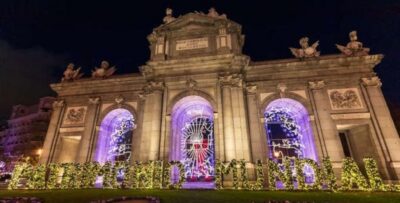
The Puerta de Alcalá is one of Madrid’s former royal gates. It now occupies the center of the Plaza de la Independencia, near several entrances to Retiro Park. The surrounding roads can be busy, but the monument is easy to recognize and makes a useful photo stop.
The route then passes Las Ventas, Madrid’s largest bullring. It seats 23,798 people and has a ring diameter of 61.5 meters. Even if bullfighting is not part of your plans, the building gives you a look at one of Spain’s most debated and recognizable traditions.
A longer stop comes in the Salamanca district, listed at about 20 minutes. This is one of the most useful parts of the tour if you want to understand modern Madrid beyond the palace and museums.
The district was developed in part during the 19th century by José de Salamanca y Mayol, Marquis of Salamanca. Today it is one of the city’s main shopping areas, particularly around Serrano, Claudio Coello, and Ortega y Gasset. The area is associated with high-end stores and one of Madrid’s highest standards of living.
You might use this time for pictures, a short walk, or questions about where to shop and eat later. The longer pause gives the tour a little breathing room after a series of quick monument stops.
Colón, the National Library, and Cibeles
At Plaza de Colón, several major streets meet, including Goya, Génova, Paseo de la Castellana, and Paseo de Recoletos. The square is named for Christopher Columbus and contains a neo-Gothic monument erected between 1881 and 1885.
Nearby is the National Library of Spain, an autonomous institution responsible for preserving the country’s documentary and bibliographic heritage. Its collection includes books, magazines, maps, engravings, drawings, scores, and pamphlets, with around 30 million publications produced in Spain since the early 18th century.
You will not enter the library as part of the tuk-tuk ride, but the guide can place it within Madrid’s cultural center. This is the kind of detail that helps you see the city as more than royal buildings and shopping streets.
The Cibeles Fountain is one of Madrid’s best-known symbols. It was planned during the 18th-century city improvements ordered by King Carlos III, alongside the Prado, the Royal Botanical Garden, and other neoclassical projects.
The fountain depicts the classical goddess Cibeles and gives its name to the surrounding square. The area became known as the Salón del Prado because of its beauty and public appeal. You also see the Bank of Spain, whose main headquarters faces the square and was built between 1884 and 1891.
Cibeles is a strong photo stop, but it can be hard to hear every word when traffic is heavy. One booking specifically noted that the city noise covered the guide’s voice and suggested better individual listening equipment. Keep that limitation in mind if you have hearing difficulties.
Gran Vía and the final city view
The last major highlight is Gran Vía, one of Madrid’s central streets. It begins near Calle de Alcalá and runs to Plaza de España. Its reputation comes from shopping, cinemas, theaters, and large early-20th-century buildings.
The stretch between Plaza de Callao and Plaza de España is often called Madrid’s Broadway because of its musical theaters. Other sections are lined with international fashion chains. A 10-minute stop gives you a useful first look and helps you decide if you want to return after the tour.
The route then returns to C. de Vergara, 1. At that point, you should have a practical sense of where the main districts sit in relation to one another. That orientation is one of the tour’s biggest benefits.
Guides, communication, and service
The strongest experiences have come from guides who mix facts with practical suggestions. Juan was praised for clear English, energy, and a fun manner. Jimena was described as patient and warm. Javier has been singled out for explaining Madrid and Spanish history well, while José and Javier were appreciated for their courtesy, energy, and restaurant advice.
One group of six reported using two tuk-tuks with Javier and George, with English and Spanish speakers in the family all able to follow along. The standard booking information is for groups of up to four, so larger parties should confirm the arrangement before paying.
The tour is offered in English. One booking expected a German-speaking guide but received an English and Spanish guide instead, after a pickup problem. If language is important to you, confirm it directly through the operator before the start.
The service includes bottled water and a guide-driver. Tips are not included. You may stop at each attraction for pictures and hear short historical information, but the experience is not designed for detailed guided entries.
Price, timing, and who gets the most value
At $131.54 per group of up to four, this is good value when the tuk-tuk is full. A couple pays more per person, but gains a private vehicle and the convenience of seeing a large part of central Madrid without arranging several taxis.
The 9:00 a.m. departure gives you an early start, useful for building the rest of your day around the places that catch your interest. The tour is about 90 minutes, though the exact flow can depend on traffic and photo stops.
I would choose this for a first morning in Madrid, a short city break, or a family group that wants an overview without a long walk. It also suits anyone who wants help deciding which museums, squares, and districts deserve more time.
I would not choose it as your only Madrid experience. You will not have enough time to visit the Prado, Reina Sofía, Royal Palace, or cathedral interiors properly. Think of it as a guided preview, followed by independent exploring.
The activity requires good weather. If poor weather causes cancellation, you are offered another date or a full refund. You can cancel for a full refund up to 24 hours before the 9:00 a.m. start time. Changes or cancellations inside that window are not refunded.
Should you book this Madrid tuk-tuk tour?
Book it if you want a private, fast introduction to Madrid and value local explanations more than long indoor visits. The route covers an impressive range of sights, and the best guides add useful restaurant and neighborhood advice along the way.
I would book it for a full group of four, confirm the 9:00 a.m. meeting point, and contact the operator if you have a specific language request. I would also keep a little flexibility in your schedule in case communication or pickup goes wrong.
The missed departures are a real concern, even though most reported experiences were strongly positive. For a smooth day, arrive early, keep the operator’s contact details handy, and make sure the meeting instructions are clear. If that small risk is acceptable, this is a pleasant way to see Madrid’s main sights before choosing where to spend your own time.
FAQ
Where does the Madrid electric tuk-tuk tour start?
It starts at C. de Vergara, 1, Centro, 28013 Madrid, Spain.
What time does the tour begin?
The scheduled start time is 9:00 a.m.
Where does the tour end?
The experience ends back at the original meeting point.
How long does the tour last?
The tour lasts approximately 1 hour and 30 minutes.
How many people can join one booking?
The price covers one private group of up to four people.
Is the tour offered in English?
Yes. The experience is offered in English.
Are museum and attraction admission tickets included?
No. The tour provides outside views, photo stops, and brief historical information. Admission is not included for places such as the Royal Spanish Academy, and the ride does not function as an indoor museum visit.
Is bottled water included?
Yes. Bottled water and a guide-driver are included. Tips are not included.
What happens if the weather is poor?
The experience requires good weather. If it is canceled because of poor weather, you can choose another date or receive a full refund.
Just added around Madrid
- Tuk Tuk Tour with Wine Test in Madrid★ 3.8 · 6 reviews
- Tuktuk historical tour of Madrid 1 Hr in a fun and original way★ 4.1 · 4 reviews
- Tuk-tuk Tour: Private tour of downtown Madrid★ 4.0 · 2 reviews
- Tuk-tuk tour of downtown Madrid★ 5.0 · 2 reviews
- Discover Madrid in a Fun & Eco-Friendly Tuk-Tuk – Private Tour★ 4.0 · 4 reviews
- Eco Friendly Tuk Tuk Experience with the Local in Madrid★ 5.0 · 4 reviews
- Tour of Castizo Madrid with a private guide in a yellow Tuk-Tuk★ 5.0 · 26 reviews
- Tuk Tuk Tour of the Best of Madrid (booking only)★ 5.0 · 2 reviews
Madrid Tuk Tuk Tours, compared.
Madrid Welcome Tour with Local Guide in Eco Tuk Tuk Private
Read our review →
Madrid Historical Tour with Local Guide in Eco Tuk Tuk Private
Read our review →
Madrid Express Tour with Local Guide in Eco Tuk Tuk Private
Read our review →
City Tours – 6 seats private ecological tuk tuk
Read our review →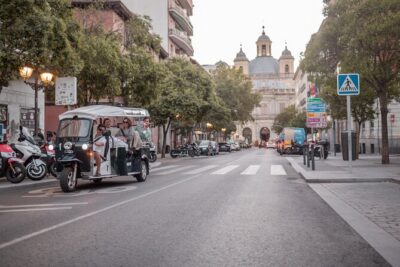
Madrid Expert Tour with Local Guide in Eco Tuk Tuk Private
Read our review →Browse the lists this tour appears in