
Review · PORTUGAL
Tavira: Tuk-Tuk City Tour
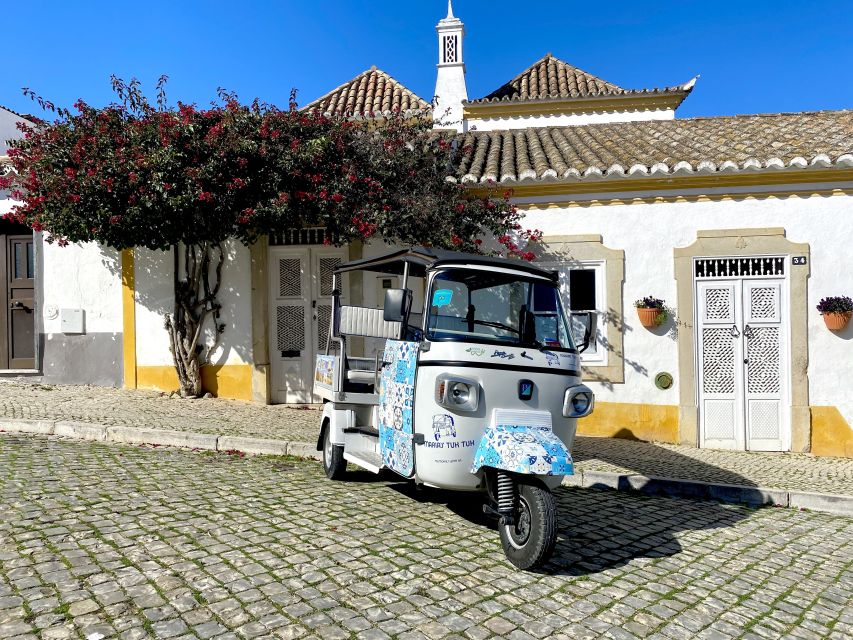
Tavira reveals itself in layers. This one-hour electric tuk-tuk tour links its churches, castle, salt pans, and quieter corners without asking you to tackle every hill on foot. I like the easy overview and the chance to hear local stories from guides such as João, Lori, Laurie, Maria, and Joel. The main limitation is time: one hour gives you a fine introduction, not long visits inside every sight.
I also like the private-group format, which makes it easier to ask questions or request a photo stop. The open-sided tuk-tuk brings a welcome breeze on hot days, too. Just remember that food, drinks, luggage, and large bags are not included or allowed in the vehicle.
Key points to know before you book
- Salt pans and city streets in one ride: The route reaches the Atalaia salt pans as well as Tavira’s central churches and squares.
- A useful first-day tour: You can get your bearings, then return later to the castle, churches, market, or other places that catch your eye.
- A strong guide-led experience: João, Lori, Laurie, Maria, and Joel have been praised for clear explanations, local stories, and friendly conversation.
- Five-minute stops matter: The salt pans, São Sebastião Church, and castle receive short stops for photos and a quick look.
- Good for hot weather and limited mobility: The electric tuk-tuk avoids a lot of uphill walking and is wheelchair accessible.
- Private and multilingual: Tours are offered in English, French, Spanish, and Portuguese.
Why a tuk-tuk is a smart way to meet Tavira
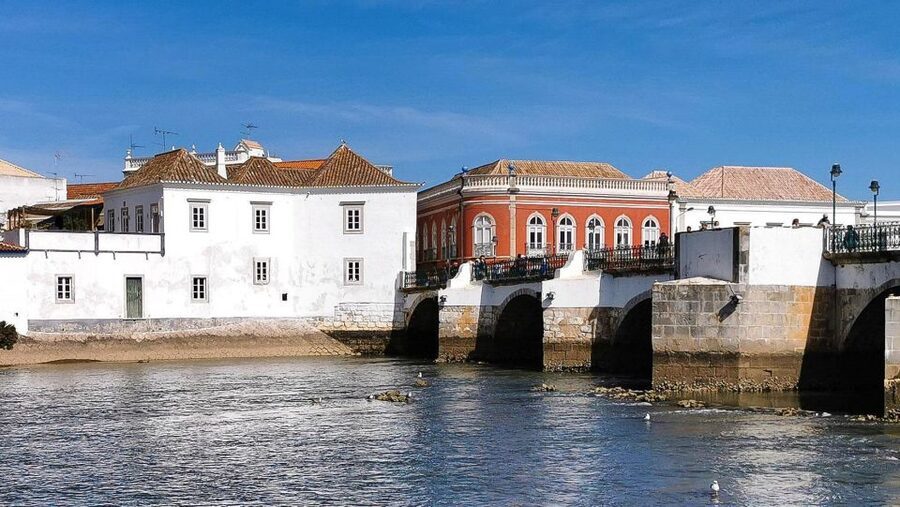
Tavira is compact enough to walk, but its sights are spread across streets, slopes, river crossings, and outer districts. A tuk-tuk lets you cover more ground before choosing where to spend your time.
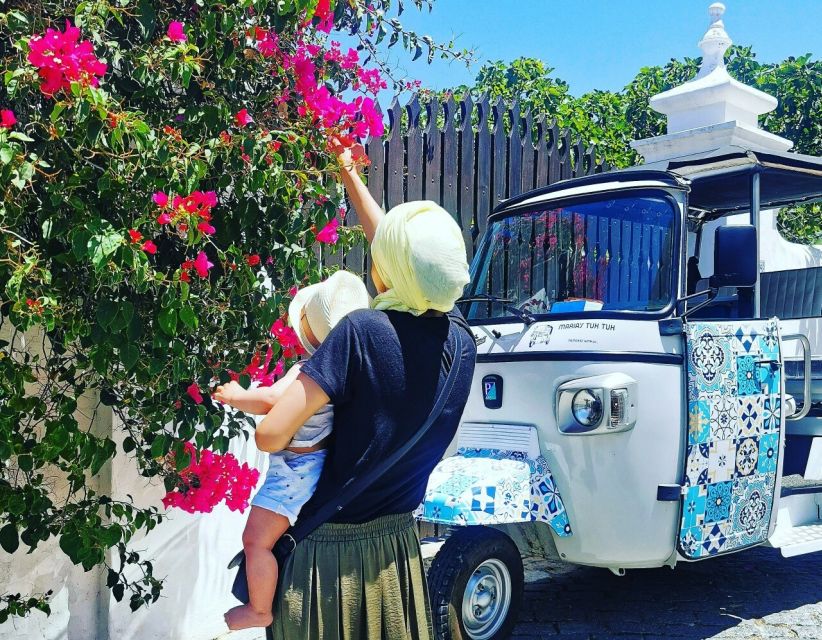
The vehicle is 100 percent electric, so you get an open-air ride without the noise and fumes of a standard motor vehicle. That matters in Tavira’s narrow streets, where the slow pace lets you look up at tiled façades, church towers, old doors, and balconies instead of focusing on traffic.
At $45 per person, the price is not the cheapest way to see Tavira. It makes better sense if you value a private group, live commentary, and the ability to ask questions. For two people, the cost can feel high compared with simply walking around with a map. For a family or small group that wants an efficient introduction, the price is easier to justify.
The strongest value comes from the guide. A book can tell you that Tavira has churches from different periods. A good guide can explain why those buildings matter, connect them to the city’s changing economy, and point out small details you might otherwise miss, such as hand decorations on doors or local stories linked to the Roman bridge.
More Tuk Tuk City Tours in Portugal
- Private Lisbon Sightseeing Tuk-Tuk Tour: Alfama, Belém & More
★ 5.0 · 4,277 reviews - Lisbon Highlights: Private Tuk Tuk Tour Adventure Sightseeing
★ 5.0 · 3,284 reviews - Discover Porto’s Highlights on a 2-Hour Private Electric Tuk Tuk
★ 4.5 · 1,860 reviews
Meeting at R. Gonçalo Velho 7
The tour begins at R. Gonçalo Velho 7, near Aguarela Café. Look for the sign for Maria’s Tuk Tuk. This is a central and practical meeting point, but you should give yourself enough time to locate it rather than arriving at the last moment.
The activity lasts one hour, and starting times depend on availability. The short length works well if you have only part of a day in Tavira, are arriving from nearby Olhão, or want an orientation before exploring on foot.
The tour is a private group experience. That gives you a more personal setting than a large sightseeing vehicle. Guides have been praised for answering questions, adapting the pace, and suggesting places to revisit after the ride. If you have a particular interest in churches, architecture, local stories, or photography, say so early.
Alto de São Brás and the city’s upper sights
One of the first sections passes through Alto de São Brás. Here you see the Chapel of São Brás and the Church of Nossa Senhora do Carmo, described as the largest church in Tavira.
This part helps you understand the city beyond its postcard center. The ride reaches areas that you might skip if you stayed only around República Square and the Roman bridge. The tuk-tuk also saves effort on uphill stretches, which is useful in summer or for anyone who does not want a walking tour built around slopes.
The stop at the Church of Nossa Senhora do Carmo is mainly part of the passing route rather than a long interior visit. That distinction is important. You are seeing a broad selection of places and receiving context, not spending twenty minutes at each church.
The guides are a major part of what makes this section worthwhile. João has been praised for connecting Tavira’s past with its present economy, while Lori and Laurie have been singled out for clear and friendly explanations. The exact guide may vary, but the activity is offered in English, French, Spanish, and Portuguese.
The Atalaia salt pans and the former prison
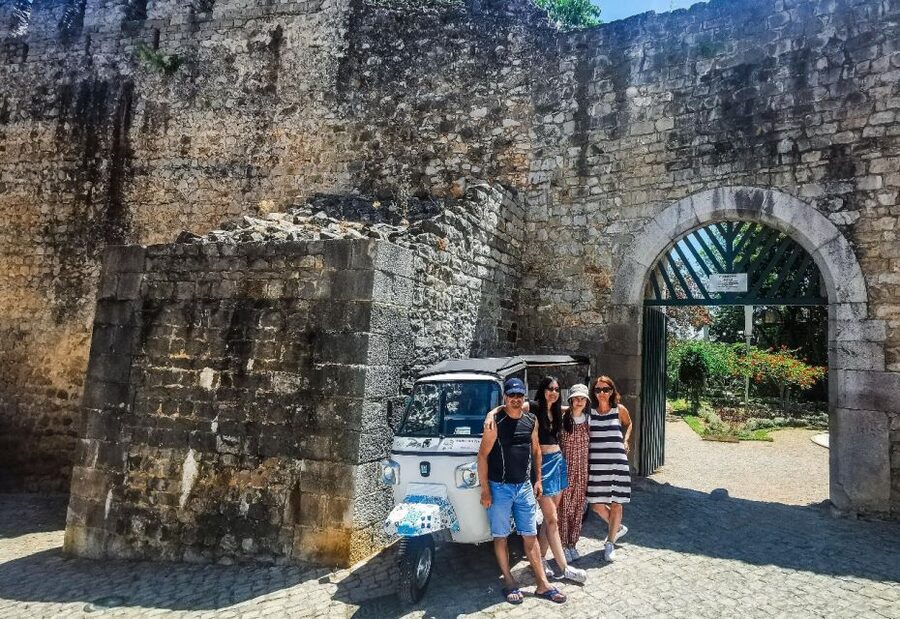
The route then reaches the salt pans in the Atalaia area. The planned stop lasts about five minutes, enough for photographs and a quick look at the salt-making area.
This is one of the tour’s most distinctive features. Tavira is not only churches and old stone streets. The salt pans connect the town to work, trade, and the nearby coastal environment. A short stop gives you a different view of local life, especially after seeing the urban center.
Some guides may offer the chance to get out at the salt pans, depending on the flow of the tour. One useful detail from the experience is that a visitor was able to buy salt locally after the stop. Treat that as a possible bonus rather than a guaranteed shopping stop.
You might also see local wildlife around the salt pans. Flamingos were spotted during one earlier tour, but wildlife is never promised. The important point is to bring your camera and keep your expectations sensible. Five minutes passes quickly, so this is a photo stop rather than a full visit or lesson in salt production.
Nearby, the route takes in the Convent of Bernardas and the former prison. These locations add another layer to the city’s story. The former prison is especially useful for understanding that Tavira’s historic buildings were not all created for worship or grand display.
More tuk tuk city tours around Portugal:
- Lisbon: Private City Tour by Eco Tuk Tuk
★ 4.9 · 1,215 reviews - Lisbon: Private Sightseeing Tour in a Vintage Tuk Tuk
★ 4.9 · 1,057 reviews - Lisbon: Private City Tour by Tuk-Tuk
★ 5.0 · 789 reviews - Lisbon: City Tour by Tuk Tuk
★ 4.7 · 617 reviews
São Sebastião Church and the short photo stops
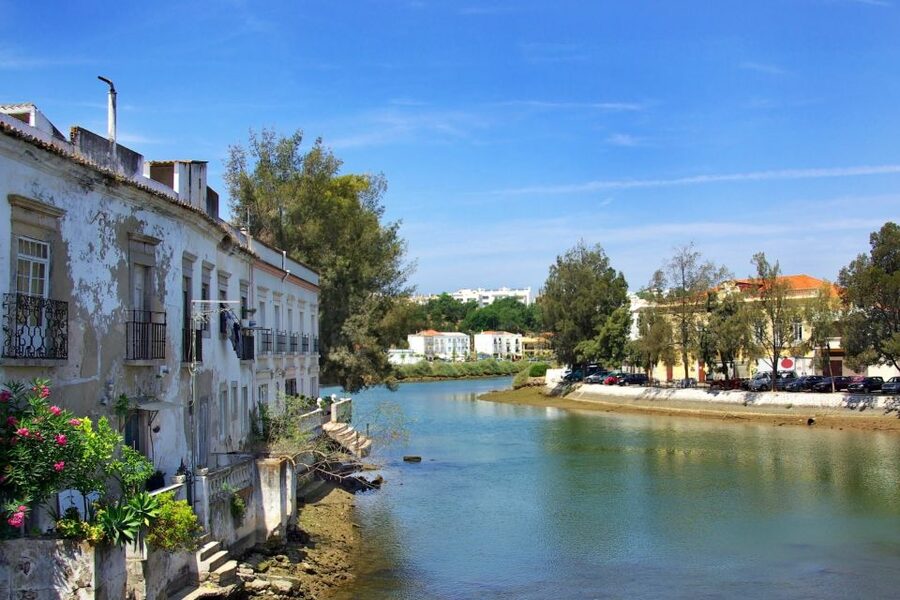
The tour includes a five-minute stop at São Sebastião Church. This is another chance to get out, take photographs, and listen to a brief explanation before moving on.
Short stops are both a strength and a weakness. They keep the tour moving and let you see a great deal in one hour. At the same time, you will not have time for a slow visit, detailed inspection, or extended quiet inside each building.
I would treat these pauses as a preview. If São Sebastião catches your interest, make a note of it and return later. The same approach works for the salt pans and the castle. The tuk-tuk gives you a practical shortlist of places worth a second look.
The open vehicle also helps on warm days. Several people have praised the breeze and the relief from walking in strong summer heat. That makes the ride especially useful in July and August, when a long uphill stroll can drain your energy before you reach the sights.
Barracks, churches, and Tavira’s central streets

After São Sebastião, the route continues through the military barracks and past the churches of São Francisco and São José. You then reach Liberdade Street and República Square, the main central square.
This portion gives you a sense of Tavira as a living town rather than a string of monuments. The military buildings, religious sites, streets, and square show how different functions sit close together. You are not simply looking at one old quarter. You are seeing how the town is arranged.
República Square is a useful reference point for the rest of your visit. From here, you can orient yourself toward the river, central shopping streets, and the older quarter. If you are staying nearby, this part of the ride can help you decide which streets deserve a slower walk later.
The guide’s commentary adds the most value here. Explanations about the city’s economy and its changing uses give the streets more meaning. Without that context, it is easy to pass a handsome building, take a photograph, and move on without understanding why it matters.
The historic center, four churches, and the castle
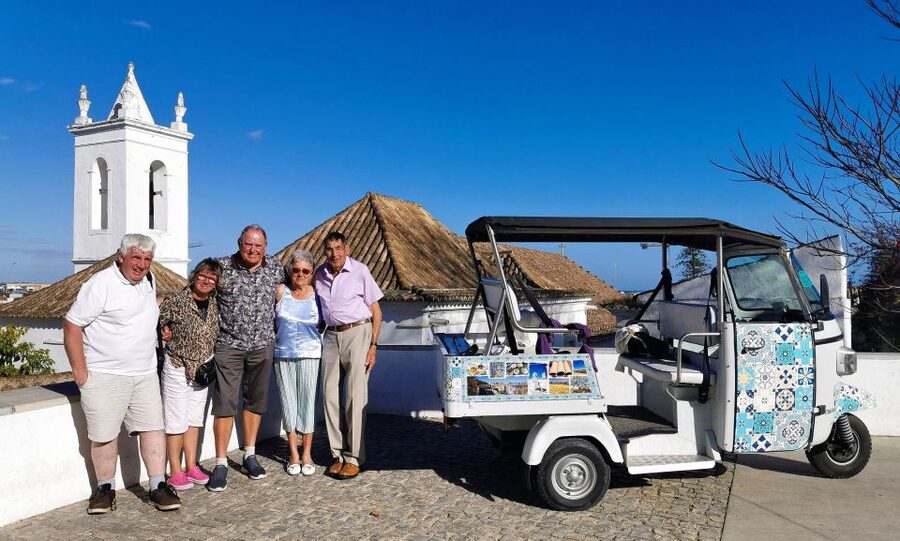
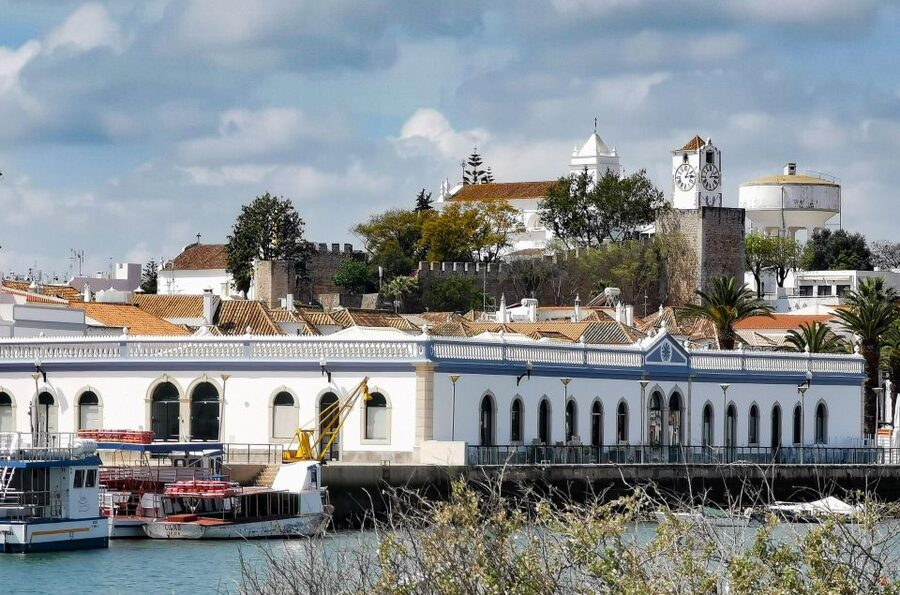
The most important part of the route is the historic center. Here you pass the Convent of Graça, Santiago Church, Santa Maria Church, and Misericórdia Church before stopping at the castle for about five minutes.
This is the section that will appeal most to anyone interested in architecture and local stories. Tavira has a remarkable concentration of churches, and the tour uses them as landmarks for explaining the town’s development. The buildings also give the route visual variety: white walls, tilework, stone details, towers, and old streets.
The Church of Misericórdia is one of the places you may want to revisit after the ride. The same is true of Santa Maria and Santiago churches. The tuk-tuk introduction helps you decide where to spend your limited sightseeing time instead of wandering without a plan.
The castle stop is short but valuable. You can take photographs and get a sense of Tavira from above. Some guides may offer to let you out there, which is handy if you want to continue exploring independently. Confirm the plan with your guide, since the standard tour remains only one hour.
The castle is also a good example of why the tuk-tuk should be seen as an introduction rather than a complete castle visit. You receive a quick look and useful context, but you should not expect enough time for a long walk through the grounds or a detailed examination of every feature.
Stories that bring the streets to life
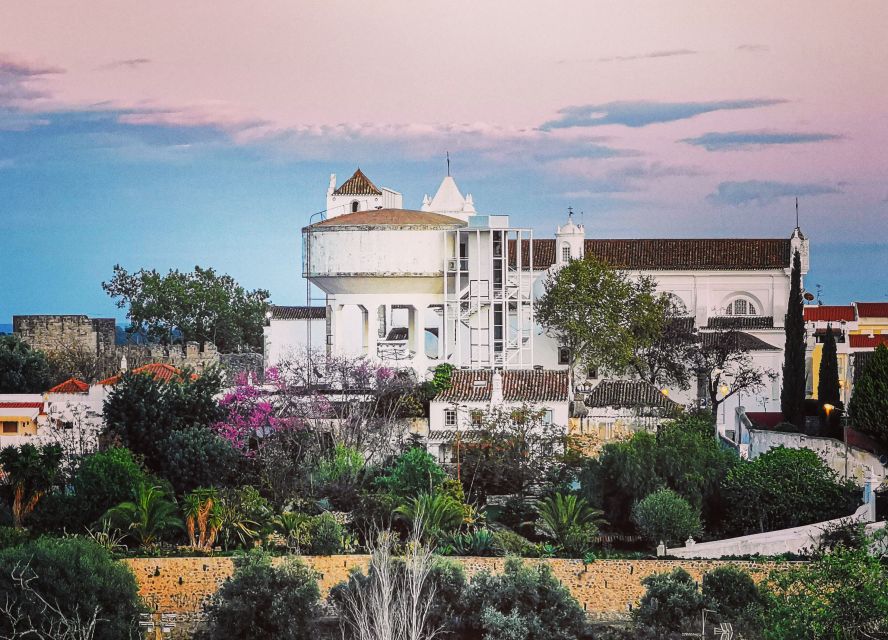
The best moments are not always the grand buildings. Guides have shared local folklore connected with the Roman bridge, explained the meaning of hand decorations on doors, and pointed out small details that would be easy to miss from street level.
Those touches make the ride feel more personal. You are not just collecting names of churches. You are learning how local stories, trade, architecture, and daily life fit together.
A guide may also help with photographs. One guide stopped at a handsome property so a solo visitor could take a picture with the home and tuk-tuk in view. That sort of small kindness can matter, especially if you are traveling alone and do not want every photograph to be a selfie.
The quality of the experience depends partly on the guide you receive. The consistently positive comments about João, Lori, Laurie, Maria, and Joel suggest a strong guiding team, but each person will have a different style. Some explanations may lean toward architecture, while others may focus more on anecdotes or local life.
Who will get the most from this tour?
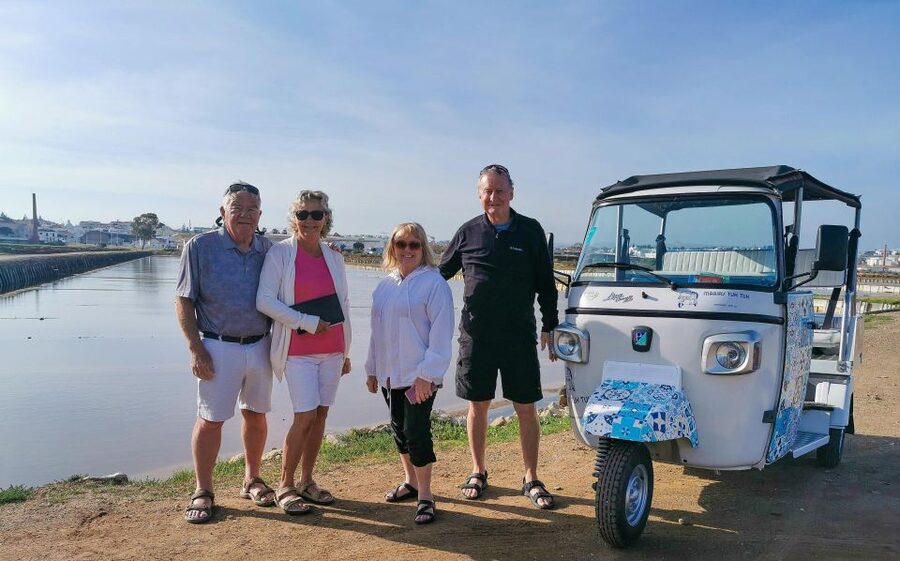
I would recommend this ride most strongly to first-time visitors. It gives you a city overview in one hour and helps you plan the rest of your stay. Several people used it early in their visit, then returned to places they had noticed from the tuk-tuk.
It is also a good choice for older visitors, families, and anyone dealing with heat or limited walking ability. One family found it particularly helpful for an elderly mother, and the tour is wheelchair accessible.
Solo visitors can benefit from the private setting and the guide’s help with photographs. Couples and small groups will appreciate being able to ask questions without competing with a large crowd.
You may want to skip it if you have already spent several days exploring Tavira on foot and prefer long interior visits. The tour moves quickly, and its purpose is coverage and orientation. It is not designed as a slow church-by-church study.
Bring a camera, but leave large bags and luggage behind. Alcoholic drinks are not allowed in the vehicle, and food and drinks are not included. Comfortable clothing is sensible, especially during hot weather, though the tuk-tuk provides some welcome air movement.
Price, timing, and booking flexibility
The $45 per-person price includes the one-hour tuk-tuk tour and live guiding. It does not include food, drinks, admissions, or purchases such as salt.
For value, compare it with the cost of your time. If you have one day in Tavira, the ride can prevent aimless walking and show you places you might not reach alone. If you have several days, it can serve as a pleasant introduction and help you choose where to return.
The booking terms are flexible. You can reserve now and pay later, and cancellation is free up to 24 hours before the tour for a full refund. That is useful if your Algarve schedule is changing.
Should you book Maria’s Tuk Tuk?
Book it if you want a friendly, efficient introduction to Tavira, especially on your first day. The strongest reasons are the private group, electric vehicle, multilingual guides, salt pan visit, and access to sights spread across the town.
You should also book if heat, hills, or limited mobility would make a walking tour tiring. The route covers a lot while leaving you with a clear plan for later.
Skip it if your main goal is extended time inside every church or a slow visit to the castle and salt pans. For everyone else, $45 buys more than a ride. It buys useful context, a local guide, and a fast look at the parts of Tavira you are most likely to remember.
FAQ
How long is the Tavira tuk-tuk tour?
The tour lasts one hour.
How much does the tour cost?
The price is $45 per person.
Where does the tour meet?
The meeting point is R. Gonçalo Velho 7, near Aguarela Café. Look for the sign for Maria’s Tuk Tuk.
What languages are available?
The live tour is available in English, French, Spanish, and Portuguese.
Is the tuk-tuk wheelchair accessible?
Yes, the activity is listed as wheelchair accessible.
What places does the tour visit?
The route includes the Alto de São Brás area, São Brás Chapel, Nossa Senhora do Carmo Church, the Atalaia salt pans, the Convent of Bernardas, the former prison, São Sebastião Church, military barracks, São Francisco Church, São José Church, Liberdade Street, República Square, the Convent of Graça, Santiago Church, Santa Maria Church, Misericórdia Church, and Tavira Castle.
Can I bring luggage or drinks?
Large bags and luggage are not allowed in the vehicle. Alcoholic drinks are also not allowed, and food and drinks are not included.
Just added around Portugal
- Tuktuk tour in historical old lisbon, city center and Belem★ 4.8 · 5 reviews
- Lisbon: Private City Tour in Alfama and Chiado with Tuk Tuk★ 3.5 · 9 reviews
- Tuk Tuk Tour of Belem★ 5.0 · 3 reviews
- Tuk Tuk Tour historic central Lisbon★ 5.0 · 3 reviews
- Tuk Tuk Tour in Aveiro★ 4.7 · 50 reviews
- Porto: Tuk Tuk Sunset Tour with Glass of Port Wine★ 3.4 · 7 reviews
- Tuk Tuk Monte Toboggan – Madeira Island★ 4.1 · 4 reviews
- Tuk Tuk Old Lisbon Tour 1,5h★ 5.0 · 3 reviews
Tuk Tuk City Tours, compared.
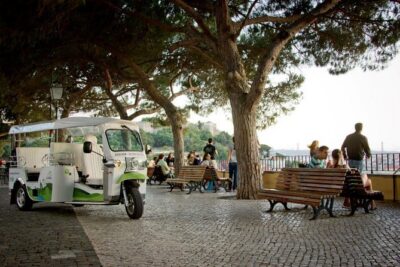
Private Lisbon Sightseeing Tuk-Tuk Tour: Alfama, Belém & More
Read our review →
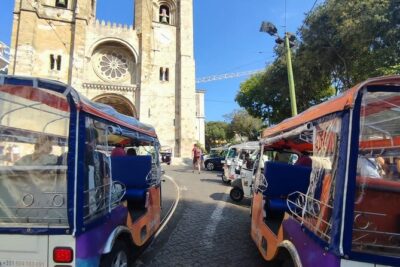
Lisbon Highlights: Private Tuk Tuk Tour Adventure Sightseeing
Read our review →
Private Tuk-Tuk City Tour with All Entry Fees
Read our review →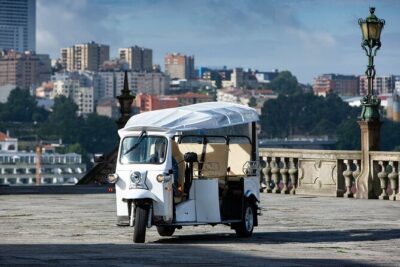
Discover Porto’s Highlights on a 2-Hour Private Electric Tuk Tuk
Read our review →

Browse the lists this tour appears in